Can't keep pothos (Epipremnum aureum) alive? Try a different method and it will grow until the pot can't hold it
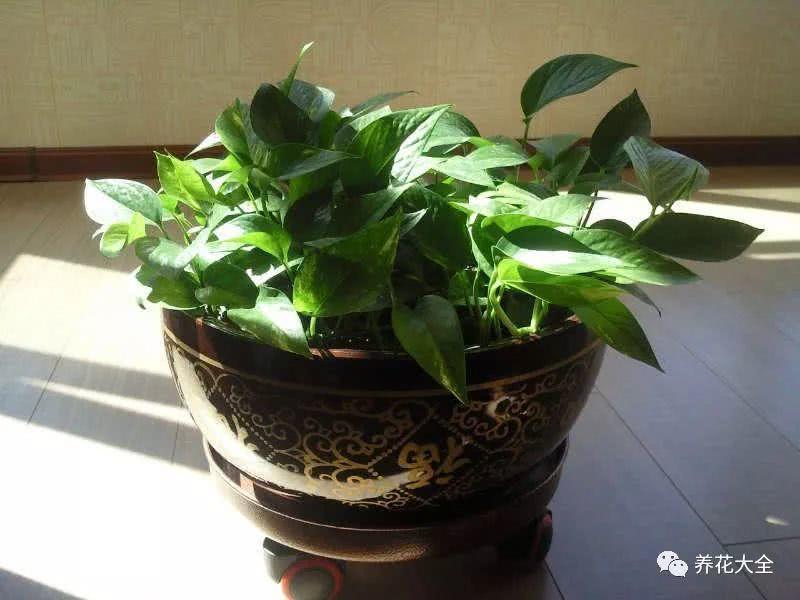
Lately, more and more gardening friends have been asking in the comments: why are my plants, whether grown in water or in soil, all looking wilted and not filling out their pots at all? So today, Huahua is bringing out the big guns to teach everyone a method that is absolutely guaranteed to fill out your pots, and that is the semi-soil semi-water method!
How to grow pothos with the semi-soil semi-water method?
The Complete Guide to Growing Flowers
Gardening friends often worry: why does my pothos just refuse to survive, whether grown in soil or in water? Don't worry, today Huahua will teach you a great method, and that is the semi-soil semi-water method! Come take a look!
Steps:
1. Using sterilized scissors, cut stems from the pothos plant, each stem about 7-10cm long, keeping 2-3 leaves on each stem.
2. Place the trimmed pothos stems into a carbendazim solution to disinfect for 20-40 minutes, then put them in a cool, ventilated place to let the wounds dry.
3. Prepare a larger flower pot or fish tank, first add nutrient soil at the bottom, and you can also mix some sand into the nutrient soil, with a height of about 1/3 of the pot. Then pour water into the pot, with the water level reaching about 2/3 of the pot's height, which is enough.
4. Insert the pothos stems with dried wounds into the soil, making sure the lower ends of the stems go into the soil, the middle parts of the stems are in the water, and the upper stems and leaves are in the air. To prevent the pothos stems from leaning, you can also add some small stones on the soil surface to hold them in place.
5. Place the pothos in a spot indoors with good scattered light for care. Whenever you see the water dry up, add more water. Every 1-2 weeks, you can toss 3-5 granules of compound fertilizer into the water, and the pothos will quickly fill out its pot!
How to grow pennywort (Hydrocotyle vulgaris) with the semi-soil semi-water method?
The Complete Guide to Growing Flowers
Huahua usually loves growing pennywort the most, after all, it is extremely easy to keep alive. Even if it accidentally droops its leaves from lack of water, just water it thoroughly once and the stems will immediately stand up straight again. It is super easy to grow!
Steps:
1. First, prepare a large flower pot. Because semi-soil semi-water pennywort grows very fast and fills out the pot very quickly, you must prepare a larger pot. The bottom of the pot should not have holes. Also prepare nutrient soil.
2. Put the prepared nutrient soil into the flower pot, with a thickness of about 2-4cm, then insert a section of pennywort rhizome into the soil.
3. Add water on top of the soil, with the water level covering the soil by about 1-2cm. In about 2-4 days, you will find that a single pennywort rhizome grown semi-soil semi-water has produced 2 stolons.
4. If you want the pennywort to grow fast, about once every week, add compound fertilizer to the water, 1-2 granules each time. (The white dots in the picture are compound fertilizer granules.)
5. When the pennywort grows more and more and the roots gradually begin to emerge above the water surface, you can add some more soil at this point to cover all the roots.
6. Place the pennywort on a south-facing windowsill, and turn the pot about once a week to prevent the pennywort from toppling to one side. In just 1 month, you will see the pennywort fill the entire pot!
7. In addition to the usual plenty of water and plenty of sun, once you find the pennywort flowering, cut the flowers off promptly to avoid consuming nutrients. Only this way can the pennywort's leaves grow bigger and bigger, even bigger than a coin!
How to grow lucky bamboo (Dracaena sanderiana) with the semi-soil semi-water method?
The Complete Guide to Growing Flowers
When lucky bamboo is mentioned, the first reaction of many gardening friends is yellow leaves! Whether grown in water or in soil, lucky bamboo at home always seems prone to yellow leaves! What to do? Why not try the semi-soil semi-water method!
Steps:
1. If the lucky bamboo at home has root rot and yellowing, first use scissors to cut off all the yellowed leaves.
2. If the lucky bamboo's roots have already rotted, cut off the rotten parts and let it re-root. You can use a sterilized knife to make a 45° diagonal cut, increasing the contact area between the lucky bamboo and the water surface, thereby promoting root growth.
3. Prepare a taller bottle, put about 2-4cm of sterilized fine sand at the bottom of the bottle, then place the lucky bamboo into the bottle so that its bottom just touches the sand. If you don't have sand at home, you can also put small stones in the bottle.
4. Place the lucky bamboo in a bright, ventilated spot indoors, away from direct sunlight. When you see the water become cloudy or smell an odor, change the water directly. You can use mineral water or cooled boiled water, but do not use tap water directly. Because tap water contains chlorine, using it directly will cause root rot and yellow leaves.
5. In about 20 days, the lucky bamboo can re-root. After rooting, you can add 2-3 drops of nutrient solution every half a month, and the lucky bamboo will quickly sprout snowy white roots!
6. To prevent yellow leaves caused by iron deficiency in lucky bamboo, you can also add a rusty iron nail to the bottle, or scrape the iron powder off a rusty iron nail and pour it directly into the water-growing bottle. Both can supplement iron for the lucky bamboo.
That's all for today's introduction from Huahua!
What other semi-soil semi-water methods have you gardening friends tried?
Why not leave a comment for Huahua right away!
?