The Legend of the Laurel Tree: Apollo's Love Buried in a Sorrowful Crown of Bay Leaves
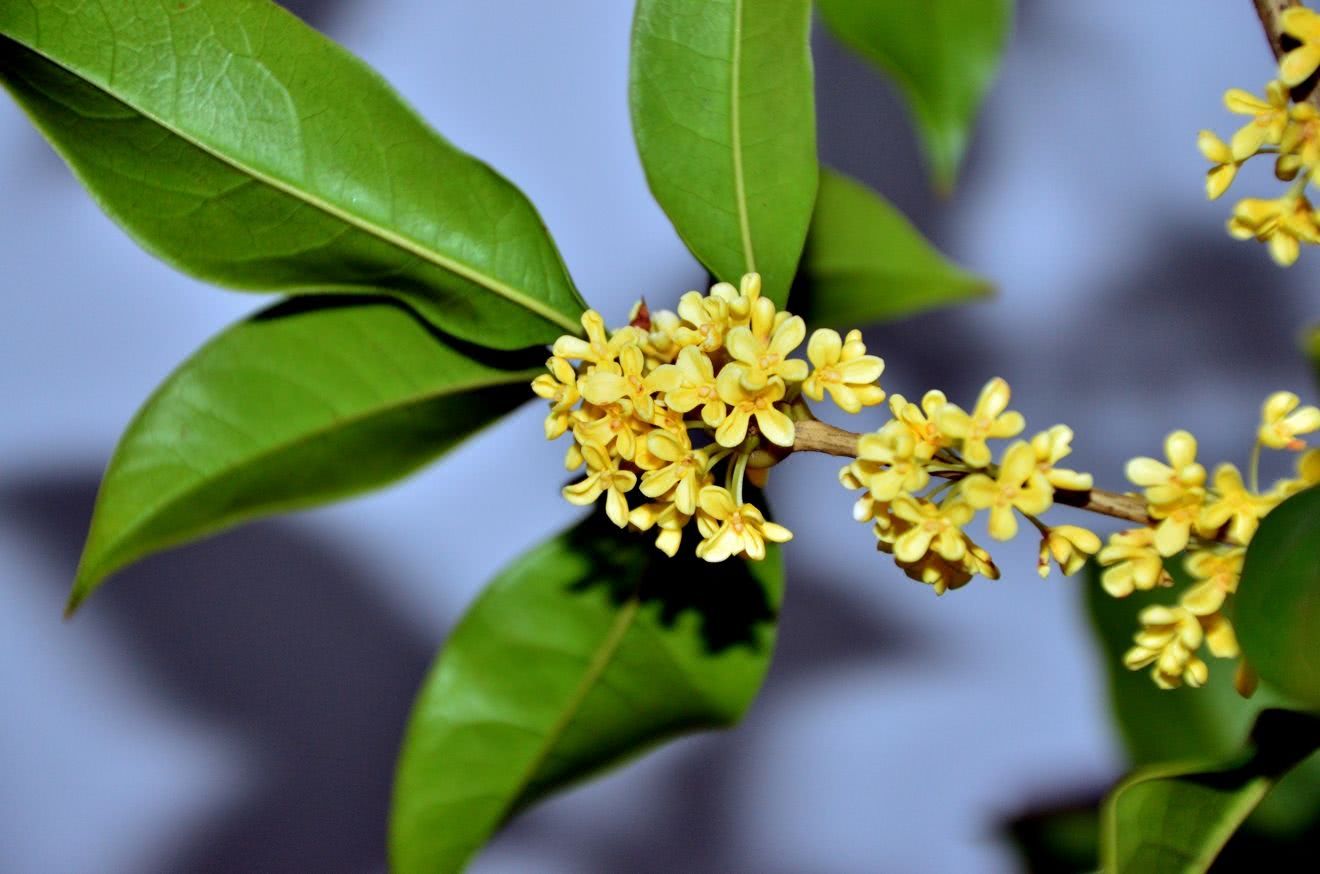
The laurel tree refers to a tree from eastern India with reddish-brown bark and a dark brown hue, featuring winding, curled grain and tough wood. It is a subtropical species native to the Mediterranean region, and is widely cultivated in gardens in provinces south of the Yangtze River basin in China, including Jiangsu, Zhejiang, Taiwan, China, and Fujian. It grows in open woodlands, dense forests, or thickets, or along streams and roadsides, at altitudes of 100-1400 m (in Yunnan it can reach up to 2100 m). It is also found in India, through Myanmar and Vietnam, to Indonesia and the Philippines.
It prefers a warm, humid climate and sunlight, is fairly shade-tolerant, and slightly cold-tolerant, enduring short periods of low temperatures from -8°C to -6°C. It is drought-tolerant but fears waterlogging. It thrives in deep, well-drained, fertile, moist sandy loam, is not tolerant of saline-alkaline soils, has strong sprouting ability, and tolerates pruning.
Laurel Tree
Landscaping:
The laurel tree has a graceful form and stays evergreen all year round, making it an ornamental tree for landscaping. It can be planted as a solitary specimen, in groups, or in rows.
Culinary Use:
Laurel leaves are often used in Western or Thai cuisine, mainly as a cooking seasoning, and are placed under meat when roasting. The thick leaves release a pleasant aroma when torn. Whether used in stews, soups, pickles, or tea, they lend a uniquely charming fragrance, and also have preservative and digestive-aiding effects.
Medicinal Use:
It can balance the nerves, relieve pain, sterilize, and treat arthritis, neuralgia, rheumatism, muscle pain, and skin diseases. Because the essential oil of the berries contains fatty acids, it is mostly used in the manufacture of soap and candles.
Laurel Tree
Greek Legend:
The mischievous little love god Eros (Roman name Cupid), having been mocked by Apollo, resolved to show Apollo the power of his bow and arrows. Flying through the air, he grinningly drew out a small lead-tipped arrow and shot it at Daphne, the nymph of the Peneus River; then he took out a golden arrow and shot Apollo. The lead arrow makes one abhor love, while the golden arrow kindles the fire of love. Apollo fell passionately in love with Daphne, but at the same time Daphne was ashamed of love and begged her father, the river god Peneus, to grant her lifelong virginity.
When Apollo caught sight of Daphne, he immediately ran swiftly toward her, but Daphne fled in panic. As the sun god chased her, he murmured his love to her, but this only made Daphne more terrified. Thus, one pursued and one fled, over many mountains, rivers, and fields. Gradually, Daphne lost her strength, and she felt she could not breathe - Apollo's footsteps were right by her ears, and she could even feel his breath. In despair, Daphne begged her father for help: "Please help me, father! Earth, split open and swallow me up!" No sooner had she spoken than she began to stiffen: her body became a trunk, her golden hair stretched out into leaves, her arms became branches, her swift-running feet now put forth roots, and her head was shrouded in dense shade; all that remained was her beauty and purity.
Although Daphne had become a tree, Apollo still loved her dearly. He embraced the trunk, and the leaves trembled with a rustling sound. "You shall be my tree," he said, "You will stay evergreen all year round and become the crown of glory for victors." From then on, Apollo honored the laurel tree as his sacred tree, and always adorned his hair, his lyre, and his quiver with laurel branches and leaves. Every year, the finest poet he selected from all of Greece was also granted a wreath made of laurel branches as a mark of honor. This is the origin of the "Poet Laureate."
Laurel Tree
Chinese Legend:
Legend has it that there is a laurel tree five hundred zhang tall in the moon. During the Han Dynasty, there was a man named Wu Gang who was obsessed with the way of immortals and did not devote himself to study, and was banished to the moon to cut down the laurel tree, but the laurel in the moon healed itself as soon as it was cut, and could never be felled completely; thus later generations came to see the image of Wu Gang endlessly chopping the laurel tree in the moon.