Rose air layering propagation tips to easily improve propagation success rate
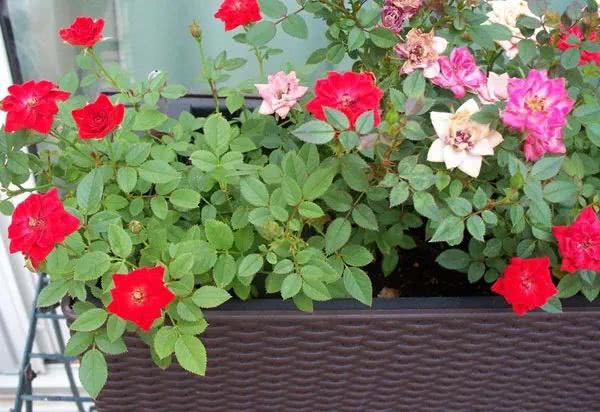
Roses are generally propagated by air layering, and can also be propagated by stem cuttings, while propagation by seed is extremely rare, and very few people have ever seen rose seeds. Below is an introduction to the method with the best success rate for propagating roses.
Many plants cannot be propagated from seed, such as the common pineapple, a tropical fruit that cannot reproduce by seed and can only reproduce asexually through stem and leaf cuttings, which is how they continue to reproduce and multiply.
In some places that are warm year-round, rose seeds are very difficult to germinate, and a low-temperature environment must be created artificially to break the seeds' dormancy, usually by placing them in a refrigerator, to increase the germination rate. Unless it is for breeding new varieties, no one would propagate roses by seed.
Most roses are propagated by stem cuttings or layering, and what will be introduced below is air layering.
Rose stems are relatively hard, so bending them down to the soil for mound layering is very difficult, making air layering the most suitable choice. Before preparing for layering propagation, you first need to prepare suitable materials, such as: soft string, a transparent plastic bag, a sharp knife and sphagnum moss; the sphagnum moss can be replaced with some loose soil with good water retention.
Step one:
Choose a semi-hardwood stem and perform ring bark removal, as shown in the picture below.
The length of the ring bark removal is generally about twice the diameter of the stem. Rose stems are very easy to propagate successfully by air layering, as the stems have very strong vitality.
Soak the sphagnum moss in clean water before use. Newly bought sphagnum moss can be soaked in boiling water for two to three minutes, then squeeze out part of the water and wrap it in transparent plastic film.
Then use the sphagnum moss to completely wrap the ring-barked area; the wrapped position is where the rose stem will take root and sprout. Both the upper and lower parts of the ring cut must be completely covered, avoiding leaving any gaps.
The wrapped sphagnum moss must be completely moist. If soil is used for wrapping, keep the soil moist and not completely dry. If layering propagation is done outdoors, provide appropriate shade above the layered area to avoid direct sun exposure and not too much sun, otherwise water will be lost very quickly, which is not conducive to rooting and sprouting.
Remember to wrap it tightly; if tied too loosely, water will be lost too quickly, which is not conducive to rooting and sprouting. Do not touch the ring-barked area at will, otherwise it is easy to break.
After wrapping completely, use string to tie the upper and lower parts of the plastic bag tightly, and then it is all done.
If the sphagnum moss is found to be dry, replenish water in time; you can directly inject water through a pinhole.
The picture above shows the state one month after air layering. You can see that many roots have already grown. At this point it can be cut off and replanted in loose, fertile, slightly acidic soil.
Long ago, roses were generally propagated by air layering. Now roses can be propagated by stem cuttings. Air layering propagation affects the health of the mother plant; during air layering propagation, the ring-barked area consumes a lot of nutrients for rooting. Stems propagated by air layering are not 100 percent successful either, though the success rate is still relatively high.
The air layering method for roses is suitable in spring and autumn, and is very unsuitable during typhoon season.
Now few people use the air layering method to propagate roses; most people use stem cuttings, and as long as fungi are controlled well, the propagation success rate is still relatively high.
The success rate of air layering propagation is somewhat higher than that of cutting propagation. Beginners who lack confidence in propagating roses can use this method.
This method is also suitable for propagating other flowers and is very useful. As long as you try it more, you will get a lot of fun.