How do you fatten up sedum succulents? The secret that made Cotyledon tomentosa the plumpest in the succulent world
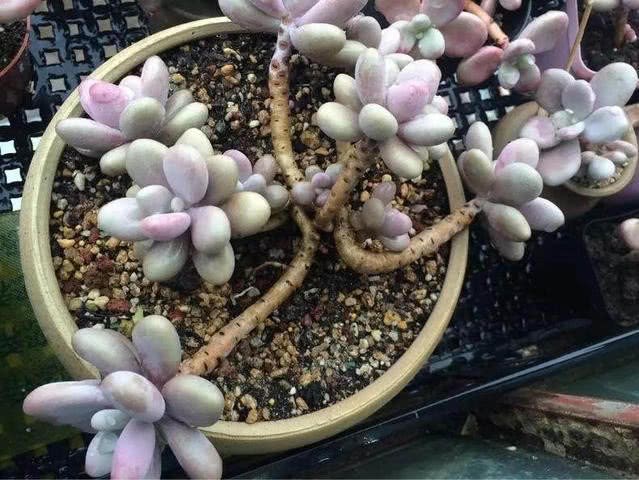
Many succulent-growing friends ask me what the "secret" is to fattening up succulents. There really is no secret, but I am very happy to share my experience with everyone. Growing plump succulents is actually not hard!
I am often asked by many succulent friends why the succulents I grow are so thick and plump. At first I did not think they were especially plump, but later, when I compared photos of the same species with other succulent friends, I realized they really were quite plump. Quite a few succulent friends even suspected that I was growing short-leaved succulent varieties. Since I started growing sedum succulents, my biggest takeaway has been that the plants grow slowly but are hardier. This all starts with that Cotyledon tomentosa, the one that became plump throughout the "succulent world."
This is the little bear plant I have grown for 2 years. It has always been chubby and very lovable (meeting it was fate)!
I grow succulents in Suzhou. I should mention here that different regions have different environments, and the succulents grown there will also differ. You should know that even succulents grown in the same region can vary greatly, because they are affected by many factors such as light, watering and succulent soil mixes.
Speaking of soil mixes, I use peat, perlite, river sand and vermiculite mixed in a ratio of 2:1:1:1. Among these, river sand is my favorite. Starting from leaf propagation and transplanting of seedlings, my succulents have been grown in a mix with a slightly higher proportion of gritty material. The downside of this mix is extremely slow growth, but the upside is that the succulents really do grow very plump and solid.
Because I have a relatively large number of succulents, I spent more than half a year setting up two small polytunnels. Water evaporates relatively quickly inside the tunnels, and since the gritty material makes up most of my succulent soil mix, I need to water frequently.
I once tried planting succulents in clay pots, but unexpectedly the water evaporated even faster. I often had to water once every two or three days because it dried out too quickly, and the succulents inside did not grow very well. Later, through trial and error, I discovered that planting companion plants around the succulent would help somewhat, so the soil would not dry out too quickly.
Here is a rough little suggestion for everyone: if your succulent-growing space is relatively spacious, it is recommended that you cover the ground soil with a thick layer of yellow sand, then set the succulents, pots and all, on top of it. That way, even if you forget to water for two or three months, the succulents will not die. With yellow sand under the pots, the water you pour in goes straight through the pot and flows into the yellow sand below, and the succulent roots will quickly extend downward and take hold, becoming very sturdy!
There is also a very "alternative" bottom-watering method that works for succulents in general. We will talk about it next time.