Succulents repotted without changing the soil - no wonder they never look beautiful
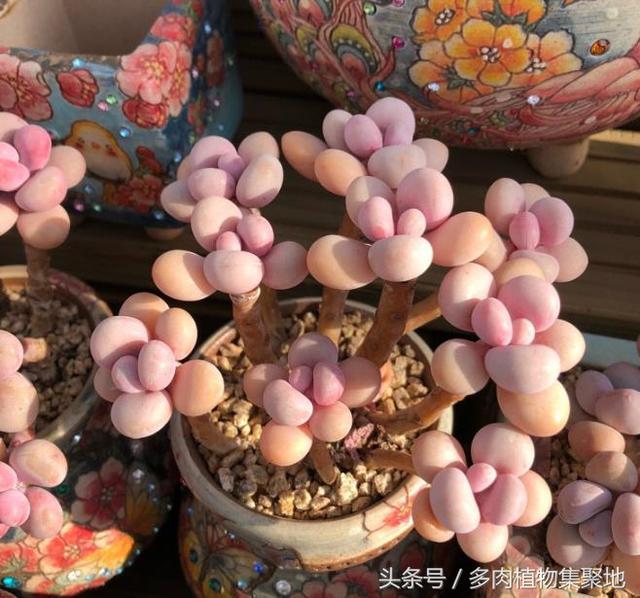
Succulents that have not been repotted for one or two years have roots filling the entire pot, which is bad for drainage and airflow, and the soil nutrients are completely depleted, turning from the original granular structure into powder, with the soil acidified. Many friends want to repot their beloved succulents. Repotting succulents is essential: after a year of growth, the nutrients in the soil have been absorbed almost to nothing, and the soil has also become rather compacted, which is bad for ventilation and airflow, and no amount of loosening gives a good result.
Many growers take the succulent out of the old pot, and because they are afraid of damaging the roots, they just give the soil a gentle shake and pot it straight up. Doing this is bad for the succulent's growth. The correct method is to remove all the soil from the roots, then trim the roots that have already rotted, and then repot. Of course, the root trimming mentioned here means cutting off the withered roots, not the newly grown fine roots.
If you are using a new pot, first rinse it with clean water, then disinfect it with a disinfectant solution. For the disinfectant solution you can use diluted potassium permanganate, then soak it to disinfect. Finally rinse it clean and let it dry. If you reuse the original pot, it must also be cleaned thoroughly, then taken out into the sun to bake, to disinfect and sterilize and remove insect eggs.
Add large-grain akadama, roughly to about one third of the height of the pot, so that drainage is smoother. Then put in a layer of potting soil, with just enough soil to cover the akadama below, and finally add a small pinch of fertilizer. Watering immediately after potting is also wrong, because the succulents have all had their roots trimmed before potting, and during transplanting there will be some friction with the soil. If you water immediately at this time, it may cause the wounds to become infected with bacteria.
Some friends find repotting too troublesome, so they never repot and keep growing in the original soil. This is very bad: when soil has been used for a long time, the nutrients in it are certainly absorbed almost to nothing, and there will be a lot of bacteria and microorganisms, and the soil becomes compacted. All of these are bad for the growth of succulents. At first you may not see any problem, but over time the leaves will begin to turn yellow, wither, and even die.
Why do succulents that have already established themselves still die? The answer is that your succulent has actually not yet established itself, and even if your succulent has established itself, that does not mean it can immediately be cared for normally like other succulents. Establishing is only a relative concept. Someone may tell you that two or three weeks after planting it has basically established, because it has usually already grown roots. Or that when the succulent is no longer limp and soft and has grown new leaves, it has established. These are all correct. But it does not mean that once it has established it can be cared for normally and receive full sun; this behaviour in summer or autumn is suicidal.
This is a gathering place for succulent lovers, sharing succulent care tips. You are welcome to follow and exchange ideas.