Bury a few soybeans in the pot of the elephant bush, and in one month it grows into an exquisite bonsai
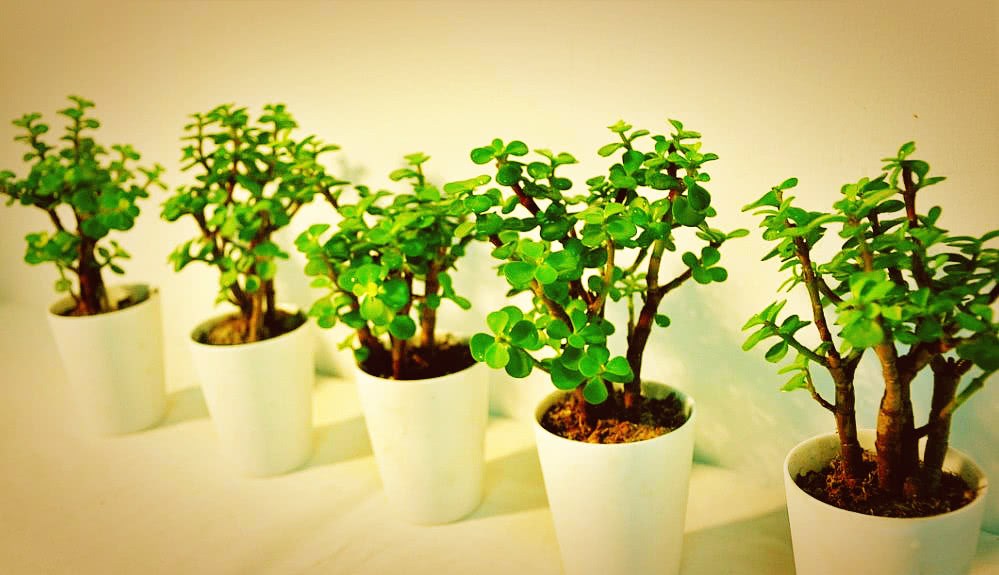
The elephant bush (Portulacaria afra) belongs to the purslane family (Portulacaceae). It has extremely strong adaptability and is a very easy plant to grow. To grow it well, pay attention to the following points:
First, soil mixing
The soil must be loose and breathable. For example: granular soil makes up more than 40%, leaf mold makes up 30%, and the rest can be supplemented with perlite, vermiculite and the like. The soil mixed this way is nutrient-rich, loose and breathable. It is very suitable for plant growth and helps the roots spread and breathe.
Second, watering
During the growing season, you must ensure the elephant bush has sufficient moisture. Many friends think the elephant bush is drought-tolerant and are afraid to water it, but in fact, only with sufficient water and fertilizer during the growing season will it grow fast, and in half a year it can grow into a large plant. As long as the soil is loose and breathable, more watering will not easily cause root rot.
Third, light
You must give it sufficient light. On the premise of sufficient moisture, letting it bask in the sun more will not harm it; the plant will grow more vigorously, and the stem nodes will not become leggy.
Fourth, fertilizing
During the growing season, give it a high-nitrogen, high-potassium fertilizer two to three times a month, because the elephant bush is a potted plant grown mainly for its foliage. Nitrogen fertilizer can make the leaves emerald green, and potassium fertilizer can make the roots vigorous and the branches thick, which is good for shaping. For fertilizing, you can use your own fermented organic fertilizer or cake fertilizer, or a compound fertilizer, applying light fertilizer frequently. You can also bury a few cooked soybeans at the edge of the flower pot, which also has a fertilizing effect.
If there is sufficient water and fertilizer, the elephant bush will grow very fast. In one month it will grow many branches, and in half a year it can be shaped into a bonsai.
Fifth, pruning
The elephant bush very easily produces side branches, so it must be pruned in time. Many people prune the elephant bush into a bonsai shape, but since the elephant bush grows very fast, it must be pruned frequently to keep the plant shape beautiful. When pruning, you can keep one to two nodes on the branches and cut off the rest, so that it sprouts side branches and the shaped foliage becomes dense and beautiful.