What plant looks like a mirror but is not one, with a golden-yellow dot in the middle?
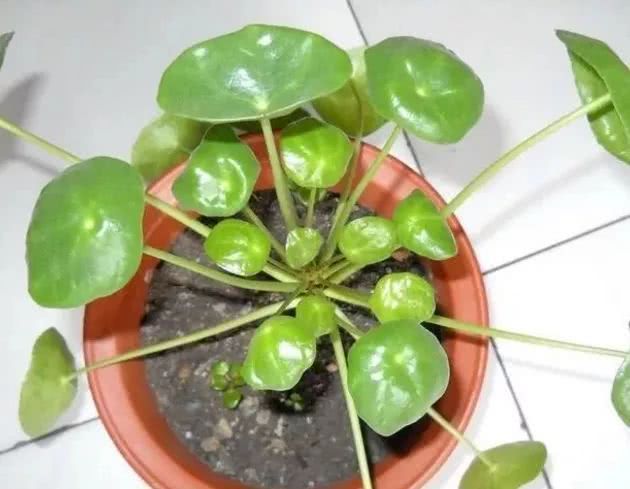
There is a plant that looks a lot like an ancient mirror, with a little golden-yellow dot in the middle of the leaf surface. At first glance it looks the same as pennywort, but on closer inspection it is somewhat different: it has leaf veins radiating from the center to the edges, and emerald-green leaves that also resemble a folding screen. Can everyone guess its name?
Some of you may have guessed it: it is the mirror plant (Pilea peperomioides)! Under sunlight its leaf surface reflects light and looks very bright, just like a mirror, so people call it "mirror plant," and because of the golden-yellow dot in the middle, it is also called "one dot of gold." So how can you care for this mirror plant well?
Although the mirror plant looks very similar to pennywort, their requirements for the growing environment are very different. Pennywort likes a warm environment, while the mirror plant is relatively cold-tolerant; as long as the temperature stays above zero degrees, it is fine, and it also prefers a cool and shady environment.
When caring for the mirror plant, be careful not to expose it to strong light, otherwise the leaves will curl and its ornamental value will be affected. Bright, indirect light and a temperature of around 15 degrees are enough. In summer, when temperatures are high, pay attention to shading it. For the potting soil, leaf mold, peat, a small amount of river sand and cake fertilizer are suitable, and humus soil from under trees can also be used. During the spring and autumn growing season, just keep the soil moist when watering, and you can spray water on the leaves to increase air humidity.
During normal care, spray it with some organic fertilizer liquid and replenish phosphorus and potassium fertilizer in time to ensure nutrients for sturdy branches and leaves, and the leaf color will become even more emerald green.
The mirror plant is a perennial herbaceous plant, the kind that if you grow it this year, it will continue to grow next year, and it is quite easy to keep alive. Propagation is also very simple. In spring, the plant grows some side shoots with roots. Keep four leaves, cut them off together with the roots, and then plant them in moist potting soil. In just over ten days, they will take root and sprout.