Bonsai: Small but Profitable, a Good Path for Green Investment
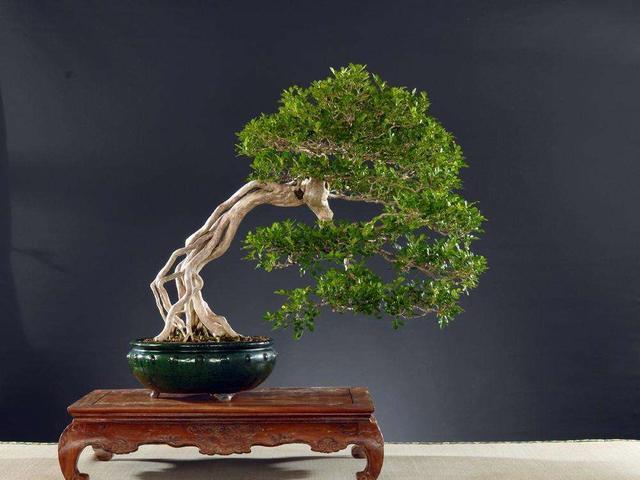
With the continuous development of the social economy, people have begun to focus on environmental protection, but investment is also a hot topic of concern. So here comes the question: what kind of project can both satisfy environmental protection and serve as an investment?
Let me answer your question: the answer is bonsai.
That's right, you read that correctly, it is bonsai.
Some people will ask, can these tiny bonsai be worth money? Do they have investment value?
The answer is yes!
Bonsai
Artistic Value
The artistic value of bonsai is reflected in its leaves, branches, trunk and roots. As for the leaves, one should choose those tree species with small leaves and dense branches, which can better express the artistic effect of seeing the large within the small. As for the branches, the handling of the branches best reflects the author's skill and artistic level. The branches of a successful, mature bonsai should be naturally distributed, with appropriate density, and in orderly contention and yielding. Evergreen species should have a full tree shape, while deciduous species should have the characteristics of dense small branches after leaf fall and a dignified tree appearance.
As for the trunk, the trunk should have variation, with a natural transition from bottom to top. The straight-trunk type should be firm and powerful, upright and rising, with a sense of majesty and grandeur. The curved-trunk type requires the trunk to bend with proper measure, trying to avoid symmetrical bends or right-angle bends. Only those trunks that are unexpected yet reasonable can display the artistic individuality of the bonsai. As for the roots, there is an old saying that "a trunk without roots is like a stuck-in branch," and the artistic value of the roots is very prominent. Generally, the roots of a bonsai should cling close to the pot surface, with the roots distributed in all directions centered on the trunk. The roots of exposed-root style works should be naturally distributed, using roots in place of the trunk, and their direction should follow the trunk.
Overall, the artistry of bonsai should show the effect of being grand and majestic from a distance, with orderly small branches up close, and leaves, branches, trunk and roots matching naturally. The creativity of bonsai art is crucial; only works that can give a small tree the bearing of a large or ancient tree are good bonsai.
Bonsai
Gradually Entering a Favorable Stage
The bonsai business has existed since ancient times. As early as the Neolithic Age from 10,000 BC to 4,000 BC, our ancestors had already planted plants in vessels for ornamental viewing. According to existing archaeological and documentary records, during the excavation of the Hemudu Neolithic site in Yuyao County, Zhejiang Province, a piece of pottery with a five-leaf pattern was found; on the pottery was carved a square pottery basin, and in the basin was planted a plant resembling a lucky bamboo. Mr. Gao Shengbao told reporters: "Our country's bonsai had already developed considerably as far back as the Northern Wei and Northern Qi periods, and at that time it had already begun to be exported to neighboring countries or ethnic groups such as the Turks."
In China, along with the development of bonsai, bonsai investment has had different temperatures in different historical periods. Taking modern times as an example, from World War II to the Cultural Revolution, bonsai was in a period of decline, and after the 1970s, the development of bonsai in China gradually recovered. In 1979, the State Administration of Urban Construction hosted in Beijing the first national "Bonsai Art Exhibition" since the founding of New China, displaying as many as 1,100 bonsai of various types. After that, the Flower and Bonsai Branch of the Chinese Society of Landscape Architecture has held a "China Bonsai Evaluation Exhibition" every few years.
Bonsai
Value Depression
Although the current situation of financial investment is not viewed favorably, its impact on the art market is not great. Bonsai is no exception, but it is also for this reason that the overall value of the current bonsai market is generally underestimated, making it a good time to invest.
Compared with traditional fields such as calligraphy, painting and porcelain, the bonsai market has always been in a relatively "blank" period. The lack of a broad foundation for appreciation and professional techniques for maintaining bonsai has intensified the risk of bonsai investment.
In addition, collectors should also choose bonsai according to the size of their space, avoiding the situation of "placing a large tree in a small room." Therefore, no matter what you invest in, it is best to understand the rules of the industry clearly, ask more questions, and communicate more. After all, the money for investment is hard-earned by us, and it is not a pie that just falls from the sky. Finally, I hope everyone can achieve success in their investments!