How much do you know about sourcing material for Japanese white pine bonsai?
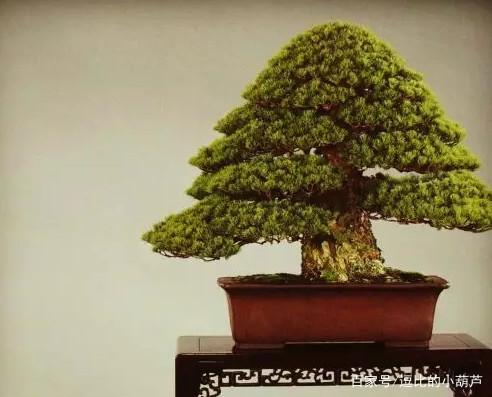
Hello everyone, I'm Little Gourd, and welcome to read my article. Japanese white pine bonsai is a fairly common ornamental tree species in daily life, with gnarled and vigorous branches, dense foliage and short needles, and lush green color in all four seasons. Because the sourced material differs, the styling also differs. Common styles include formal upright, informal upright, cascade, and semi-cascade. How much do you know about sourcing material for Japanese white pine bonsai? Today Little Gourd will talk with everyone about the aspects to note when sourcing material for Japanese white pine bonsai.
First, let's talk about sourcing material for Japanese white pine. The Japanese white pine introduced and cultivated in our country mostly does not grow well, so grafting is often used, with 2-3 year old black pine (Pinus thunbergii) seedlings as rootstock, selecting one-year-old branches from robust Japanese white pine mother trees for grafting, about 8-10 cm long, cutting off the lower half of the needles, and cleft grafting or side grafting onto the root crown of the rootstock. After grafting, place it in a shady spot and keep it moist. After the scion buds, cut off the branches and leaves at the top of the tree, and then wait for the scion to sprout and grow, gradually cutting away the rootstock above the scion in stages, thus becoming a Japanese white pine plant. During cultivation, pay attention to keeping the soil layer moist, the soil loose, and avoid exposure to strong sun.
The rootstock buds within 3-4 months. A bud grown about 3 cm on the five-needle pine is used as the grafting bud. Bud grafting is done onto the buds of black pine, using the needles of the root branches to provide shade and protect it. It can also connect buds to the main and side branches of the rootstock at a relatively early stage so that they can sprout and grow. Grafting can cultivate good five-needle pine and bonsai in a short period. The bud survival rate is high and growth is fast, but attention should be paid to timely tying.
Seeds can be sown and propagated when seeds are available. Because Japanese white pine seeds are thick, solid, and difficult to germinate, they need proper treatment. 40 days before sowing, first use warm water at about 50°C for 3-4 hours, take them out, mix with 2 parts wet sand, place in a wooden box or pot, and store in a shaded sand pile. Sow in March-April in fertile soil and loose seedbeds, with mud and soil being best, and they germinate in about one month.
Seedlings should be carefully managed and sprayed frequently to keep the soil moist and shaded, to prevent strong sunlight. In the spring of the second year, strong seedlings can be cultivated. Seedlings grow slowly, and two-year-old seedlings are only a few centimeters tall, with little value for bonsai production. At present, some landscaping units use the high-grafting method to promote stump propagation and have achieved good results. Different sourced material means different styling, and then different themes and artistic conceptions, so when sourcing material for Japanese white pine, pay attention to the above points.