How to grow succulents fast and big? Techniques for plump, beautiful leaves
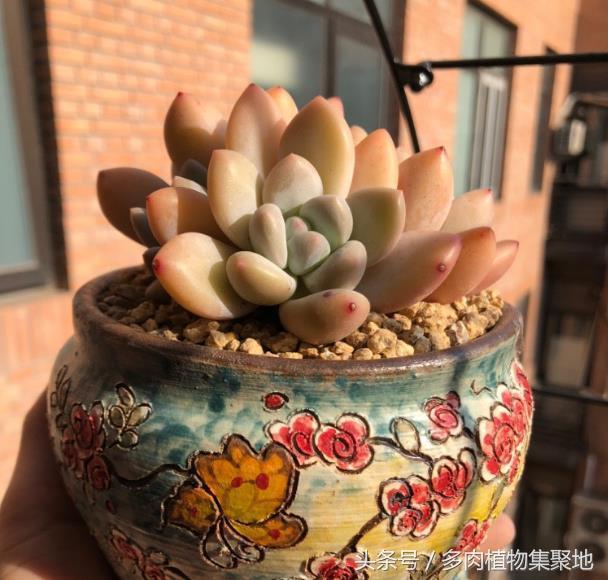
Let's start with temperature. Simply put, the best growing temperature for succulents is above 10 and below 30 degrees, roughly within this range, and this range also happens to be the spring and autumn seasons. Of course, in the north where there is heating, and further south in Hainan, winter is also a growing season. That is to say, if the temperature is below 10 degrees, or even below 5 degrees, they simply will not grow, and there is nothing you can do about it, otherwise it would be going against the laws of nature.
For newly potted succulents, you must also water during the root recovery period. Without watering, the roots will grow very slowly, or simply fail to develop at all. Only by watering can the roots fit more closely with the soil, allowing for better and faster root recovery. This is the so-called settling water. First pot them in moist soil to give the succulents an adjustment period, then water thoroughly after a week. At this point, be sure to pay attention to ventilation. Mold or root rot is caused by poor ventilation or too much peat in the soil making it too wet. After the soil dries out completely, water just the surface of the soil, only enough to moisten the surface. Water again once it dries, and repeat this process. After a month, watering thoroughly once more should be about right.
For a long time, I have always believed that when growing plants, whether succulents or other foliage plants, it is less about growing flowers and more about growing roots. Only when the part below the soil is healthy and thriving, able to absorb water and nutrients well, can the part above the soil be brought into good condition. And the key to growing roots lies in the soil.
What techniques are there for the soil used to care for succulents? A while ago, a fellow flower lover was also desperately searching for the secret formula for succulent soil, and in the end used coal cinders. A small restaurant throws out several jin every day, plus ordinary soil, which can be found right in the flower beds by the roadside, and used directly. The process of soaking the coal cinders in water was even skipped, just put them in a bag and crush them underfoot. The process of sifting out the extremely fine powder was also skipped, just mix it together (put nothing else in, sow directly, seedlings come up, and to this day they are still doing just fine).
For the all-purpose type, akadama soil must be mentioned first. Akadama soil has very high comprehensive indicators, holds roots very well, has strong water absorption, contains a small amount of nutrients, retains good air permeability for one to two years, and is weakly acidic. So, just use it directly. Akadama soil does not need to be mixed with other growing media. What you need to note is that within two years you must repot, otherwise air permeability will drop sharply as it breaks down into powder. If you are growing a large old succulent trunk that is inconvenient to repot, akadama soil is not quite suitable.
Kanuma soil is an all-function product just like akadama soil, but it has lower hardness and breaks down into powder quickly, so it can be disregarded for planting, though it is still fine for top dressing. Roughly in the same category are also various things that appeared during the era when orchids were wildly speculated on, such as Hyuga soil, kiryu sand and so on. The price and shape of these things are similar to akadama soil, some have no nutrients at all, and they can basically be ignored.
This is a gathering place for succulent lovers, sharing succulent care techniques. Welcome to follow and exchange ideas.