How to grow Chinese peonies? Learn to tell good from bad; the whole Chinese peony plant is a treasure
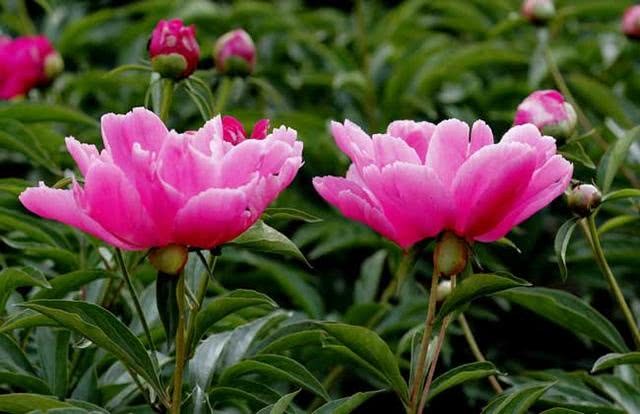
The Chinese peony (Paeonia lactiflora) is the king of flowers, with extremely high ornamental and medicinal value, and its appearance closely resembles that of the tree peony (mudan), so many friends mistake one for the other. Chinese peonies are usually divided into two kinds, ornamental and medicinal. Ornamental ones have more flower colours, including single-petal types, double-petal "louzi" types and so on; medicinal ones have rather uniform flower colours and are grown mainly for their roots, which are used as medicinal material.
1. The soil used for Chinese peonies
Chinese peonies like loose, fertile sandy soil, and you must also pay attention to the soil's pH. For most plants, alkaline soil causes yellowing leaves, and the same goes for growing Chinese peonies: we need acidic soil. If acidic soil is scarce, we can put some orange peel or pomelo peel into the soil to adjust its pH.
2. Water properly
Although all plants like water, Chinese peonies' moisture needs must be kept under control. Normally the moisture in the air and rainwater are enough for their growth; only when the weather is extremely dry may you top up the water a little, but the amount should not be too much. Be very careful with watering: water too much and the Chinese peony's roots rot, and it is done for.
3. Pruning Chinese peonies
Growing Chinese peonies at home is mostly for enjoying the flowers, and we need to prune in time to achieve a good look. Dry, withered branches and leaves should be pruned appropriately; this keeps the plant's nutrients stored in the thick, strong stems instead of being lost, which benefits its growth and makes later flowering go more smoothly.
4. Watch out for pests and diseases
Pests and diseases on plants are always a headache, but we can prevent them in advance, for example by boiling red chillies in water to water the flowers. Because of the smell of the chillies, this special flower-watering liquid has a particular ability to repel pests. If we find that pests or diseases have already appeared, we can use a fungicide to kill them, and we must also promptly clean up the places the insects have bitten, to prevent them from affecting other plants. Only in this way can we give Chinese peonies a healthy living environment.
Besides caring for Chinese peonies, we should also distinguish good from poor ones. Generally, the best ones have relatively thick, sturdy stems, with outer skin that comes off easily and are not hollow; if they are slightly hollow, they are a grade lower.