7 air-purifying plants: place a few pots to clear out waste gases
As living standards improve, many families put a few potted plants in their homes. They not only purify the air and benefit health, but also add beauty to the room. When a new house is built and the walls are painted, in order to remove the odor as quickly as possible, people often choose to place some plants to absorb formaldehyde and purify the air. Below are some common plants that can purify the air, for your reference:
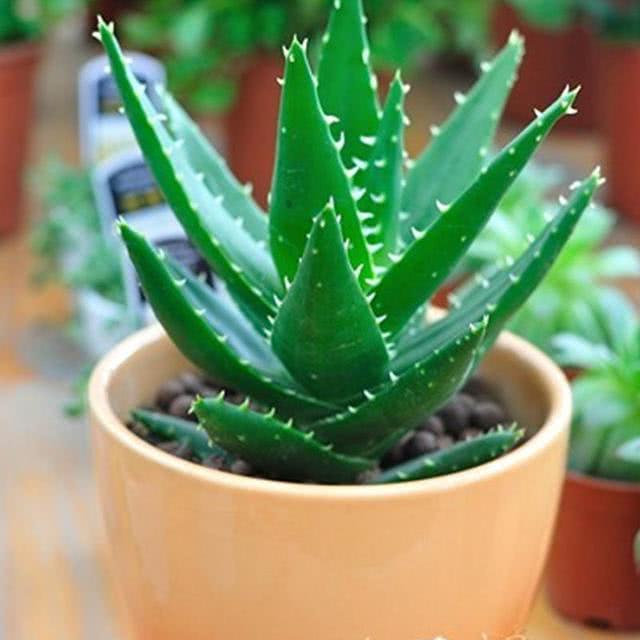
1. Aloe (Aloe vera)
Aloe is certainly familiar to everyone, often used in beauty care and medicine. But it is also a very good air-purifying plant. Growing a few pots in sunlight or placing them in a new house has very good effects, especially for absorbing formaldehyde; on average, it can absorb 85%-90% of the formaldehyde in 1 sq m.
2. Cactus
Cactus is also known as Guanyin palm, bawang, and other names. It has strong vitality and is fairly heat-tolerant. Placing a potted cactus beside a computer or TV has a good anti-radiation effect and helps protect the eyes. The cactus also has strong adsorption capacity, and its air-purifying effect is very good as well. When placed in the bedroom, it releases carbon dioxide at night, which has certain benefits for our bodies.
3. Ivy (Hedera helix)
Ivy is also a plant commonly seen. It is mainly used for ornamental purposes and planted in front of buildings for greening purposes. As an easy-to-grow plant, it can be used indoors as decoration or to absorb toxic substances in the air. Especially in a newly renovated house, it has a noticeable absorption effect on harmful substances such as benzene and formaldehyde.
4. Chinese rose (Rosa chinensis)
The Chinese rose is also called the queen of flowers. It can be used as an ornamental plant or for medicinal purposes. It blooms in all four seasons, its flowers are brightly colored, and the blooms have a rich fragrance. Chinese rose cultivation is relatively simple. A potted Chinese rose placed on the balcony can improve air quality and absorb harmful gases such as sulfides and benzene, and placed on a desk it also has a pleasing effect.
5. Pothos (Epipremnum aureum)
Pothos can be grown not only in pots but also hydroponically. Because it can survive upon contact with water, it is often called the "flower of life." Since it is a shade-loving plant, it can be grown in a study or indoors for viewing and air purification. In addition, it absorbs formaldehyde especially well, and is also known as a little formaldehyde-absorbing expert.
6. Snake plant (Sansevieria trifasciata)
The snake plant, like pothos, is also a plant that strongly absorbs formaldehyde. Unlike the cactus, it can release oxygen during the day. As a plant with strong adaptability to the environment, if placed indoors, on average it can absorb 80%-85% of harmful gases within 1 sq m, and only two to three pots are needed to purify the air of an entire room.
7. Aglaonema (Aglaonema commutatum)
The aglaonema has bright leaf color and is extremely shade-tolerant. Grown in pots, it can beautify indoor and outdoor environments and has a quite good air-purifying effect. Even in places with poor ventilation, its effect is very noticeable, making it suitable for placement in dark places.