How to care for potted carnations? Master these care essentials
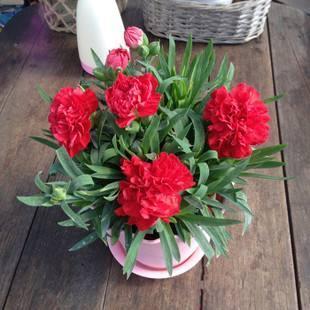
Image source: Internet
Carnations (Dianthus caryophyllus) are plants of the genus Dianthus in the family Caryophyllaceae; people in Shanghai mostly call them xiangshizhu (fragrant Dianthus). They originated in the Mediterranean region and are one of the most widely used flowers in the world today. Carnations include many varieties and hybrids and can bloom almost continuously in a greenhouse. Their flowers are large and brightly colored, in red, pink, yellow, white, bicolor and other colors, and are very popular.
Carnations prefer a cool, dry, sunny and well-ventilated ecological environment. They have good cold tolerance but poor heat tolerance. The optimum growth temperature is 14-21°C; when the temperature exceeds 27°C or falls below 14°C, the plants grow slowly. They like fertilizer and are best planted in calcareous soil rich in humus and with good drainage.
Potted carnations are sun-loving flowers and still need a certain amount of sunlight, but because it is now midsummer and the midday sun is too intense, it is recommended to avoid direct sunlight from 10 a.m. to 3 p.m. If moving them in and out is too troublesome, you can install a shade net above the balcony, with about 50% shading. In addition, carnations are fibrous-rooted plants with relatively fragile roots, and improper watering can easily make them sick and die. In summer, water before 8 a.m. and after 6 p.m. Generally, depending on the condition of the potting soil, watering once a day is enough; do not water too much, because if the potting soil is always moist, it will cause root rot.