What to do when your asparagus fern (Asparagus setaceus) isn't thriving? Use this to say goodbye to yellow-leaf worries
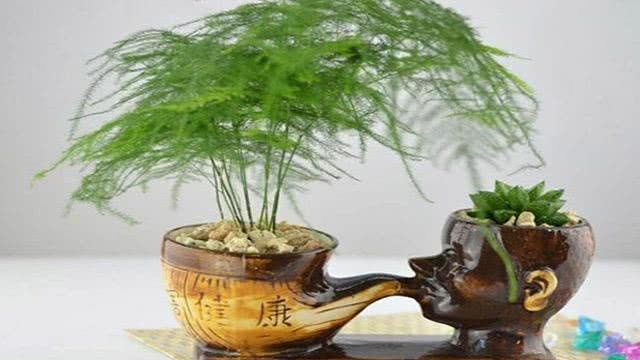
We'd best use liquid fertilizers such as cake fertilizer and sesame paste residue, and there's also slow-release fertilizer; besides these, inorganic compound fertilizer is also feasible. Cake fertilizer once every ten days is fine. Sesame paste residue can be used in smaller amounts each time, but more often. Slow-release fertilizer works best, basically only needing to be used once or twice a year. Inorganic compound fertilizer is fairly ordinary, so don't use too much at one time.
1. Cake fertilizer
Cake fertilizer is the residue left after oil is pressed from oilseed seeds. It can be used directly as fertilizer, and there are many kinds, depending mainly on which seeds were pressed for oil. This kind of fertilizer is quite important for plants, so it is very suitable for us to apply in daily care, enabling them to grow very well. This fertilizer is generally applied once every ten days, and not too much should be applied each time.
2. Liquid fertilizer
This fertilizer is liquid: organic or chemical fertilizer is mixed with water, then applied directly to the leaves or roots of the asparagus fern, so it is absorbed relatively quickly. The ratio of this fertilizer is 1:15, and the soil should be slightly dry before application, so absorption will be faster.
3. Slow-release fertilizer
Because this plant is rather suited to indoor ornamental use, it looks fairly small and delicate, so clean and hygienic fertilizer should be used rather than heavy fertilizer. Slow-release fertilizers on the market contain a certain amount of nitrogen, phosphorus and potassium, and some of the nutrients are wrapped in a coating and released slowly; each application can be effective for as long as four to twelve months. Its fertilizer is also relatively mild, clean and hygienic. Most importantly, its nutrient release is related only to temperature, so it is very suitable for everyone to use on asparagus fern, and after one application there is hardly any need for further management.
4. Inorganic compound fertilizer
Ordinary compound fertilizer based mainly on nitrogen and potassium is also fine, but don't use too much at one time, otherwise it may burn the roots.