10-Year Succulent Grower Shares 90 Pieces of Advice for Beginners: How Many Are You Doing Right?
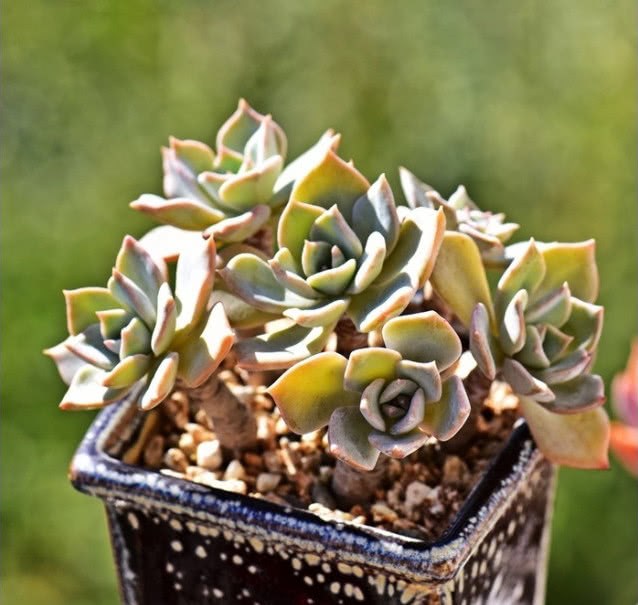
Below is advice from a friend who has been growing succulents for 10 years, covering varieties, pots, soil mixing, care, propagation and more for beginners. Little Exquisite Life has organized it to share with everyone, hoping it will be helpful:
Preface
1. Succulent care, from getting started to becoming familiar and then mastering it, is a relatively long process, so it is not recommended to start with many varieties at high prices and a high starting point.
2. Learning and exchanging ideas online is essential. There are now many professional forums about succulents, such as Xianzhen Huan and Duorou Dabenying, with many flower enthusiasts where you can learn most of the useful knowledge.
3. When out for a walk or on your way to work, do not keep looking down at your phone. Look around more; perhaps in some corner you will unexpectedly encounter a pleasant surprise.
4. Be more active in local flower enthusiast groups in your city, both online and offline discussions and gatherings. Around you there will be many experts worth learning from.
5. Plants are also life, so please treat them well. As for those friends with fleeting enthusiasm who buy a bunch of rare varieties on a whim, keep them for a few days and then neglect them, let us not waste succulents.
Variety Selection
6. Entry-level succulents like Aeonium decorum, Graptoveria 'Titubans' and Aeonium, are economical and easy to handle. For beginners, why not try them first.
7. Friends who want to experience the beauty of a full pot can try succulents like Sedum pachyphyllum, Sedum hispanicum and Sedum lineare. They can fill a pot in a relatively short time.
8. Succulents like Ceropegia woodii, Senecio Jacobsenii and Senecio rowleyanus have a strong sense of layering and three-dimensional space, very suitable for arranging a balcony.
9. More robust succulents like Aeonium and Sempervivum can withstand severe cold and heat outdoors, suitable for friends who sit back and wait for beautiful surprises.
10. Crassulaceae succulents change greatly throughout the four seasons, provided your growing skills are good enough.
Sources
11. When shopping online, keep your eyes open, compare prices at three stores, and act decisively when you find something suitable. Also, the risk and the probability of pleasant surprises in online succulent shopping are equal.
12. Communicate often with fellow flower enthusiasts, exchange varieties you each do not have. It saves money and strengthens friendships.
13. If you see a variety you do not have in a neighbor's front or back yard, you can generously ask for a piece. Believe that most people will not refuse.
14. Do you visit flower markets? Although most prices are a bit higher, there are still many things that attract us.
15. If local group members organize a visit to a greenhouse, then go along when you have time to see the world. Do not bring too little money though.
16. Build relationships and get closer to the local experts in your city, and "mooch some succulents" when you have the chance.
Seasons and Climate
17. When getting into the hobby, pay attention to "meeting the right succulent in the right season." Spring and autumn are excellent. As for summer, wait a while.
18. If you feel the four seasons are too general, it is recommended to pay attention to the 24 solar terms. The 24 solar terms are further divided into 72 hou, and the changes within are much more wonderful.
19. Always pay attention to the weather forecast. Even if it is sometimes inaccurate, it is always scientific. Sunny days are good weather; rainy days, are they not?
20. For extreme weather such as typhoons and hail, be sure to prepare accordingly in advance.
About Flower Pots
21. An expert once said, "Beginners use red clay, veterans use black square pots, and fanatics build greenhouses."
22. As long as the method is right, there is no pot that cannot grow plump succulents.
23. There is really no need to buy many all kinds of high-end pots right from the start.
24. As mentioned in a previous article, drainage holes are an important standard for measuring a flower pot; the material actually does not matter.
25. As for purple clay pots costing tens or hundreds, this poor person still does not recommend them.
26. Prepare a few hanging pots if you want to see succulents like Senecio rowleyanus fill a pot.
27. Coarse ceramic, tile pots and orchid pots are cheap and very good, but now tile pots are actually hard to find.
28. As long as you can think of it, everything around you can be a flower pot.
29. Search "strawberry pot" on Taobao. But you need to lay half the bottom with crushed stone, otherwise it will use a lot of soil.
30. Egg cartons are very useful for raising seedlings.
31. If you see pots that others have left unused, you can try asking for them. You can also occasionally see exquisite pots in the trash. I just picked one up yesterday.
About Soil Mixing
32. Making soil from local materials in your surrounding environment is the most economical choice.
33. Buying ready-made soil is indeed simple, but it is better to save the money for soil and buy a few more succulents.
34. The simplest local soil mix is 50% peat soil + 50% coarse sand.
35. If you further break down the peat soil into 3 parts peat soil + 1 part coal cinder + 1 part sawdust, it will be even better.
36. For coal cinder, "crush it - soak it - sieve it - use it" and it is ready.
37. As for those so-called special perfect soils made from a dazzling mix of many things, better not believe them.
38. Regarding granular material at the bottom of the pot, although expanded clay pellets come in many specifications and are quite good, they are still much more expensive than the crushed stone seen everywhere at construction sites outside.
39. After laying the bottom layer, spread a layer of mesh on top, which can very effectively prevent soil and water loss.
40. Top dressing is indeed very beautiful. It is still recommended to first use local materials, and only then various purchased options.
41. As for using "tea leaves, distillers' grains, coffee beans, okara" for top dressing, better not joke around.
About Potting:
42: After online-purchased succulents arrive, be sure to trim the roots. First clean off the soil on the original roots, then check for pests. If there are pests, soak them in Huahuashen. Finally trim off the overly long and dried roots, trimming to about two or three cm is enough.
43. After root trimming, place them in a cool place to rest for a period. If you really cannot wait 24 hours, then wait one or two hours.
44. When potting, whether to use "dry soil" or "wet soil" actually does not matter, since after potting you need to water thoroughly anyway.
45. Please Baidu "root-setting water." I still relatively believe in it.
46. After potting, leave it in a ventilated place with scattered light for a few days, wait for the acclimation period to finish, and then take it out to sun.
47. The sign of acclimation is that after potting, the lower leaves of the succulent will gradually wither. Once the leaves spread out again, the acclimation period is basically over.
48: Acclimation is actually the process of the succulent adapting to a new environment and growing new roots.
49: Moving pots is the same as potting; spring and autumn are excellent. As for winter and summer, better wait.
50: If the succulent is crooked after potting, bury it deeper again.
About Care:
51. There are more than a thousand varieties of succulents, but there are absolutely not a thousand ways to care for succulents.
52. Light, water control, breathability and ventilation are always the most basic elements of succulent care.
53. The same succulent, in different regions, different climates and different environments, will also have different conditions.
54. Appearance must be pursued; as for varieties, no need to obsess too much.
55. Never be impatient. Pulling seedlings to help them grow will always only harm the succulent. Calm down, and the succulent will definitely give you surprises.
56. Summer legginess is hard to avoid. Do not worry; by autumn, after pulling off the leaves, it will become an old stem, and it will also sprout side shoots.
About Light
57. Light is always the first element for succulents to show their colors.
58. Unobstructed full sun in autumn and winter is excellent for succulents. They will quickly show their colors, and the colors will continue until spring.
59. In summer, you need shade netting to block light and avoid scorching sun.
60. As for a north-facing balcony, leaf cuttings can be placed there temporarily. For the rest, you can grow some flowers and plants other than succulents.
About Watering
61. Watering principle: do not water if not dry; when watering, water thoroughly.
62. No matter the season, follow the above watering principle.
63. During the dog days of summer, it is necessary to cut off water. In summer, water in the morning or evening; watering at noon is absolutely not allowed.
64. Rainwater is natural acidic water, absolutely a great tonic for succulents. When it rains, set out a few buckets to catch some rainwater; it will not take up much space.
65. As for self-mixed acidic water with acetic acid or hydrochloric acid, forget it. I might as well use tap water for convenience.
66: Speaking of tap water, usually prepare a few buckets and leave them in the sun; just use them when watering.
About Ventilation
67. Ventilation is one of the conditions that must be met for succulent care.
68: Outdoor flower racks are the optimal ventilation level; an open-window balcony is excellent level; high-rise windows cannot be fully opened; bay window ventilation level is good.
69. On stuffy, hot, cloudy and damp days, give the succulents an electric fan early.
About Fertilizing
69. Autumn is the best time to fertilize, to prepare for winter.
70. A few granules of slow-release fertilizer produced by a legitimate manufacturer is enough.
71. When mixing soil, you can conveniently add some things like bone meal and monopotassium phosphate. Huahuashen and carbendazim can also be "conveniently" mixed in.
About Leaf Cuttings
72. After winter, start freely pulling leaves in spring.
73. It is not that leaf cuttings cannot be done in summer and winter, but they are not recommended.
74. When picking leaves, twist left and right and they will come off.
75. Be sure to choose healthy, plump leaves with a growth point.
76. For leaf cuttings, lay them flat? Insert them diagonally into the soil? Or insert them straight into the soil? It seems all are fine, and there is also a method of digging furrows.
77. Soil mix for leaf cuttings? I still use local materials, with one extra part peat and one less part coarse sand.
78. Some leaves first grow roots and then sprouts, while some first grow sprouts and then roots. This is just the individual character of different plants.
79. Sometimes you encounter one that after a long time has only grown roots and otherwise has no movement. Some have a growth point that only produces a lump and then no response. Then, for the former, cut the roots; for the latter, cut the lump and continue trying.
80. After leaf-cutting seedlings enter an active growth period, the mother leaf slowly withers. At this time, the seedlings can become independent.
81. If the mother leaf is still plump, you can separate the seedlings and do a second round of leaf cuttings.
About Beheading
82. After spring passes the late cold snap, and after autumn passes the afterheat of summer, both are good times for beheading, and it easily creates the surprise of multiple heads.
83. When beheading, the cutting position must be reasonable. After choosing the position, pull off a ring of leaves to make it convenient to cut.
84. After beheading, the mother body and the cut-off seedling must be placed in a cool, ventilated environment until the wounds dry and heal. Then the mother plant can continue normal care, and the new seedling can be potted.
About Rooting
85. The soil mix is the same as for leaf cuttings.
86. Try air rooting; you can also observe the entire rooting process.
87. The rooting environment should be ventilated with scattered light. Commonly called "seeing the sky but not the sun." You can imagine an environment similar to dappled tree shadows.
Summary
88. I have not yet studied sowing.
89. Take photos at any time to record the growth process of succulents. Sometimes, you will be moved to tears.
90. The last piece of advice: NO ZUO NO DIE.
Organized and published by Little Exquisite Life