Are Succulents Poisonous? Learn About the Benefits of Growing Succulents
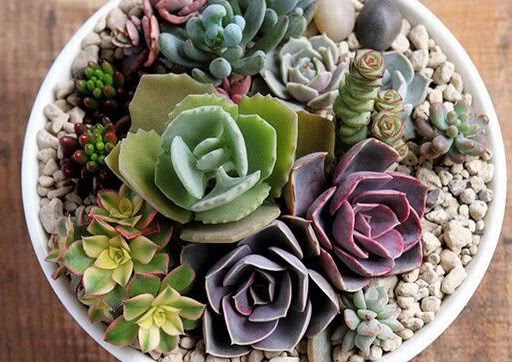
Are Succulents Poisonous? The Many Benefits of Succulents
Succulents are a type of plant that is extremely popular right now. Many people believe that succulents can both purify the air and protect against computer radiation, but what they don't know is that succulents do not actually protect against radiation, and some succulents are even poisonous. Let's find out more.
What Are Succulents?
Succulents are higher plants with enlarged vegetative organs, usually possessing three vegetative organs - roots, stems and leaves - and three reproductive organs - flowers, fruits and seeds. In horticulture they are also called succulent plants or succulent flowers, but the name "succulents" is the most commonly used. There are more than 10,000 species of succulents worldwide, all of which are higher plants (the vast majority are angiosperms). In plant taxonomy they belong to several dozen families. A few experts believe that 67 families contain succulents, but most experts believe that only just over 50 families contain succulents.
Are Succulents Poisonous?
Some succulents do indeed contain toxins.
Succulents have plump, juicy, fleshy leaves. In horticulture they are also called succulent plants or succulent flowers, and in recent years they have been highly favoured in the plant world both at home and abroad.
Unfortunately, the delicate and cute "little fleshy plants" are not all safe; some varieties contain toxins, and there are certain risks if they are not grown properly. For example, among succulents, most of the Chi Feng Jin genus (Tylecodon) and the Euphorbiaceae family are poisonous. Among them, succulents of the Tylecodon genus mostly contain prickles, which can easily harm the human body. After contact with the sap, the skin will develop symptoms such as redness, swelling, itching and allergies. Once ingested, it can cause significant harm to the heart, and consumption by livestock can lead to death.
The more common poisonous varieties on the market include dragon bones (Euphorbia lactea), crown of thorns (Euphorbia milii), Qilin palm (Euphorbia neriifolia), and jade plant (Crassula ovata). When buying, don't blindly covet their beauty; try to choose non-toxic varieties.
Common Poisonous Succulents
Qilin Palm (Euphorbia neriifolia)
The white sap in the stems and leaves can cause allergic symptoms such as redness, swelling and itching of the skin.
Jade Plant (Crassula ovata)
Both the branches and leaves contain large amounts of euphol. When the human body comes into contact with the sap flowing from the branches and leaves, it causes skin redness, swelling, pain and blistering. If it accidentally splashes into the eyes, it can cause blindness.
Crown of Thorns (Euphorbia milii)
Crown of thorns blooms with red flowers on top, which is very beautiful. But if you are pricked by its thorns, because its sap contains toxins, it will cause redness and swelling at the pierced area.
What Are the Benefits of Growing Succulents?
The Most Suitable Plants for Lazy People to Grow
Because succulents grow in arid regions, they themselves have little demand for water. Generally, for indoor cultivation, watering once every 7-10 days is enough. Summer is the dormant period, so you can water once every half a month. For varieties like lithops, summer is the dormant period, so you can water once a month. So whether you are often away from home or just a lazy person, succulents don't need your meticulous care and can still grow healthily.
Radiation Protection
Some succulents do have a radiation-protection effect. For most of us office workers this is a good thing; we can grow some succulents and place them on the computer desk to protect against radiation.
Satisfying Aesthetic Needs
Succulents come in many diverse forms with great variety, and can satisfy all kinds of aesthetic needs. Of course, compared with relatively tall herbaceous and woody plants, they are quite a bit shorter and smaller, which depends on personal preference.
Miniature, Compact and Versatile Home Decor
Succulents are, just like their name suggests, plump and chubby, and they are all small in size. Apart from caudex varieties and a few individual varieties, most are within 5-20 cm in diameter. Lithops are perennial, and even at their largest they will not exceed 10 cm. Get a small, delicate pot and place it on the computer desk, on the coffee table, on the TV cabinet, on the bookshelf... put it wherever you like. Anyway, it doesn't take up space, and it's beautiful.
Purifying the Air and Releasing Oxygen
Succulents have the opposite respiration from other plants. Ordinary plants carry out photosynthesis during the day and release oxygen, and at night release carbon dioxide. Succulents, however, close their stomata for respiration during the day and absorb carbon dioxide and release oxygen at night. Because they grow in arid and hot regions, they close their stomata during the day to avoid water loss, and open their stomata at night to absorb CO2, which then forms malic acid stored in the large vacuoles, and during the day the CO2 is released for photosynthesis. This unique metabolic method is called "Crassulacean acid metabolism".
Less Watering, Not Easy to Dirty the House or Breed Mosquitoes
Ordinary plants often need watering, especially in summer. Watering a lot easily breeds mosquitoes. But because succulents themselves do not have such a great demand for water, breeding mosquitoes in summer is naturally impossible.
The Top Choice for Gifts
Friends who are still worrying about what to give for various festivals might want to consider a succulent bonsai. It is suitable for all kinds of people to grow, whether office workers or retired elderly people, or children, or a loved one - succulents are undoubtedly the top choice. Beautiful and tasteful, giving one to your boss is also a first-rate choice.
Things to Note When Growing Succulents
They love to grow in arid or semi-arid or desert regions. Even if there are many times each year when water is scarce, they can sustain life by relying on the water stored within their bodies. Overall, succulents are relatively easy to grow. When growing them in summer, the things to note are:
Be Careful to Avoid Water
Succulents cannot tolerate waterlogging. If in summer you water frequently, it will cause the roots to remain wet and rot for a long time, making it difficult for them to continue growing.
Pay Attention to Ventilation
In a stuffy, hot and humid environment, the air does not circulate, which is not conducive to the evaporation of water, and it is difficult to lower the temperature, and it also easily leads to root rot.
Pay Attention to Light
When growing succulents in summer, you should give them plenty of sunlight, otherwise the plants will easily become leggy.