Succulent Care Tips: More Than Just Haworthia cooperi Are Crystal-Clear and Translucent
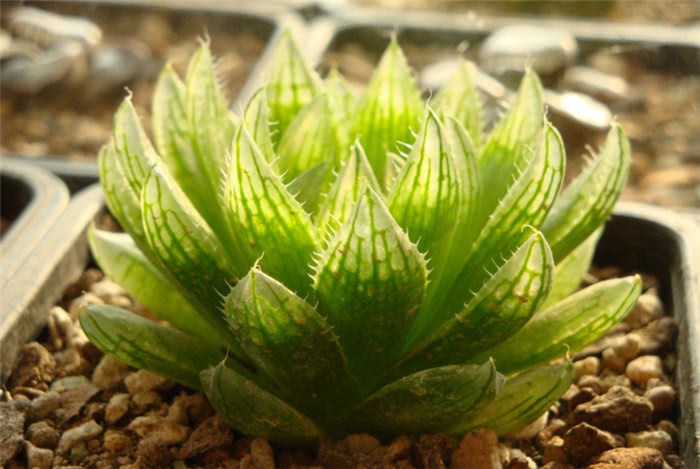
For those who love succulents, their appeal is not limited to being adorably cute, small and delicate, and highly decorative. Some varieties can also be as crystal-clear and translucent as crystal, bringing a refreshing and pleasant sense of comfort. Aihua Xiaobian shares a few succulents that will make your eyes light up!
Xiaobian's grandfather is an old gardener. In the past, in his rural hometown, he had a courtyard full of color, and the flowers he carefully tended were simply breathtaking. Later, after moving to the city, Grandpa also cultivated quite a few succulent varieties, and he was especially fond of "crystal" succulents!
1. Haworthia cymbiformis var. obtusa (Sakura Crystal)
The succulent Haworthia cymbiformis var. obtusa (Sakura Crystal) is native to South Africa. It is very easy to care for, and its crystal-clear leaves look as if they were formed from jade, unique and beautiful. In terms of cultivation and management, it likes a warm, dry environment, tolerates partial shade, but does not tolerate drought or waterlogging. Spring and autumn are its periods of vigorous growth, so keep water and fertilizer sufficient. Water thoroughly, and do not water when the soil is not dry. Fertilize once a month, with a light fertilizer, which helps the leaves maintain a good shape. In addition, keep the potting soil moist. Generally, loose and fertile soil can satisfy its root growth. When the air is dry, you might as well spray more water on the leaves to raise the humidity.
2. Haworthia cooperi var. picturata (White-Striped Haworthia)
Haworthia cooperi var. picturata (White-Striped Haworthia) looks clear, transparent, and moist, full of girlish charm, and is also one of the common varieties among succulents. It likes loose, breathable soil with good drainage; sandy soil is very suitable. During normal care, the light should not be too strong, otherwise it will scorch the leaves. Keeping it in warm, sufficient sunlight or a partially shaded environment helps the leaves become plump and exquisitely translucent. White-Striped Haworthia is relatively cold-tolerant, but in winter you still need to pay attention to controlling water. During the growing period, you can increase the frequency of watering, while also avoiding excessive water accumulation that rots the leaves and roots.
3. Haworthia cooperi (Hime Yulu)
If you like moist, succulent varieties, Haworthia cooperi (Hime Yulu) is sure to be one of the most popular. Its densely packed leaf lobes look just like little crystal grapes, cute and tempting. Hime Yulu likes a cool, partially shaded environment, is drought-tolerant but not cold-tolerant, and should avoid stuffiness and humidity. Growing in partial shade can make the leaves more transparent. In terms of water and fertilizer management, fertilize once a month, choosing well-rotted, dilute liquid fertilizer, and choose spring and autumn for this. In summer and winter it is in a semi-dormant period, so no extra management is needed.
4. Bulb
The succulent Bulb has a unique name that leaves a deep impression. Its sparkling appearance closely resembles a light bulb, which is how it got its name. It mostly blooms in clear weather, with flowers in a pale purplish-red color and a slightly white center. It is suitable for growing in small pots. Especially in environments with a greater temperature difference between day and night, the Bulb's growth form becomes even more beautiful and pleasing to look at. As for the soil, besides being fertile and well-draining, it also needs a certain degree of granularity. A mix of leaf mold, coarse sand, and limestone is all you need.
How much more do you know about the four succulents above? Feel free to leave us a message in the comment section below!