Succulents prone to black rot and root rot during consecutive rainy days: 2 easy prevention tips
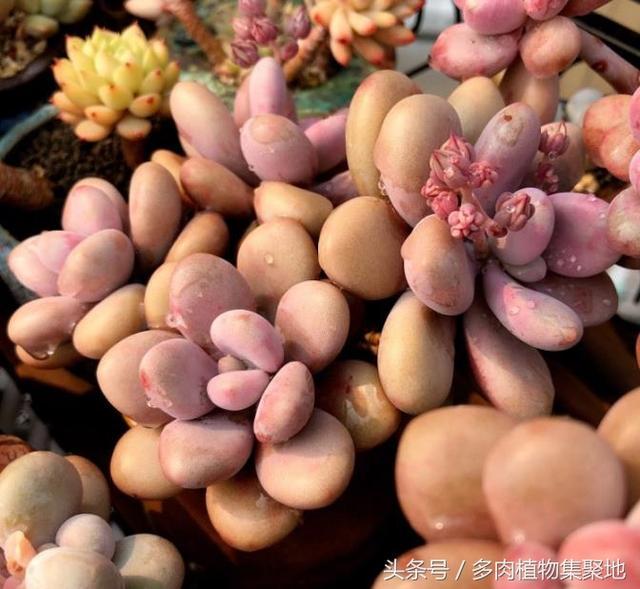
The aftereffects of succulents getting too much rain are usually leaves starting to turn to mush, and black spots may even appear before they turn to mush. Once black spots appear, it is depressing, as it is usually black spot disease. Succulents with tightly packed leaves are the most vulnerable, such as Aloe nobilis, Sedum adolphi, Sedum morganianum, and Echeveria 'Ruffled Red' - these fall into this category. Rainwater remains trapped in the leaf axils and cannot drain away, slowly breeding bacteria, and it can also spread between plants of the same variety, so special attention must be paid to the issue of rain exposure.
During consecutive overcast days, succulents are prone to problems. Especially now that temperatures have risen, the stuffy, hot, and humid conditions are most likely to cause black rot in succulents. So if you want your succulents to still grow well during consecutive rainy weather, without becoming leggy or developing black rot, we need to pay attention to these points. Succulents grown outdoors are still out in the rain on rainy days. The best strategy is to keep them outside. Outdoor growing provides good ventilation, and overcast and rainy weather still has ultraviolet rays, which to some extent inhibits succulents from becoming leggy. If conditions permit, it is best to shelter succulents from the rain, either by manually setting up a net or moving them under the eaves where there is ventilation.
If the soil of the succulents is already soaked through, forget about watering. But ventilation must be strengthened. Do not move rain-exposed succulents back indoors to use a fan for ventilation, as this makes leggy growth more likely. For succulents with good root systems, ones that have been growing for more than half a year, the watering interval can be longer - you can water once a month, or simply observe the succulents' condition and water when they are short of water.
Never move them into a sealed room after rain. Succulents need ventilation. You can find a windowsill or a spot under the eaves to place them. Indoor succulents also need attention to ventilation. On rainy days humidity is high, so be careful not to water too frequently. Finally, note that once the weather suddenly clears, do not rush to move the succulents outside to sun them. After a long period of overcast days, succulents are very fragile. Be careful not to let the suddenly harsh sun scorch them and cause unnecessary damage.
Rainwater is different from the water we usually use. What we usually use is mostly tap water, which is hard water, and to remove chlorine it has been exposed to the sun, leaving the dissolved oxygen content in the water extremely low. Overwatering prevents the roots from breathing, and at the same time anaerobic bacteria in the soil multiply, leading to root rot. Rainwater, however, has a different composition from tap water and will not cause root rot. Secondly, rainwater is rich in oxygen, which not only inhibits the growth and reproduction of anaerobic bacteria in the succulents' potting soil, but also meets the oxygen needs of root respiration. This is completely different from root rot caused by overwatering.
When we are preparing to water our succulents, we find that during this period the sunlight intensity is relatively low and the humidity may be relatively high. Under such conditions, the watering interval must be stretched a bit longer, because things dry more slowly, and the amount of water must certainly be reduced a bit, because air humidity serves as a supplement.
This is a gathering place for succulent enthusiasts, sharing succulent care tips. Welcome to follow and exchange ideas.