Orchids survived four man-made disasters in history, and the fourth one is still fresh in people's memory.
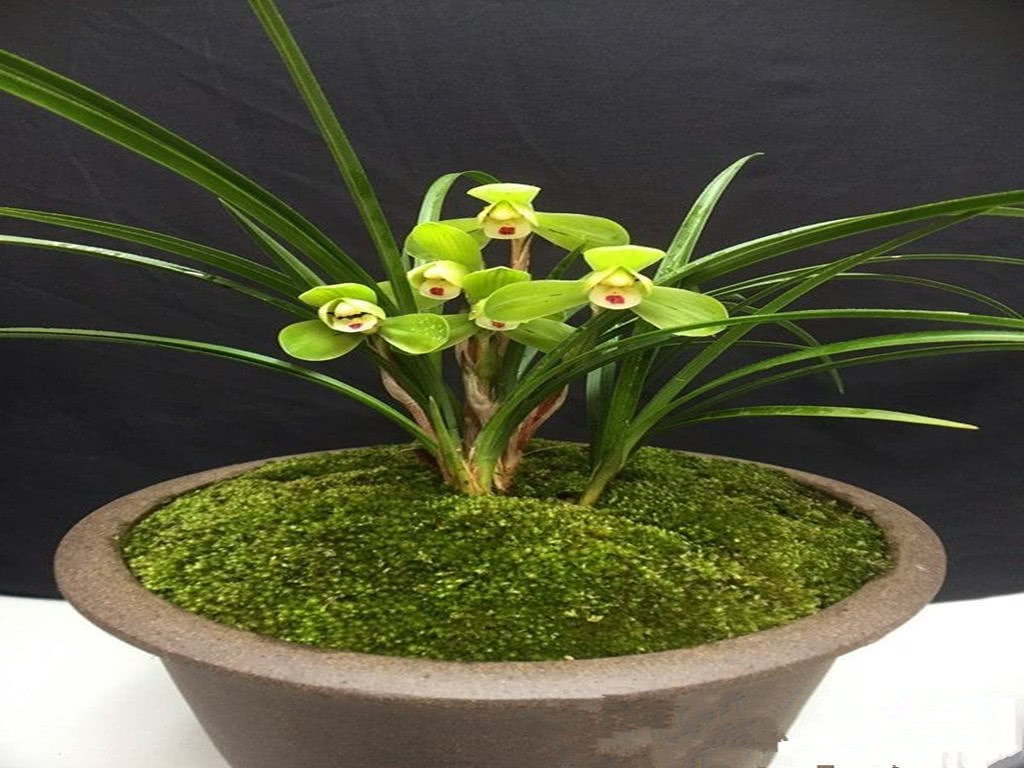
The survival of orchids through four "man-made disasters" in history, especially the fourth one, is still fresh in people's memory.
Orchids are one of the flowers that we Chinese people take pride in. Because of their purity and elegance, they are deeply loved by our people. At the same time, orchids have also caused no small amount of turmoil.
The first was the "Taiping Rebellion" ("the Gengshen Chaos") that broke out in 1851: in 1860, Qing troops suppressed the Taiping army in southern Jiangsu and Zhejiang, causing famous orchid and cymbidium varieties to be "fewer than one in ten preserved," and large numbers of precious orchids were destroyed in the fighting. In addition, during this period many precious ancient orchid manuals were lost when they were burned.
The second was the Japanese invasion of Jiangnan from the late 1930s to the early 1940s: during this period, Japanese orchid enthusiast Eijiro Obara and others came to China many times and took away hundreds of varieties of precious orchids. At that time, Eijiro Obara opened a shop called "Keikado" in Tokyo, Japan, specializing in the sale of Chinese curios and orchids. After the Pacific War broke out, some of the orchids that had been taken to Japan were destroyed in the fighting, while some were preserved after passing through many hands, and beginning in the 1980s they started flowing back to the mainland, which objectively promoted the exchange and preservation of Chinese orchids.
The third was the orchid-seeking movement that began in the 1980s and lasted until the end of the century: during this period, driven by economic interests, a large workforce became the main force in collecting orchids. In traditional orchid-producing areas, people carried out carpet-like searches all over the mountains and fields, and wild orchid resources were almost completely destroyed and had nearly dried up.
The fourth was the "Cultural Revolution" that began in the 1960s: during this period, growing flowers was called feudal, capitalist and revisionist. The orchids of units such as the Shanghai Botanical Garden, the Hangzhou Orchid Room, the Botanical Garden of the Chinese Academy of Sciences in Beijing, the Canglang Pavilion Orchid Room in Suzhou and the Orchid Room of Beijing Zhongshan Park, as well as those of famous orchid growers such as Shen Yuanru, the "Orchid King of Jiangnan," were mostly destroyed or stolen and scattered and gone. At this time, although objectively some precious orchids ended up among the common people, quite a few of them still met their doom because individuals' cultivation techniques were not up to standard.
At the same time, thank you for taking your precious time out of your busy schedule to read patiently. Reading takes you to an even higher level. In addition, if you have any thoughts or views, you can post them in the comment section below. Readers are welcome to bookmark or forward this! Click the word "Follow," and you will be able to read more articles related to orchid care.