Grow potted jasmine at home: master these four points and it will easily burst into full bloom
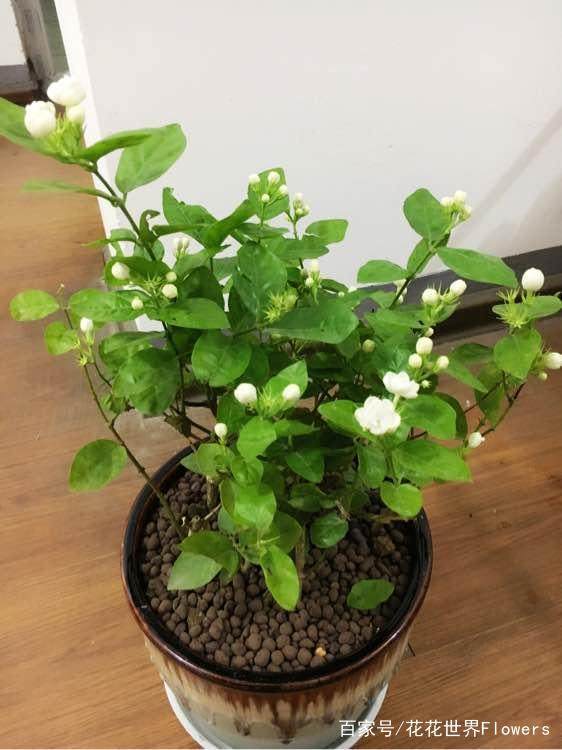
Potted jasmine has emerald-green leaves and flowers like stars, small and delicate, with a pleasant fresh fragrance, making it very popular among flower lovers. But in everyday cultivation, improper care often causes problems such as jasmine not blooming, blooming sparsely, dropping buds, flowers fading early, and weak fragrance. So how can you make jasmine bloom more and have a stronger fragrance?
1. Plenty of sunlight. Jasmine loves hot, humid and well-ventilated environments, and is a long-day, sun-loving flower, hence the saying "jasmine cannot be killed by sun, orchids cannot be defeated by shade." To grow good jasmine, you must place it in a sunny spot in all four seasons, ensuring at least 5 hours of sunlight every day. Strong light means sturdy branches, deep green leaves, more flowers, better colour and a stronger fragrance; insufficient sunlight means sparse, small and fragrance-less flowers. Therefore, to make jasmine bloom more, it must have a good environment and plenty of light.
2. Suitable soil. The potting soil for growing jasmine must be well-aerated, well-draining, not easily compacted, and slightly acidic. The best potting mix is 40% leaf mould, 40% garden soil and 20% river sand, with a small amount of bone meal added as a base fertiliser. In this kind of soil the roots are dense and growth is robust. If the soil is sticky and heavy, lacking organic matter, low in fertility and poorly aerated, then the roots will be few, the plant short, the stems and leaves thin, and the flowers small and few.
3. Moderate watering. When growing jasmine, learning to water it properly is the gateway to success. Jasmine fears prolonged wetness and hates waterlogging; in the rainy season, promptly pour out any standing water in the pot, otherwise the leaves easily turn yellow, commonly known as "water yellow." After summer arrives, as temperatures rise, watering frequency should increase accordingly, and be sure to regularly spray the branches, leaves and surrounding ground to cool things down and raise humidity. After autumn begins, watering should be reduced appropriately, keeping the potting soil merely moist. Along with watering, during the growing season you can apply a 0.2% ferrous sulfate solution once every half month or so, which keeps the potting soil consistently slightly acidic and helps the plant grow robustly and bloom more.
4. Reasonable fertilising. The high summer heat is jasmine's peak growing period, when it needs heavy fertilising, with plenty of organic fertiliser and phosphorus-potassium fertiliser, such as peanut cake, bone meal, superphosphate and compound fertiliser, applied 1 to 2 times a month. In the summer growing period, lush branches and leaves but no flowers often appear, mainly due to excess nitrogen causing leggy growth; at this point you should control water and fertiliser, increase phosphorus-potassium fertiliser to encourage bud formation, and at the same time move the jasmine to a sunny, well-ventilated spot. Note that when the buds grow to the size of a mung bean, spray once with a 0.1% borax solution; this treatment promotes bud development and a rich fragrance.
5. Moderate pruning. Jasmine grows very fast in summer, so prune it promptly. For potted jasmine, prune to keep 10 to 15 cm of the base, to encourage many thick shoots. If the new branches grow very vigorously, pinch them out when they reach 10 cm, to encourage a second flush of shoots and more flowers, keeping the plant compact. After the flowers fade, cut off the flowering branches to reduce nutrient consumption and also encourage new shoots.