Pests on Kalanchoe in Summer: Identify the Pest Species to Eradicate Them Effectively
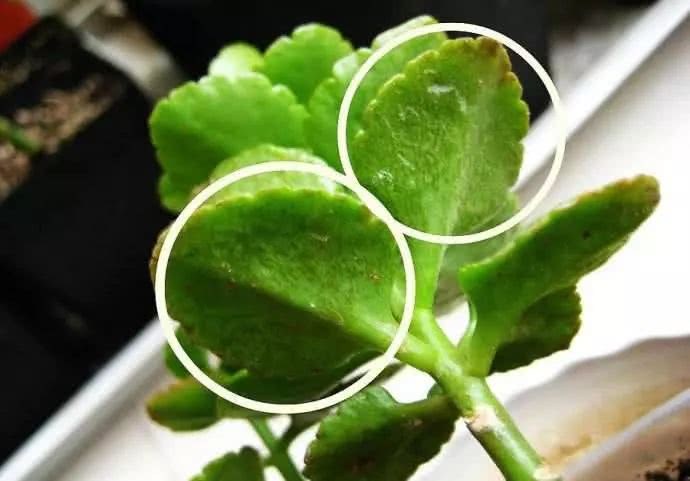
As summer arrives and temperatures keep rising, friends who love growing flowers should guard against small pests appearing at home. For example, our commonly grown kalanchoe (Kalanchoe blossfeldiana) - what symptoms is it prone to? In fact, this is also a problem that many potted flowers are prone to. Today let's talk about it.
1. Leaf spot disease
Brown small spots appear on the leaves of kalanchoe, gradually increasing in number, and they will also spread to other leaves until the entire leaf becomes necrotic and falls off. This is the manifestation of leaf spot disease.
Cause
Leaf spot disease is mainly caused by excessive moisture in the potting soil and poor ventilation. Therefore, to prevent leaf spot disease in kalanchoe, normally pay attention to clearing away fallen leaves on the surface of the potting soil, provide more ventilation, and give more sunlight in spring and autumn.
Solution
If a potted flower unfortunately gets leaf spot disease and the symptoms are mild, you can spray the leaves or drench the roots with carbendazim, once a week, generally two or three times is enough. If it is too severe, use thiophanate-methyl to spray or water it. Carbendazim is for prevention, thiophanate-methyl is for treatment. In addition, you can also take the plant out of the pot, soak it in fungicide, and repot it with fresh potting soil.
2. Black rot
In summer, when the weather is too hot, many potted plants will get black spot disease, and kalanchoe can also get black rot. The black rot area will gradually move upward until the entire kalanchoe plant rots.
Cause
The cause is high temperature, humidity and excessive watering, which leads to root black rot.
Treatment
Black rot in kalanchoe develops very quickly. Once root black rot is discovered, cut off healthy branches as soon as possible for cuttings. Some people water kalanchoe with fungicide when it gets black rot, but facts have proven that once black rot occurs, no matter how much fungicide you apply, it has little effect.
3. Powdery mildew
Powdery mildew is very common. Many home-grown flowers are attacked by powdery mildew, and it is hard to guard against. The symptoms of powdery mildew in kalanchoe are that some white powdery substance grows on the leaves and stems. It cannot be wiped off or washed off, making the kalanchoe limp and listless.
Treatment
Powdery mildew in kalanchoe is also a fungal disease. Once discovered, immediately spray with potassium permanganate solution, and the condition can be controlled. If the powdery mildew is already very severe, you can only use other medicines, such as sulfur powder. Sulfur powder is very effective for treating powdery mildew in kalanchoe. Sprinkle it on the surface of the potting soil, and at the same time apply sulfur powder to the stems and leaves affected by powdery mildew.
4. Red spider mites
Red spider mites are one of the most common pests attacking kalanchoe. At the beginning, webs may occasionally be seen on the kalanchoe, and at the same time there will be translucent small dots on the undersides of the kalanchoe leaves. At this point, you should start checking whether there are red spider mites, and not wait until the whole kalanchoe plant has been ravaged by red spider mites and is half dead before taking action.
Treatment
If red spider mites are found, you can spray with medicine, for example, Huahushen. In the early stage, one or two applications can clean them up. When the air is too dry, red spider mites are more likely to breed, so frequently spraying water on the leaf surface of kalanchoe can prevent red spider mites.
5. Aphids
Aphids are the most common for those of us who grow flowers. If aphids appear on kalanchoe, they will densely infest and damage the tender leaves at the top. They will also produce winged insects, and in large numbers they are very annoying.
Treatment
If there are only a small number of aphids, you can carefully crush them to death. If there are many, it is best to spray with oxidized rotenone or use Baichongqing. There are some methods for treating aphids without medicine, but they are not very thorough and cannot eradicate them. If you want to eradicate them, using medicine is still more suitable.
Besides the above several diseases and pests, kalanchoe can also get mosaic virus disease, leaf caterpillars, scale insects, etc. When caring for them, be sure to observe more, detect early, and remove early. It is now summer, and rising temperatures will make bacteria and pests more active. Giving kalanchoe more ventilation is the best way to prevent pests!
Have you learned it? Give it a like.