How to propagate Malus spectabilis? A detailed guide to common propagation methods
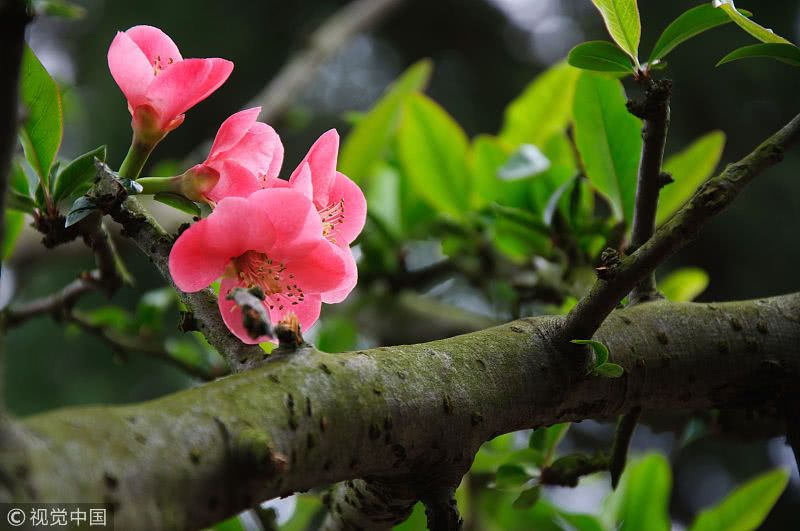 A while ago, a fellow flower enthusiast asked whether Malus spectabilis can be propagated by cuttings. Actually, I don't really recommend it. Because the survival rate of Malus spectabilis cuttings is not high, and the cycle takes too long, so I'll roughly explain how to propagate Malus spectabilis in a more convenient, quick way, with a somewhat higher survival rate.
If you want to use cuttings for propagation, generally choose spring or autumn, and select branchescurrent-year semi-lignified young shootsfor a higher survival rate. For the cutting medium, sandy soil, vermiculite, peat soil and so on are all fine, as long as it is clean. Water thoroughly to keep it moist; after about two to three weeks callus tissue will form, and once the roots reach at least three to four cm, then transplant into a temporary bed.
Recommended propagation methods:
1. Layering
For small seedlings, you can bend a branch down to the ground and cover it with soil; for large plants, use air layering. As long as it is done properly, the survival rate of layering is very high, the growth cycle is relatively short, and it is not too difficult to do.
2. Division
In early spring, or in autumn and winter when the leaves have fallen and the plant is dormant, you can divide the shoots sprouting from the roots. When dividing, keep part of the root system, so they take root easily.
3. Grafting
Grafting is a bit harder than the above methods, but after trying it a few more times you'll find it's okay. After all, most gardening is about hands-on practice to master it yourself; no matter how much theory is said, it's useless. The rootstock can be a seedling grown from seed, and the grafting methods can be bud grafting or scion grafting. Grafting should be the fastest-growing of all.
Friends who like it are welcome to follow, leave comments, and like, to exchange and learn flower and plant care experience together with fellow flower enthusiasts.