Learn these techniques for camellias, and having a tree full of blooms is easy
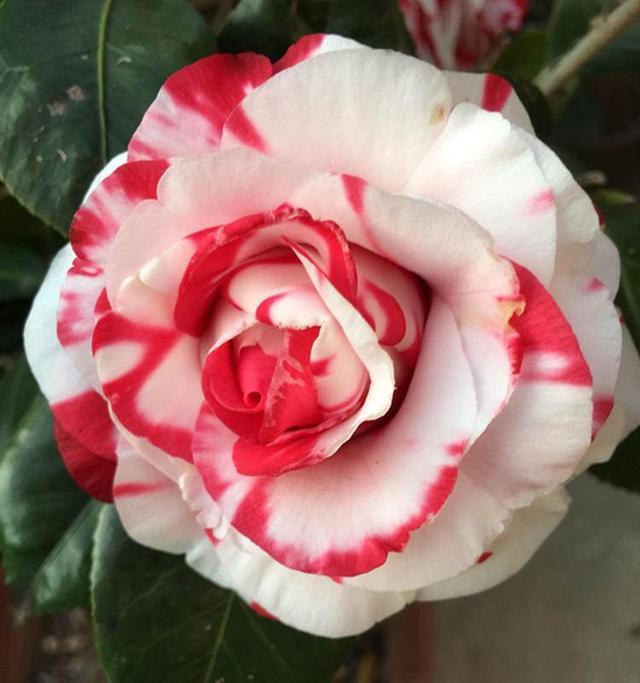
The camellia's tree form, flowers, and leaves all have high ornamental value. It is one of the ornamental plants that flower lovers are familiar with and fond of. When it is covered in blooms, red as fire, white as jade, set off by its emerald green leaves, it appears even more delicate and elegant.
So, do you want your camellia to bloom all over the tree? Then you need to learn these techniques!
Camellias prefer acidic soil and fear alkaline soil. They grow poorly or cannot grow at all in alkaline or even neutral soil, so for pot cultivation the soil must be prepared in advance. For potting soil, sandy black mountain soil rich in humus is best. The pH is 4.5-6. If there is no suitable mountain soil, you can make your own. The prepared soil can be mixed and composted in a ratio of 4 parts sandy loam, 3 parts leaf mold, and 3 parts compost soil.
After October, the aboveground part of the camellia has stopped growing and entered the dormant period, while the root system is still active. During this period, potting and repotting are both suitable and beneficial for the next year's growth. After potting, it can be placed in a wind-sheltered, shaded spot. After 10-15 days, the potted plant can be moved to a sunny spot in a cold room to overwinter.
In spring, from mid-to-late April, move it out from indoors and place it in a wind-sheltered, sunny spot. From late May to early June, move it into a shade shed to avoid scorching sun. At first, shade it only at noon. As the weather gradually becomes hotter, gradually lengthen the shading time. From early July to the end of August, shade it from 8 a.m. to 6 p.m. From early September, begin to shorten the shading time, and after October, stop shading altogether. In late October, to prevent damage from early frost, a curtain should be used for covering at night, and in early November, move it indoors.
In addition, although camellias are not heavy feeders, insufficient nutrients will also prevent them from growing well and blooming well. Generally, when potting or repotting, put some hoof and horn shavings at the bottom of the pot. During the vigorous growth in spring, apply a thin organic nutrient solution once, with a ratio of water to fertilizer of 500:1. In autumn, decide whether to fertilize according to the growth situation. When camellias are moved indoors to overwinter in winter, a little cake fertilizer can be sprinkled on the surface of the pot.
When growing camellias, watering is a routine management task. The first watering after potting must be thorough, and afterward water once every 1-2 days. Generally, water again when the surface soil in the pot turns white. If the potting soil is too wet for a long time, it easily causes root rot. In summer, evaporation is high and more water is needed, so depending on whether the weather is clear or rainy, water once a day or once each in the morning and evening. In addition to watering from the roots, you can also sprinkle water on the ground around the pot to increase air humidity and lower the temperature, creating a microclimate environment favorable for camellia growth.
Camellias complete flower bud differentiation in July-August, then gradually develop, with flower buds appearing at the branch tips. Several flower buds often form on the branch tips. To avoid dispersing nutrients and early flowering, bud thinning should be carried out after buds appear. Generally, keep only 1-2 flower buds at the branch tip; for buds growing in the leaf axils, also keep 1 as appropriate. In this way, because the buds differ in size and development, the flowering times will also differ later, so through bud thinning, you can regulate and extend the viewing period.
Camellias often show the phenomenon of leaves losing green and turning yellow. This is generally due to insufficient or excessive soil acidity, which prevents certain trace elements from being absorbed and used by the camellia. To prevent chlorosis, usually water once every 15-20 days with an 800-fold organic nutrient solution, then add 0.2-0.3% ferrous sulfate.