How do you grow bougainvillea so it blooms large and vividly colored? Do these few things and you can too
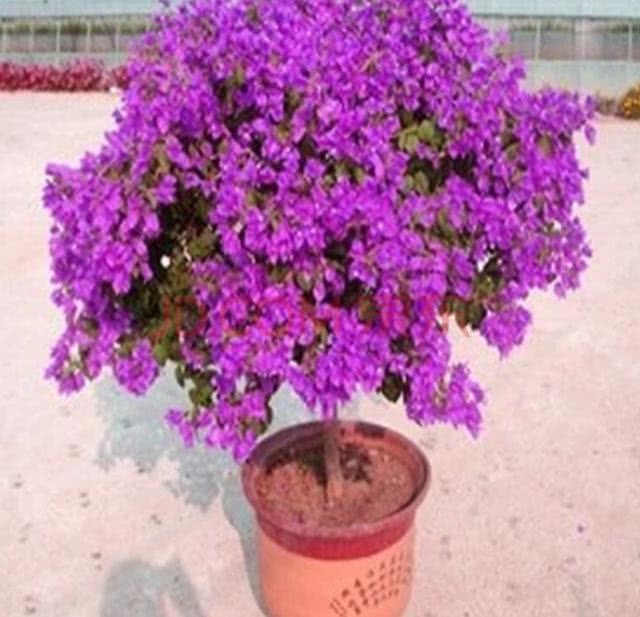
Bougainvillea, also known as lesser bougainvillea, grows best at 15-30°C. Because it loves warmth and plenty of light, and the plant is highly adaptable, it is widely cultivated in courtyards and parks in many southern regions. Because it is not cold-tolerant, in northern regions during autumn and winter it is mostly cultivated in greenhouses. Because the climate varies from region to region across the country, the flowering period of bougainvillea also differs slightly. In the south, the peak flowering period is mostly in winter and spring, while in the north it can also bloom when cultivated in a greenhouse from March to July. Each flowering cycle of bougainvillea lasts about 50 days, and after each cycle the plant needs to continue growing for another cycle to facilitate flowering in the next cycle. With suitable temperatures and proper management, bougainvillea can bloom continuously all year round!
If you want bougainvillea to have many vividly colored flowers, timely water control before flowering is very important. During the vigorous growth period of branches and leaves, you can apply more nitrogen fertilizer to bougainvillea to promote branch and leaf growth, but if the flowering temperature for bougainvillea has been reached, for example in the central and northern regions where the temperature is around 20°C at this time, promptly control water for the bougainvillea (including 20 days of water control, plus the 20 days from bud appearance to flowering), and flowers can be seen after 40 days. The specific steps are as follows: stop watering. If you find the soil surface turning white and the branches and leaves slightly wilting due to lack of water, you can spray the plant or pour a small amount of water on the pot surface. Be sure not to drench the roots with a large amount of water. After the wilting of branches and leaves improves, carry out another round of water control, repeating this for about three weeks. The purpose of water control is to prevent new leaves from sprouting, so that all the plant's nutrients are supplied to the old leaves and the maturation of the branches is promoted. During water control, stop fertilizing to prevent root burn.
After three weeks of water control, resume normal watering, and at the same time apply phosphorus and potassium fertilizer or spray a 1:1000 potassium dihydrogen phosphate solution on the leaves to promote flower bud differentiation, once a week, and after about another three weeks, buds will appear and flowers will bloom. During water control, be sure to observe the plant's growth condition to prevent excessive water control from causing the plant to die.
Bougainvillea is a light-loving plant. If you want many vividly colored flowers, ample light is indispensable. A long-term shaded environment with little light will cause bougainvillea to only grow leaves and not bloom. During the vigorous growth period of branches and leaves, you can give bougainvillea ample light. During the bud gestation period before flowering, combined with water control management, give bougainvillea 8 hours of light per day and shade it for the rest of the time, which can promote bud gestation and flowering more quickly.