Detailed Explanation of Key Techniques for the Cultivation and Management of Chinese Pine
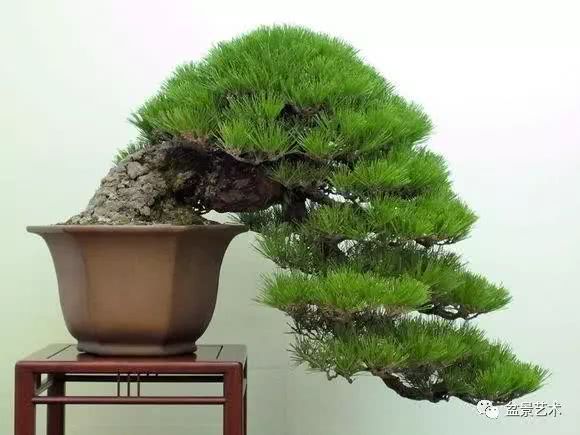
Chinese pine, also known as Northeast black pine and short-leaved Masson pine, is an evergreen tree distributed in Liaoning, Jilin, Hebei, Inner Mongolia, Henan, Shanxi, Shaanxi, Gansu, Shandong, Ningxia, Sichuan, Qinghai and other places. Chinese pine stays green all year round and has a vigorous, sturdy form, making it an excellent material for landscaping. Its cultivation and management techniques are described below for reference only.
Chinese pine is a light-loving tree species. Seedlings 1 to 2 years old tolerate slight shade, but if adult trees receive insufficient light, they grow poorly or even die. It is cold-hardy and can withstand low temperatures of -30°C. It is not demanding about soil and tolerates poor, thin soil, but grows poorly in low-lying, damp sites and in clayey soil. It prefers neutral and acidic soils and does not tolerate saline-alkaline conditions. It has a deep root system and a moderate growth rate. Spring is its period of vigorous growth, and seedlings grown from seed can flower and set fruit in 6 to 7 years.
Water and Fertilizer Management
Chinese pine has a fairly strong drought tolerance and is not very strict about water requirements. Generally speaking, when planting, water thoroughly the first three times, and after that it can rely on natural rainfall for growth. In late autumn, water thoroughly for the freezing period. After heavy summer rains, drain promptly to prevent waterlogging from killing the seedlings. In early spring of the following year, water promptly to thaw the soil, and water at other times according to the first year's method. Starting from the third year, it is enough to water well for thawing and for freezing each year, and at other times it can rely on natural rainfall for growth. It is worth noting that if several consecutive months of drought occur, water promptly to relieve the drought, as excessive drought is also harmful to seedling growth.
Chinese pine tolerates poor, thin soil but also likes fertilizer; adequate fertilizer can make the seedlings grow vigorously. When planting, apply decomposed and fermented cow and horse manure as a base fertilizer, and the base fertilizer must be mixed evenly with the subsoil. There used to be a belief that chemical fertilizers could not be used during the seedling stage of Chinese pine, but based on the practice of some growers, applying a reasonable and appropriate amount of topdressing during the growing season - nitrogen fertilizer in the early stage and phosphorus and potassium fertilizer in the later stage - has a good effect on accelerating seedling growth and will not cause fertilizer burn. In winter, some cow and horse manure can be applied together with watering for freezing. In the second year, topdressing can be carried out during the growing season according to the first year's method, and cow and horse manure applied in late autumn. From the third year on, fertilize according to the second year's method.
Pruning and Shaping
If Chinese pine is not styled, the natural tree form of Chinese pine does not require much pruning. Take care to thin out overly dense branches, and promptly prune inward-growing branches, diseased and pest-infested branches, drooping branches and crossing branches. For shaped specimens, pruning should be carried out according to the intended use. Pruning and shaping should proceed step by step and must not be rushed or done all at once. Binding, stretching and other methods should also be used for shaping as required.
Propagation Methods
Select Chinese pines 30 to 50 years old with beautiful tree form, good trunk quality, strong resistance and no pests or diseases as mother trees for seed collection. After the cones mature in early October is the best time for seed collection. Place the collected cones in a ventilated place to dry in the sun. After the seeds fall out and are cleaned, disinfect them by spraying with an 800-fold dilution of 75% chlorothalonil wettable powder. After drying, store them by the dry storage method in a cool, dry place for later use.
There are two ways to raise Chinese pine seedlings: one is flat-bed nursery raising, and the other is container seedling raising. Container seedling raising is easy to operate, saves land and seeds, and has a very high transplant survival rate, so in recent years container seedling raising has been adopted in many places. Choose a site sheltered from the wind and facing the sun, convenient for operations, as the seedling-raising site. The site should be plowed and made into low beds or flat beds. Use nutrition pots 10 cm high and 7 cm in diameter as the seedling containers. Make a substrate from sandy loam and decomposed and fermented cow and horse manure, and disinfect it. Before sowing, the seeds should be pre-germinated. Soak the seeds in 45°C warm water for 24 hours; after they have absorbed enough water, remove them and cover them with a wet cloth, spraying water every day; after a week, when the seed coat splits, they are ready for sowing. Before sowing, arrange the nutrition pots neatly on the seedbed, then sow, placing 5 to 7 seeds in each nutrition pot. After sowing, cover with plain sandy soil to a soil depth exceeding the pot height by 2 cm, then spray water and keep the pot soil moist at all times.
Pest and Disease Control
The common disease of Chinese pine is pine seedling damping-off, also known as seedling blight, caused by Rhizoctonia fungi and various Fusarium species. There are four common symptom types: seed rot, shoot rot, damping-off and seedling blight, with damping-off and seedling blight being the most frequently seen. Pine seedling damping-off should be controlled starting at the seedling-raising stage. First, choose a good nursery site; do not choose heavy clay soil as the nursery site. Before sowing, thoroughly disinfect the nursery site and substrate, and during the seedling-raising period prevent waterlogging in the nursery. If it occurs, spray with a 500-fold dilution of 25% dexon wettable powder and at the same time drench the roots, once every 10 days, for 3 to 4 consecutive applications.
The pests that harm Chinese pine include: Chinavia angulosa, Aphrophora costalis, Pineus laevis, Cinara keteleeriae, Cinara pini, Cinara piniformosana, Matsucoccus matsumurae, Fiorinia japonica, Ips sexdentatus, Dioryctria pryeri and more than thirty other species.
If Chinavia angulosa or Aphrophora costalis occurs, spray a 3500-fold dilution of 48% chlorpyrifos EC or a 3000-fold dilution of 3% high-penetration fenoxycarb EC during the nymph stage for control. If Pineus laevis, Cinara keteleeriae, Cinara pini or Cinara piniformosana occurs, use a 2000-fold dilution of 10% imidacloprid wettable powder or a 1000-fold dilution of 1.2% matrine-nicotine EC to kill them. If Matsucoccus matsumurae or Fiorinia japonica occurs, spray 1 to 1.5 degrees Baumé lime-sulfur mixture during the 1st to 2nd instar nymph stage; during the exposed period, spray the trunk and branches with a 3000-fold dilution of 3% high-penetration fenoxycarb or a 1000-fold dilution of 20% s-cypermethrin.
If Epinotia rubiginosana occurs, spray a 7000-fold dilution of 20% diflubenzuron suspension concentrate or a 3000-fold dilution of 1.8% abamectin EC during the young larval stage.
If Tomicus minor, Tomicus piniperda, Ips sexdentatus, Pityogenes chalcographus, Dendroctonus valens, Cryphalus pseudotabulaeformis or Cryphalus tabulaeformis occurs, apply 20% aldicarb granules at the base of the tree before adult beetles emerge in spring, or inject Shuchongjing into the tree trunk. If Dioryctria rubella or Dioryctria pryeri occurs, use light traps or attractants to trap and kill the adults, and release Pyemotes mites during the larval damage period.