Detailed experience on watering orchids, master the correct method
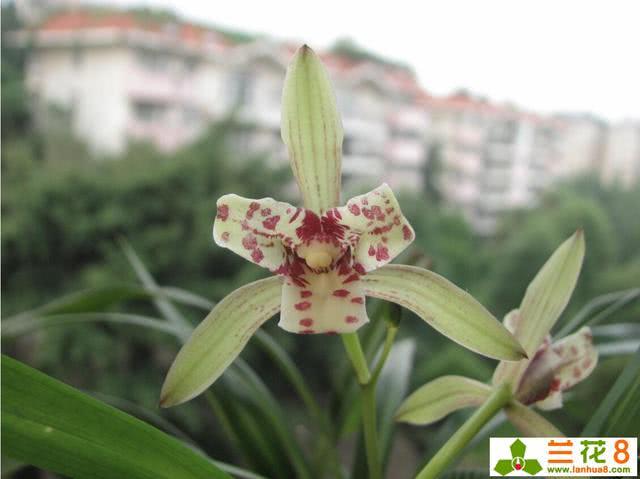
For a long time I've only been reading and not saying much. The more I buy, the less I say; the more I see, the less I say; the more I think, the less I say too. Hehe, I feel like I'm not even qualified to be a new orchid enthusiast anymore. Every now and then I think of a topic, so I'll post it again to discuss with everyone. Recently quite a few have bloomed and put out quite a few shoots, which feels quite fulfilling. Spring orchids, Huilan, Lianban, Siji, Chunjian - I can grow them all to bloom on my own, and I can control the flowering period. For orchid enthusiasts in the south this is fairly basic, but for orchid enthusiasts in the north the significance is quite different, so my confidence in growing orchids is even greater. Compared with before, the potting medium has changed somewhat, and the management approach has changed somewhat, so I might as well share it with everyone: orchids are easy to keep alive but hard to keep well, and even harder to bloom with a good form! One medium corresponds to one management approach, so a thousand people have a thousand ways of growing them. Now I understand this better!
Some advocate heavy watering for growing orchids, while others advocate regular dry growing. Each has its own reasoning. Over the past two years I've also tried different potting media, and I feel they can all grow orchids, but for different varieties and orchids from different sources, they must be treated differently. With heavy watering, the heaviest would have to be water culture, and some people do grow orchids quite well that way. This growing method produces water roots, which are thin, white, and translucent; they like lots of water and can be watered at any time, and their only fear is drying out. With regular dry growing, the plants produce aerial roots, which are thick, white, and not translucent; they prefer slightly moist dry growing, and the potting medium is required to have strong air permeability.
When everyone buys orchids online, one look at the roots tells you whether the original growing method was heavy watering or dry growing, so after buying it's best to use a similar method accordingly. This can speed up the time for the plant to settle into the pot, avoid black roots, rotten roots, and hollow roots, and avoid plant collapse. But the two cannot be combined, otherwise the orchid will not grow well. If water roots are grown dry, especially in a medium with a lot of humus, they easily turn black, while aerial roots rot easily when given too much water. When changing growing methods, generally the plant itself is required to replace a batch of roots. If the new roots cannot keep up with the needs of growth, this affects the normal growth of the plant. This is also the main reason many beginners fail to grow well the roots of newly bought plants. Moreover, different media correspond to different dryness and wetness. A medium with a lot of humus is suitable for heavy watering, flushing away excess nutrients at any time to avoid burning the roots, while one with little humus is the opposite. If the potting medium is relatively coarse and contains relatively few nutrients itself, fertilizer growing is generally used (should be mostly in Guangdong and Fujian), and it also likes heavy watering, with higher environmental humidity and frequent artificial supplementation of nutrients. Orchid enthusiasts in other regions also use this growing method, but still mainly use relatively finer media with regular dry growing.
Expanding on this topic, orchid enthusiasts who grow with the dry method will not easily grow well varieties bought from heavy watering, and those who grow with heavy watering who buy dry-grown orchids face the same situation. If you can get an orchid safely through the root adaptation period, then you can count yourself an expert, but if you cannot, it may be fatal. The same two plants sold by the same seller will produce different results in the hands of orchid enthusiasts using different growing methods. The seller is still a good seller, and the buyer is also a good buyer; the problem lies in the difference in orchid-growing techniques. For such problems, everyone must treat them differently, and in particular buyers should also look for reasons in themselves. There are not many good sellers, and good sellers who suit your orchid-growing technique are even fewer!
One more thing: my orchids are now mostly grown in volcanic stone, Songliwang, a small amount of oak leaves, fern roots, and charcoal. I feel this suits regular dry growing, watering thoroughly about once every two to three weeks, and usually spraying the pot surface (covered with sphagnum moss or pine needles). Before watering thoroughly, let it dry out completely. I feel the growth and sprouting are both pretty good. I've posted about this before too. If you're interested, you can refer to it, but this method only suits my own potting medium and management approach. How you grow yours still depends on the environment on your side: temperature, humidity, light, potting medium, and so on. That's as much as I have to say after all this thinking. A modest spur to induce others to come forward with valuable contributions - let everyone share their own views! I publish orchid knowledge and pictures every day, taking you to a deeper understanding of orchids and teaching you to grow them easily and well. If there's anything about orchids you don't understand, you can ask me anytime or leave a comment below. If my knowledge has helped you, I hope you can give me a like or share it to help more people!