Detailed Explanation of Potted Hawthorn Planting Techniques and Management Methods
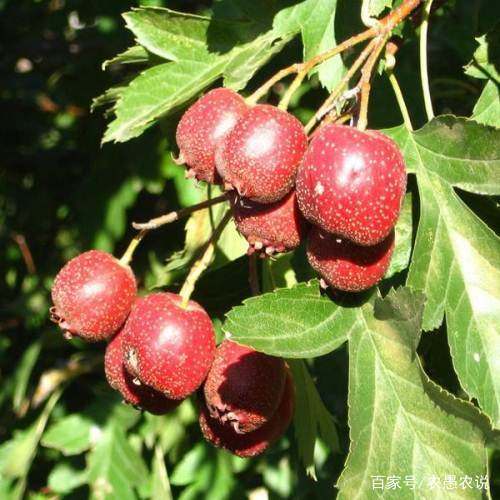
1. Selection of flower pots and preparation of nutrient soil
The flower pot should be a breathable clay pot with a diameter of 30-40 cm and a depth of 30 cm, or an equivalent wooden barrel, wooden box, etc. The nutrient soil in the pot is prepared by mixing leaf mold or humus soil, garden soil, and sand in a ratio of 4:4:2.
2. Variety selection
For potted hawthorn, varieties with late fruit ripening, large fruit, bright red color, and strong cold resistance are generally selected. Such as Hongrangmian, Yanranghong, Fulihong, Hanluhong, Dajinxing, Zezhouhong, Damianqiu, etc.
3. Seedling cultivation
There is a relatively large difference between the seedlings used for potting and those used for open-field cultivation. The seedlings used for potted hawthorn first require that within a relatively small range from the root system to the root crown, there should be well-developed fibrous roots. The greater the amount of fibrous roots, the more beneficial it is for growth after potting. Hawthorn seedlings grafted from root-sucker seedlings have the above characteristics and are very suitable for hawthorn potting. In places where wild hawthorn is distributed or under large hawthorn trees, take root-sucker seedlings, transplant them to a nursery for centralized management, and graft them uniformly. After the graft survives, root growth has already become vigorous. During the growing season, a sharp knife or iron shovel can be inserted into the soil at a distance of 20 cm from the trunk to perform root pruning, including cutting off the main root of the seedling rootstock (generally at a depth of 20-30 cm), and shortening and pruning the roots, so as to limit the extension range of the root system and increase the amount of fibrous roots. For the aboveground part, methods such as pulling down main branches (increasing the angle) and timely pinching of new shoots in the early growth stage (May) are used to achieve the purpose of controlling seedling height and lowering the branching point of the main trunk. According to the requirements of potted shaping, the number of years for nursery seedling cultivation can be extended, but generally 1-3 years after the graft survives, they can be potted. After potting, perennial branch groups with flower buds can also be grafted, with the obvious characteristics of a high survival rate and good fruit setting.
4. Training and pruning
Tree forms can adopt various forms such as curved trunk, straight trunk, slanting trunk, and layered form. However, because hawthorn has obvious apical dominance, it easily causes weak growth vigor of lower branches and buds. The basic requirements for its tree form are that the tree should be short rather than tall, the angle of main branches should be large rather than small, and upright branches on the back should be short rather than long, so that the branches extend outward and form a slightly flattened crown. Winter pruning is mainly thinning and renewal pruning. Thin out weak branches, crossing branches, overlapping branches, excessively dense branches, and upright branches. Cut back longer weak branches; when cutting back, note that the cut must retain a branch with a suitable direction to help restore branch vigor. Summer pruning: on the premise of sufficient branches, for adventitious shoots sprouting from latent buds on the cut and branches, remove them in time after germination. Pre-flowering supplementary pruning is the main content of summer pruning. It resolves the ratio of fruiting branches to vegetative branches by thinning flowers. The ratio of fruiting branches to vegetative branches in potted hawthorn should be within the range of 1:1-3. If growth vigor is strong, the proportion of vegetative branches should be reduced; if growth vigor is weak, the proportion of vegetative branches should be increased.
5. Promoting vigor and flower induction
As long as new shoots of potted hawthorn are thick and strong and no autumn shoots occur, flower buds can form at their tips. The thicker and stronger the fruiting branch, the stronger its ability to bear fruit continuously. Therefore, under the condition of ensuring a compact tree form, cultivating a sufficient number of strong branches is a basic measure to improve the level of hawthorn potting. From germination to the early flowering stage is the critical period for water and fertilizer needs of hawthorn. Fertilizer and water management at this time is the key to promoting robust branches and shoots and flower bud formation. Use 2-3 applications of 0.2%-0.3% inorganic liquid nitrogen fertilizer and 1 application of 200-fold organic liquid fertilizer alternately, with each interval of 7-10 days. After mid-July, control the use of inorganic nitrogen fertilizer to inhibit the occurrence of autumn shoots. In addition, to promote flower bud formation, measures such as girdling, ring cutting, and root pruning can also be used.
6. Promoting flowers and preserving fruit
Spraying 30×10-6~60×10-6 gibberellin at the full flowering stage of hawthorn can increase the fruit setting rate by 30%-40% and significantly enlarge the fruit. Girdling and ring cutting on the main trunk at the full flowering stage of hawthorn can also significantly increase the fruit setting rate. However, the objects of girdling and ring cutting must be vigorously growing potted trees; otherwise, the effect is poor, and it may even cause a large amount of flower and fruit drop.
7. Cold protection and overwintering
Hawthorn has relatively strong cold resistance, but under potted conditions, the protection of the pot wall for the root system is limited. Therefore, measures should be taken to prevent freezing damage. For those with a large number of potted plants, a trench can be dug on site and the pots buried in it; the depth of the trench depends on the height of the pots. Before burying, first water the pots and the trench thoroughly, and after the water has drained, cover with soil. For a small number of potted hawthorns, they can be moved into a corridor or indoors for overwintering, and attention should be paid to moderate watering, once a month is sufficient. For potted hawthorn, in March of the following spring, after the soil thaws, they can be moved out from the trench or indoors.