Can't seem to keep snake plants alive? Just follow this method and you'll get it right
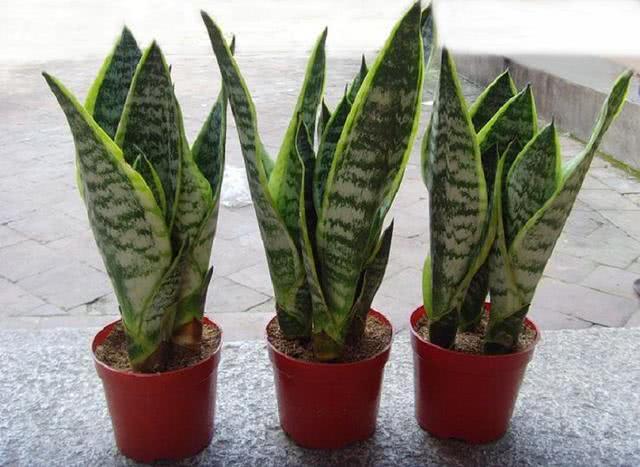
Snake plants (Sansevieria) are a fairly common green plant in our homes, and many households probably grow them, but quite a few people just can't seem to keep snake plants healthy. So below, the editor will sum up some experience on growing snake plants, hoping it will help you.
1. Soil
No matter what kind of green plant we grow, the soil must have good drainage, and of course, the soil for growing snake plants needs to be like this too.
Although snake plants are not very demanding about soil, it is still recommended to use leaf mold and loose sandy soil, so that snake plants will grow better.
Here are two fairly good soil ratio references: garden soil, leaf mold, and sand at 5:2:3; or peat soil, leaf mold, sand, and perlite at 4:2:2:2.
2. Light
Snake plants like sunlight, so when we grow snake plants, we need to place them in a spot with plenty of light. In summer, direct strong sunlight at noon should be avoided.
If snake plants do not get enough light over a long period, they will not grow well, and at this point the leaves will gradually start to turn yellow. We just need to put the snake plant in a spot with diffused light for a while, then slowly move it to a spot with direct sunlight, and after a few days it will be much better.
3. Temperature
The suitable growing temperature for snake plants is 16-30 degrees. In winter, try to avoid indoor temperatures below 5 degrees, otherwise the snake plant may get frostbitten.
However, for many central and southern regions now, winter temperatures are not too low, and with the indoors being a bit warmer, plus many homes having underfloor heating and air conditioning, the temperature is fairly easy to control.
4. Watering
The potting soil for snake plants needs to be moist and fertile. As for watering, generally you need to wait until the potting soil is dry before watering; when watering, do not let water accumulate in the potting soil, otherwise it will affect the roots.
In winter, if the temperature is too low, do not water, so as to prevent the soil from freezing in winter and causing the snake plant to suffer frost damage.
5. Fertilizing
When growing snake plants, you can fertilize lightly, once a month is enough, and a compound fertilizer can be used. During the growing season, the fertilizing frequency can be a little higher. Overall, snake plants are not very demanding about fertilizer.
6. Repotting
Snake plants are generally repotted once every two years, and standard compost fertilizer can be used when repotting.
The above are some points to note about growing snake plants. If unluckily your snake plant's leaves have turned yellow, then find the cause, see whether it is due to light or water accumulation, and then solve it;
In addition, if the leaves rot, the rotten leaves should be cut off in time so as not to affect the healthy leaves.