Once a life-saving wild vegetable for the poor, only old farmers know it, and now it sells for 9 yuan per jin as a rare commodity
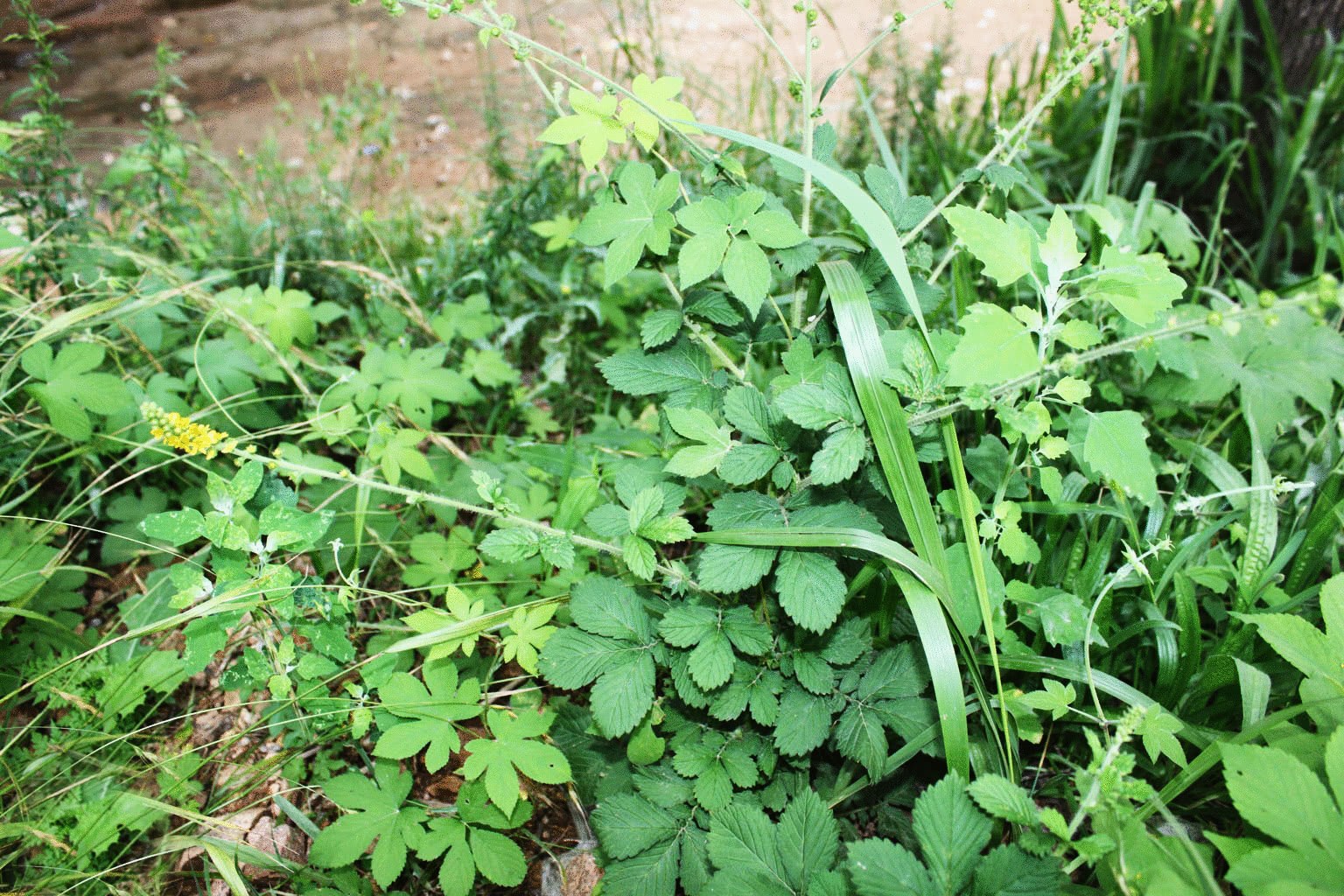
After spring arrives, countless wild grasses begin to grow in the rural countryside. For farmer friends, these wild grasses have also become a part of life. Most farmers are relatively fond of wild grasses, because these wild grasses can not only be eaten as wild vegetables, but some can also be used as medicinal herbs to treat illnesses. However, not all wild grasses are known to everyone, and some wild grasses are still unknown to many people. Below, the author introduces a kind of wild grass. It was once a life-saving wild vegetable for the poor. Apart from old farmers who know it, many young people do not recognize it.
In the grass along rural roadsides, many wild grasses grow. Among them, one kind of wild grass often grows together with Humulus scandens. In the rural area where the author lives, Humulus scandens is usually called "lala yang." The leaves and stems of this wild grass have backward-pointing prickles, and if you accidentally brush against it, you can easily get cut. This wild grass that grows together with Humulus scandens looks very similar to Humulus scandens. It is "Xianhecao," also called "Longyacao" (Agrimonia pilosa). Because Xianhecao looks very much like Humulus scandens, many people think it is Humulus scandens, so they dislike it, yet they do not know the value of Xianhecao.
In fact, for many old farmers in rural areas, Xianhecao has a very important significance: it was once a life-saving wild vegetable for the poor during famines. The author was also very curious before: Xianhecao looks so much like Humulus scandens, can it really be eaten? Later, after asking Grandpa, the author learned that Xianhecao really can be eaten as a wild vegetable, and it tastes quite good.
The author then consulted relevant materials and found that the tender stems and leaves of Xianhecao are edible and have rich nutritional value. Every 100 grams of the edible tender stems and leaves contains 11.2 mg of carotene, 150 mg of vitamin C, as well as other nutrients such as carbohydrates and minerals. It can be called a first-class wild vegetable. Unfortunately, apart from old farmers, many people do not recognize it.
Besides being eaten as a wild vegetable, Xianhecao also has very good medicinal value. According to "Modern Practical Chinese Medicine," the whole plant and root of Xianhecao can be used as medicine. Its taste is bitter and astringent, and its nature is neutral. As medicine, it has the effects of stopping bleeding, strengthening the stomach, lubricating the intestines, stopping dysentery, and killing parasites. It can be used to treat many conditions such as fatigue and exhaustion, irregular menstruation in women, red flooding and white discharge, stomach cold and abdominal pain, red and white dysentery, vomiting blood, coughing blood, intestinal wind, and blood in the urine. In particular, its effect on stopping bleeding is very good. Precisely because of this, many old farmer friends also use it as a hemostatic medicine.
Because of these values of Xianhecao, many old farmer friends are especially fond of it. Recently, quite a few old farmers in the village who recognize Xianhecao often go to the wild to dig it up and sell it at the market, hoping to earn some pocket money. The author also saw a few of them, and upon asking learned that this Xianhecao sells for 9 yuan per jin, which can also be considered a rare commodity. However, because not many people recognize Xianhecao, the old farmers have not sold much of it, which is truly a pity.
Dear friends, do you recognize Xianhecao or Longyacao? You are welcome to leave a message and share your thoughts!