Succulent leaves turn yellow after blooming - care for it this way to get it safely through summer
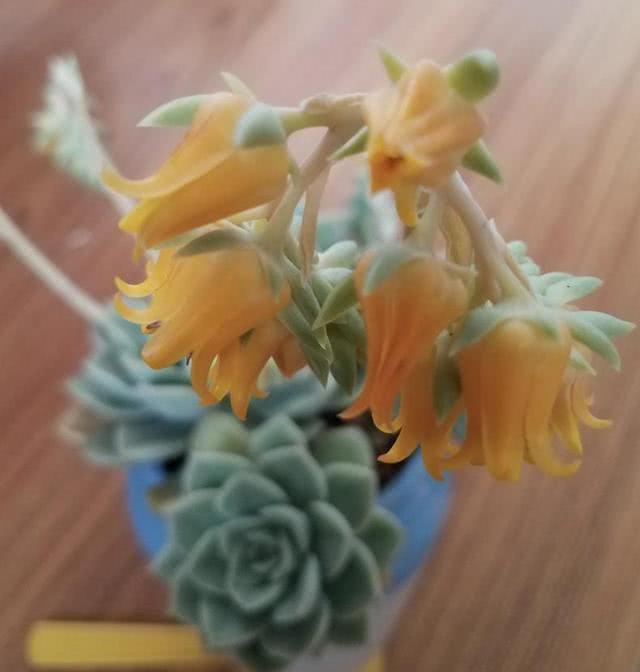
The succulent bloomed, and after cutting off the flower stalk, the leaves have now turned yellow. How should I care for it? As shown in the picture.
This potted Kalanchoe was still plump-leaved and in decent shape while it was blooming; but after blooming, the lower leaves turned yellow over a large area. This is a very normal situation, because blooming is simply too draining on a succulent's nutrients. Since it has come to this, I will just talk about what to do next.
First, remove all the yellowed leaves. These leaves have already lost their vitality, keeping them is just a burden, and they may also become a breeding ground for pathogens, so, decisively pluck them off.
The second step is to replenish fertilizer and water. To put it figuratively, this succulent is now "in confinement after childbirth" and should be properly nourished with fertilized water. Whatever your usual watering frequency is, you should now increase it appropriately, and at the same time use fertilizer specially made for succulents. There are many of these fertilizers on Taobao; just buy one from a major manufacturer.
Note that succulents do not need much fertilizer, so it is best to apply dilute fertilizer frequently; even if the amount is insufficient, do not give too much.
In fact, we can completely avoid this situation, and the way to do it is to decisively cut off the flower stalk when it starts to emerge. As the saying goes, you cannot have both the fish and the bear's paw; in order to get it safely through summer, it is fine to skip the flowers - anyway, that is what I usually do.
Spring can be said to be a golden season for caring for succulents, and if you buy succulents now, they will also be in the best condition. Repotting or leaf propagation can both be done now; it is only after entering summer in June that the peak death period for succulents begins. From June to August is the most difficult season for caring for succulents: less light, too much watering, and continuous cloudy and rainy weather cause all kinds of leggy growth, water-soaked rot, and black rot. Pay special attention to avoiding direct midday sunlight, especially for those grown outdoors; high temperatures plus strong direct light may bake and scorch your succulents. In summer, increase the day-night temperature difference for succulents as much as possible and control watering; getting succulents safely through summer is the most crucial thing.