Taiwanese rice variety grown in Shimane, Japan: Chen Wei-Jen brews Taichung No. 65 sake
Winter is the season when the sake brewers of Shimane Prefecture, Japan, devote themselves to ascetic training. The brewers shoulder heavy bags of rice, hauling two metric tons after two metric tons into the brewery day after day, and this is only one of their tasks; if the veteran master brewer "toji" catches a glimpse of them rubbing the rice too slowly, with a bit of rice bran still clinging to the outer layer of the washed white rice, the brewers (sake craftsmen) in training get another scolding; they may even go entire nights without closing their eyes, just to tend the koji with full concentration,
"There's no way to make the yeast and koji molds obey; all you can do is do your utmost." Through painstaking training, exhausting every effort to control the balance inside the tank and transform crystalline white rice into mellow sake, this is the realm that brewers pursue with their whole lives on the line. Still on the path to enlightenment, Chen Wei-Jen, a Taiwanese brewer who went to Japan to study the art of sake brewing at a brewery, is now a Japan-certified professional sake brewing technician, and has once again entered a brand-new discipline: "farming."
Last year, Chen Wei-Jen planted a batch of "Taichung No. 65 rice" in a fallow field of only 0.7 fen of land in Matsue City, Shimane Prefecture; this year's harvest was 370 kilograms, and it is expected to brew nearly five hundred bottles of "Taichung No. 65 sake (タイチュウ)"; for him, this tank of sake is not only the first representative work of his career as a brewer, but also a fateful encounter in his life.
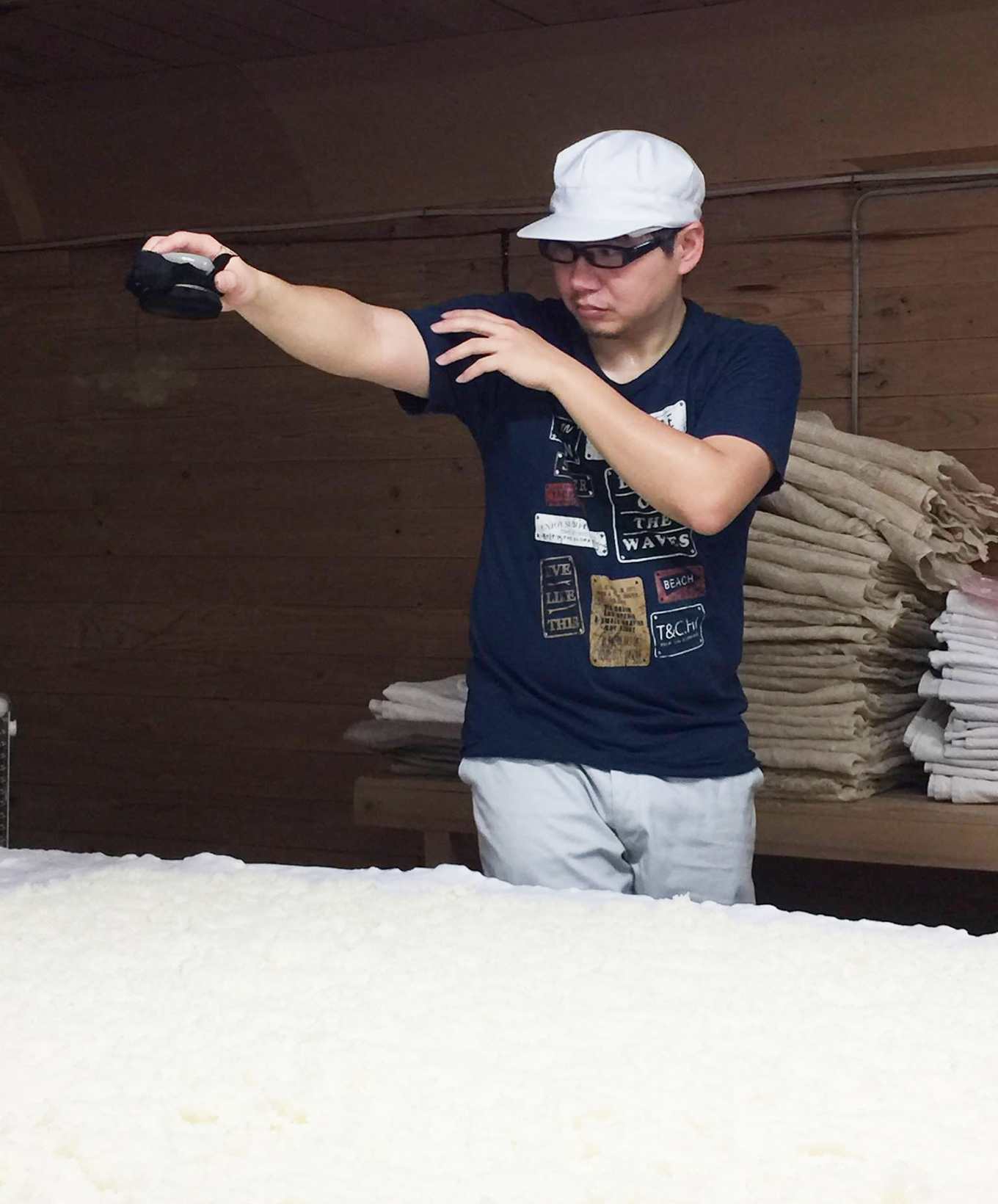
Taichung No. 65 brews its first tank of sake, and Chen Wei-Jen continues his training
While playing the classic old song "Bāng Chhun-hong (Gazing at the Spring Breeze)," Chen Wei-Jen brews with full concentration, and after saccharification and fermentation, the "Taichung No. 65 sake" finally flows out of the tank; although the toji, after one sip, still felt the body was not rich enough, to him it tasted "neither too strong nor too light, with the sweet fragrance of rice," and he was already fully satisfied.
Even after brewing his first tank of sake, Chen Wei-Jen's training as a brewer is still unfinished and ongoing, "I hope that next year Taichung No. 65 can be expanded in cultivation and the harvest can reach 800 kilograms, and then I'll brew again." "In the next five or six years, I want to run back and forth between various breweries, trying different brewing methods." "The next step, I want to try the ancient method that has been passed down in Japan for hundreds of years, brewing without adding lactic acid."
Speaking of this, Chen Wei-Jen then revealed that he still harbors the "dream of becoming a toji," dreaming that one day he can become a toji capable of handling the delicate and complex process of sake brewing; although he cannot guarantee how old he will be when he stops brewing, "there's a legend in our trade that some people are still brewing at 80." But what is certain is that he, now a Japan-certified professional sake brewing technician, is still devoted to his training.