How many of the national flowers of four European countries do you know? An old gardener tells you
Since ancient times, growing flowers and plants has been a way for people to enrich their lives and cultivate their character. Not only that, people have also given various flowers and plants beautiful meanings, as a way to express their longing for a better life. Some flowers and plants have even been recognized as the national flowers of certain countries, as a way to reflect the country's culture and characteristics. Today, the old gardener editor will introduce a few European national flowers to everyone. I wonder how much you know about them?
First, heather
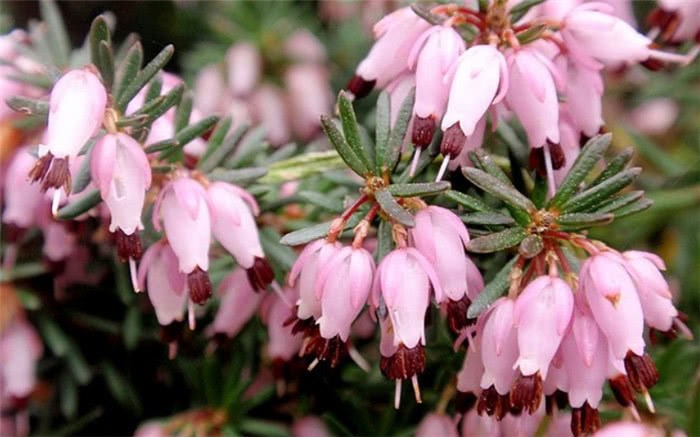
Heather is also called Erica. It belongs to a perennial shrub plant variety. It originated in the central region of France, and later, as time went on, heather could be found throughout the entire European region, and it was recognized by Norway as its national flower. The heather plant has a graceful and elegant shape, with small yet sturdy leaves and a lush green color. Especially in the late spring season, heather will bloom with pink flowers one after another. Seen from afar, they are just like strings of beautiful little lanterns, very lovable. Usually, heather prefers a warm, humid, and sunny growing environment, and it has a certain cold resistance and drought tolerance. Even if it is placed in a low-temperature environment, heather can still maintain very good growth.
Second, edelweiss
Edelweiss belongs to a perennial herbaceous plant variety, and it also has many other names, such as alpine edelweiss, small mugwort, old man's grass, snow grass, and so on. The place of origin of edelweiss is also very broad, and it can be seen almost throughout the entire European region. Therefore, edelweiss has also been chosen as the national flower by Switzerland and Austria. The edelweiss plant is relatively large. Under normal circumstances, it can grow to a height of about one meter. Its leaves are fresh and green, dense and lush. Especially the flowers of edelweiss, which are large in shape and as white as jade, and there is also a layer of fine fuzz growing on the surface. Perhaps this is the origin of its name! Edelweiss prefers a warm, humid, and sunny growing environment. However, edelweiss also has a certain ability to resist cold climates. Even in an environment of -1 degrees, edelweiss can still remain alive.
Third, pansy
Pansy also belongs to a perennial herbaceous plant. It is also called cat's face, human-face flower, and butterfly flower, among others. It first originated in the northern region of Europe and has been recognized as the national flower by Poland and Iceland. The pansy plant is relatively large. Its leaves are round in shape, fresh and green. Especially the color of its flowers, which usually comes in purple, white, or yellow, and that is why people gave it the name pansy. Because the pansy originated in the forest areas of northern Europe, it prefers a cool and ventilated growing environment. Its most suitable growing temperature is between 5 and 15°C. In addition, the pansy also has strong cold resistance. Even when the ambient temperature is below about 3 degrees, it can still maintain very good growth.
Fourth, cornflower
Cornflower is a biennial herbaceous plant variety. It is also called blue hibiscus, emerald orchid, lychee chrysanthemum, and so on. The hometown of cornflower is in the European region, and it is the national flower of Germany. The leaves of cornflower are lanceolate in shape and dark green in color. Its inflorescence is relatively large, and its flower colors are also very rich, including purple, white, blue, red, and so on, among which blue cornflowers are the most common. Under normal circumstances, cornflower very much likes a warm, dry, and well-ventilated growing environment. In addition, cornflower also has a certain drought tolerance. Even in the case of long-term water shortage, cornflower can still survive.
After listening to the introduction from the old gardener editor, do you have a better understanding of these four flowers? How much else do you know about the topic of the article? You are welcome to share your views in the comment section below. If you like this article, you might as well subscribe, and there will be more wonderful articles to share with you.