Once you plant a climbing flowering vine, you'll be hooked - and it blooms for more than half the year
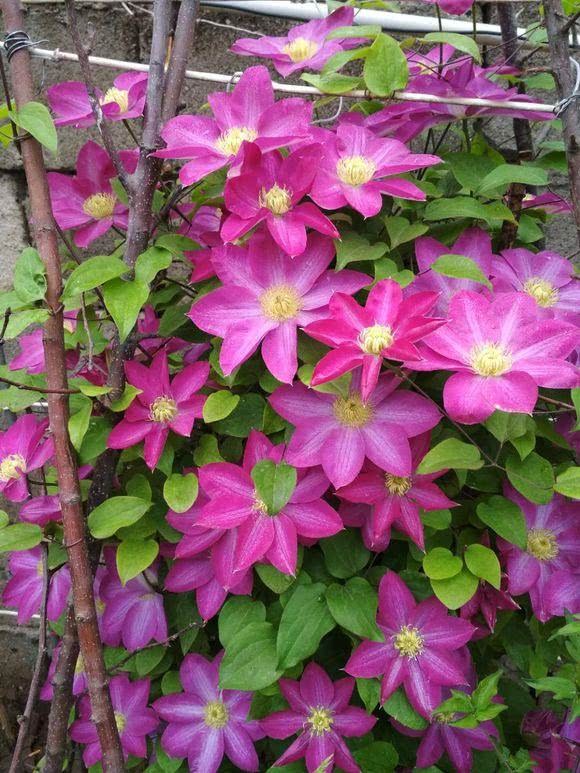
If you love growing flowers, you probably dream of having a whole wall covered in blooms, but you just don't know which flowers are best to grow. Today, Huahua introduces a few flowers that can climb walls - plant one and you'll be hooked, and each one blooms for more than half the year.
Clematis
Gardeners in the south may not be very familiar with this flower, because there are simply too many flowers to choose from in the south, but clematis is a bonus for gardeners in the north. This flower is the queen of climbing flowers - not only are there many varieties, it has few pests, grows fast, blooms for a long time, and is fairly cold-hardy, so covering a flower wall with it is just that easy.
Care tips
It needs plenty of light, so growing it outdoors is best, and a south-facing balcony is ideal; its wall-climbing ability is outstanding.
Water it well, but be careful not to waterlog it; the soil should also be fairly loose and breathable, and mixing in grit is even better. In spring, water once every 3 days; during the flowering period, water once a day.
Clematis is a vine plant, and its vines are fairly thin, so it usually needs a support to grow well. If you have a balcony, it can climb the windowsill or the glass, which is a sight in itself.
Blue hydrangea
Among hydrangeas, both the blue and the white kinds can grow along a wall and look no different from climbing flowers - big blooms, dreamy colors, and everyone who sees them praises them!
Care method:
Blue hydrangea is not afraid of light, and can generally be placed in the sun for full exposure; there is no need to worry about it wilting from the sun.
Choose acidic soil for growing it; leaf mold, peat soil plus ceramsite or vermiculite can ensure nutrients while also being breathable and well-draining, so you don't have to worry about waterlogging.
This flower can be propagated by cuttings and will survive from just a single branch; generally cut a 6-10 cm branch, apply some rooting powder, and roots will appear in about 1 week.
Honeysuckle
Honeysuckle is not only beautiful but can also treat illness - a flower that grows extremely well, generally able to climb walls, and it can bloom from spring to summer; after rain, its scent is even more striking.
Care tips
Honeysuckle can survive in any kind of environment; as long as you water it, that's enough - generally water once every 2-3 days.
Honeysuckle flower buds can also be made into cold dressed dishes, cooked into porridge, or dried and used as medicine; they can clear heat and detoxify.
Trumpet vine
Trumpet vine has a nice name and is easy to grow; in fact, many people are familiar with it but just can't name it - it is a common wall-climbing flower.
Trumpet vine is generally suited to a semi-shady environment or one with fairly abundant sunlight; choose leaf mold or garden soil, mix it and add some nuts, peanut shells or sandy soil, and once it grows normally it will quickly cover a wall.
Passion fruit
Passion fruit is also a climbing plant; it can be grown on a balcony, and it flowers and fruits without missing either. It is generally suited to growing in the south; in the north it can usually be grown for its leaves and flowers, but it will not fruit. In everyday care, add some farmyard organic fertilizer, so it blooms and fruits more and tastes better.
Wisteria
When wisteria blooms well, it is even more beautiful than romantic cherry blossoms, and the purple color gives people an even more intoxicating feeling.
Growing wisteria requires a semi-shady, humid environment; keep the soil slightly moist. If grown outdoors, it depends on the weather; in winter it will drop its leaves, but this does not hinder its growth, and it will bloom as usual the next year.