How do succulents avoid sunburn in summer? These little tips are very practical
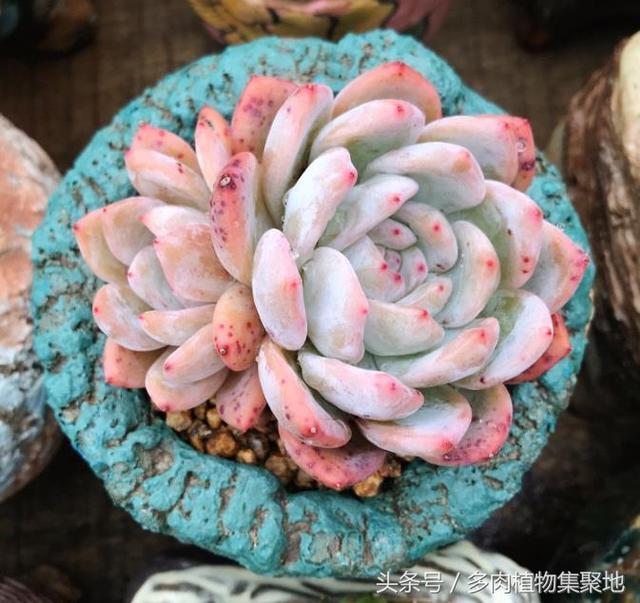
In summer, avoid prolonged exposure to high temperatures and strong sun. Succulent plant tissue cells are thick and fleshy and dissipate heat slowly, making them very prone to leaf sunburn. Most people do not carefully understand their habits after buying succulents, thinking that just watering them and letting them get some sun is enough. Actually, this is not the case, especially in summer, when succulents have relatively high requirements for sunlight. Sunlight between 11:00 noon and 14:30 in the afternoon is a major taboo, while morning and after 3 p.m. are more suitable.
Sun exposure can make succulents plumper and more beautiful. Except in summer, you can give them as much sun as they want in spring and autumn, and the longer the time, the better. Direct outdoor sunlight is best, because indoor glass blocks a large part of ultraviolet rays. If conditions do not allow it, you can place them in the spot at home with the strongest sunlight. The longer they get sun, the richer the colors of the succulents will become. In summer, provide appropriate shade to prevent sunburn. In winter, it is best not to water when the outdoor temperature is below minus 3 degrees Celsius, as it will freeze and cause cold damage.
For succulents, species that go dormant in summer require caution. If they have not entered dormancy and you cut off water in advance, because the temperature is high at that time and evaporation is great, they may wither. For some species that complete the alternation of new and old leaves during dormancy, if water is cut off in advance, it will affect the differentiation of new buds and force the old leaves to wither early. This will affect the alternation of new and old leaves and cause the entire plant to die. If the plant has already entered dormancy and you still water and fertilize it, it will cause rot. Therefore, only by correctly understanding the dormant period can you do a good job managing the summer dormancy period.
Generally, when grown outdoors on a balcony, there will be some shelter, and the light level is basically 40% of that in a greenhouse or even lower. At this time, only a 2-pin shade net is needed, which is enough. If you grow succulents on a terrace or in an outdoor growing area, and the daily sunlight duration is more than 8 hours, you can consider using a 3-pin shade net. If the light conditions reach more than 10 hours, you need to choose a 4-pin shade net with more pins. When summer temperatures drop or there is continuous rainy weather, the sunlight at this time is not so abundant and is harmless to succulents, so you can appropriately put away the shade net and give the succulents supplemental ultraviolet light.
For growing "summer-type" species, you can water fully, but not allow waterlogging. During the rainy season, pay attention to drainage and flood prevention to avoid root rot caused by soil waterlogging. It should be pointed out that although succulents in the growing period are drought-tolerant, they do not like drought. If they are short of water for a long time during the growing season, although the plants will not die, they will grow extremely slowly or even stop, and their appearance will also be poor. Therefore, sufficient water must be given during the growing period. The best time to water is early morning, and evening is also acceptable, but avoid watering during the high temperatures at noon.
There is no need to say much about the importance of soil aeration, and it should also have somewhat good water retention. If you do not know how, you can follow this ratio: 40% peat plus 50% granules (or vermiculite, maifan stone, etc.), then use rainbow stone or akadama soil as a top dressing. For seedlings, you can use a little more peat; for old plants, you can use a little more granules. A large temperature difference helps succulents develop their best appearance. For example, in spring and autumn, when the outdoor temperature difference between day and night is large, succulents grown outdoors will change color in three to five days, and the colors will be very beautiful.
This is a gathering place for succulent lovers, sharing succulent care tips. You are welcome to follow and exchange ideas.