Two Wolfberry Trees Are No Longer Young - Try Managing Them This Way
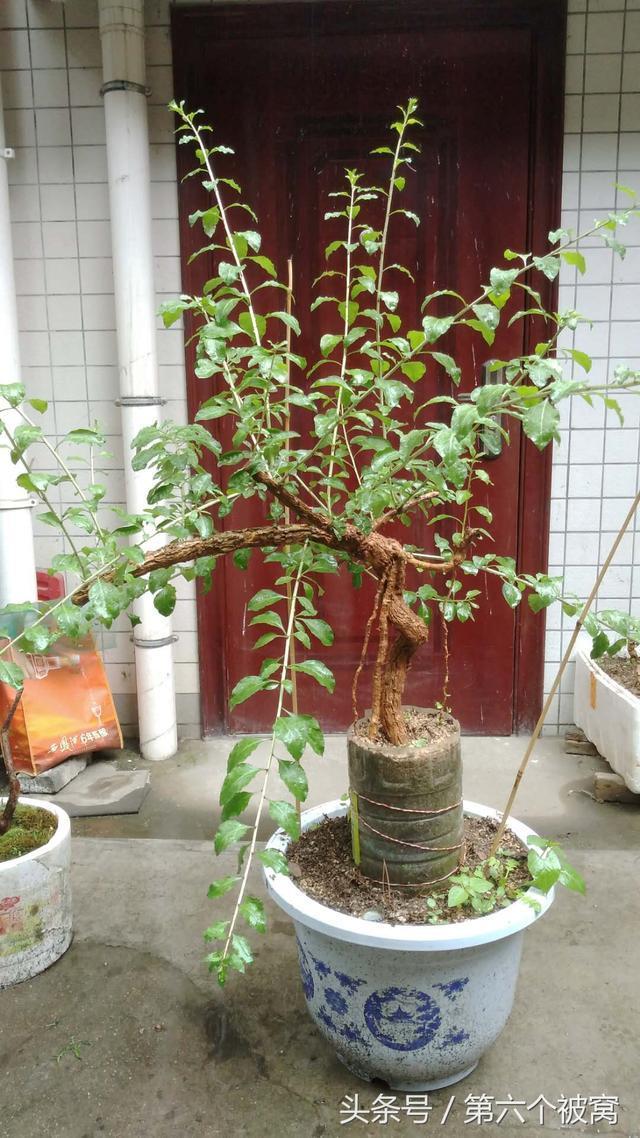
No Longer Young: A friend sent me two wolfberry stumps and asked me to help figure out how to shape them.
Both stumps are very tall, as you can tell from the high mounding of soil, and they basically follow the same pattern: both have horizontal trunks, and the budding is irregular.
How do you shape this kind of horizontal trunk? I thought of a friend's wolfberry tree. It's the one below.
Dense shade blocking out the sun, laden with fruit, visitors sitting underneath, the red berries within reach - this is a scene of harvest.
For similar horizontal-trunk bonsai, it seems this shaping approach can be used across the board.
The image above can also serve as a reference - it's also a wolfberry.
The old trunk is weathered and full of history, the autumn leaves are sparse, and the fruit is all spent.
So my advice to this friend is: shorten the tall trunks, especially the lower parts - such long roots serve little purpose for bonsai. For wolfberry bonsai, if you want it tall, go really tall, tall enough for the literati style; if you want it low, go for the squat, domineering style - 20 to 30 cm tall is enough, fist-sized, and that too is a fine piece.
When we look at trees in nature, they are especially tall and especially graceful. But bonsai is not nature - it is nature in miniature, a simulated nature, the natural landscape in the bonsai master's mind, so proportion matters a great deal. The saying "add one part and it's too long" captures exactly this idea.
The images below are for you to reference how to handle the branches. Wolfberry branches easily grow extremely long, but do not easily thicken. Who has a method for thickening them? Who can make wolfberry branches naturally twist and turn in one bend after another?
It's frightening that this may go against the wolfberry's nature, but someone will always find a way.
Look at the tree above, and how those two curved branches are handled.
The wolfberry branches of Big Cleaver in the image above are handled very well. How does Big Cleaver handle branches? I've posted about it many times. You can look for the original posts.
The wolfberries below also belong to this friend, No Longer Young. A few of them still have potential. Especially that cascade style one - just right, and the buds have grown in beautifully.
It is very difficult for wolfberry to form branch groups; every single branch needs careful study. Rainy days are exactly the best time to study wolfberries. If you have nothing to do, you can bring them inside and study them properly.
Hmm, the most beautiful thing is not the rainy day, but the eaves under which I once sheltered from the rain with you.
A spring rain comes pattering down, sprinkling across the river and sky. Listening to the sound of cars outside the window fading in and out, mingling with the dripping rain, thinking of distant places and those warm-hearted friends, I feel an inexplicable joy.
I've said that when I'm old, after retirement (TM does retirement really start at 65 now?), I will surely ride a donkey in the fine rain, with a bamboo staff and straw sandals, wandering everywhere, visiting all you wolfberry-growing friends, looking around. And while I'm at it, I'll help you prune your wolfberries and do some shaping. Our motherland's mountains and rivers are so magnificent, and I've only been to very few places.
How's that idea?