Potted rubber plant just won't grow? Let me teach you a few tricks: thick, glossy leaves and fast-growing stems
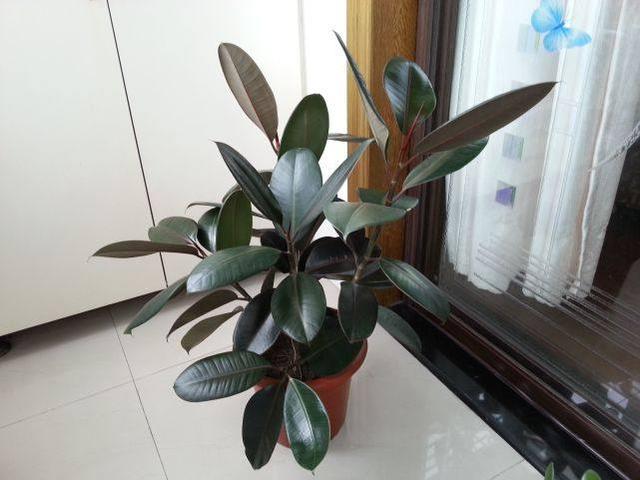
The rubber plant is one of the easier houseplants to grow. It counts as a succulent, more or less, so it doesn't matter if you water it a bit more or a bit less. It's also hard to kill, which is why most people choose to keep a rubber plant at home, adding a touch of spring to the indoors. It can also purify the air and absorb dust, which is great.
If your rubber plant grows slowly and its leaves look listless, there are only a few possible causes. Xiao Qi will explain them, and if your rubber plant has these problems, you can check against them.
1. Insufficient water
Although the rubber plant is easy to grow, if you don't water it for a long time it will stop growing, though it won't die. If you've had it for a long time and never watered it, I suggest you give it a drink. Long-term lack of water is the main reason it doesn't grow. Another point is that the soil must be loose and breathable, and when you water, try to soak it through. If you only ever give the soil surface a little water over the long term, the soil at the bottom gets no water supply, and since there are roots down there too, the roots get no water and the plant will stop growing or develop other problems. The watering principle for rubber plants is: don't water until dry, and when you do water, soak it through.
2. No growth due to lack of fertilizer
If you want the rubber plant to grow fast, it must have plenty of nutrients. During the growing season, if you never repot it and never fertilize it for a long time, the potting soil will be completely depleted of nutrients. If the roots go without nutrients for a long time, growth will stall. In more serious cases, leaves may even turn yellow and drop. So during its growing season, you must regularly give it fertilizer at least once or twice a month. Try to choose fertilizers high in nitrogen and potassium, because it is mainly a foliage plant. Fertilizers high in nitrogen and potassium promote lush foliage and thick, sturdy stems. You can also use fermented oil crops, such as beans and peanuts. These fermented oil crops are the best high-nitrogen, high-potassium fertilizer.
If you don't want to ferment anything, you can also bury a few cooked soybeans at the edge of the pot, a little way from the roots. Bury a few, and this will likewise have a fertilizing effect.
3. No growth due to damaged roots
No matter what plant it is, growth depends on the roots absorbing nutrients. If its roots are damaged, they can't absorb nutrients and the plant will stop growing; in serious cases, rotten leaves and leaf spots may appear. If you notice it has stopped growing, the leaves have rotten spots, or the stem nodes and leaves feel soft, I suggest you check the roots to see whether they are damaged, and repot it with fresh soil while you're at it. Cut off all the damaged roots, soak them in carbendazim, replant in fresh soil, and it will quickly send out new roots and grow well.
If you want your rubber plant to grow well, during the growing
season, give it fertilizer and water at least once or twice a month. Try to choose a fertilizer high in nitrogen and potassium. Choose loose, breathable potting soil. When the soil is dry, water it thoroughly. Try not to let water accumulate in the saucer at the bottom, as standing water easily causes root rot. Be sure to give it plenty of light, because the rubber plant quite likes light. With enough light, the leaves will be darker and thicker, and the stems won't grow leggy.
Just remember these few points, and your rubber plant will have thick, long stems and plump, glossy, almost black-shining leaves, and will keep sprouting new buds.