Edible bonsai cultivated by Henghe Grain Cooperative
2018-05-06 09:45 | Zhejiang News App reporter | Lu Chunming
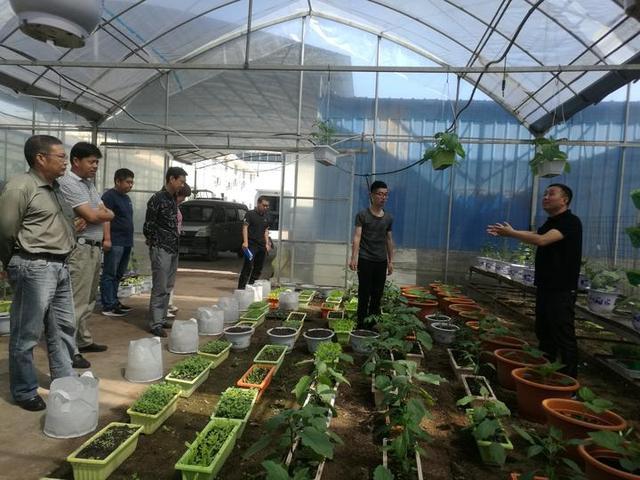
On the morning of May 4, experts from the Dongyang Municipal Agriculture Bureau came to Henghe Grain Cooperative to provide guidance on the use of agricultural machinery, affirmed the cooperative's project of cultivating bonsai fruits and vegetables using seedling greenhouses, and offered work guidance.
The bonsai fruit and vegetable cultivation project of the Henghe Grain Cooperative Union was operated and guided single-handedly by Ge Xiaoquan, a cadre of the Hengdian town government (formerly a cadre of the Dongyang Municipal Agriculture Bureau). According to reports, at present, more than 500 pots of fruit and vegetable seedlings have been planted in the cooperative union's seedling greenhouse, including chili peppers, tomatoes, eggplants, leaf lettuce, pumpkins, small radishes, lettuce, etc. The flower pots are placed on the ground in forms such as single pots, stepped combinations, tiered arrangements, and elevated display racks, and some are suspended in the air with hanging ropes, with varied shapes, reflecting ecological beauty.
Two young people, Lu Jianwei and Ge Weihua, persons in charge of the cooperative union, participated together in the bonsai fruit and vegetable cultivation, and Ge Xiaoquan provided guidance on all aspects including bonsai soil, mixing organic fertilizer, soil disinfection, and watering. Every morning from 6:30 to 7:30, he would come to the cooperative union's seedling greenhouse to inspect and guide. On the morning of May 4, after carefully inspecting, Ge Xiaoquan reminded Lu Jianwei to promptly open through the drainage holes at the bottom of the pots and to timely trim seedlings and transplant them.
"Hatching bonsai fruit and vegetable seedlings in the seedling greenhouse allows the temperature and humidity inside the greenhouse to be effectively controlled, and shade measures can be taken well, so the fruit and vegetable seedlings grow much faster," Ge Xiaoquan said. During the cultivation process, spraying pesticides is strictly prohibited, and all procedures such as fertilizing and sterilizing are strictly carried out according to scientific operations to ensure organic, ecological, safe and environmentally friendly production.
Since the introduction of bonsai fruits and vegetables in mid-April, the Henghe Grain Cooperative Union has received three or four batches of visitors who came after hearing of its reputation. "After seeing them, visitors said one after another that placing fruit and vegetable bonsai at home can let children watch and learn the process of growing vegetables, and adults can also relax while cultivating them. Quite a few visiting customers want to buy twenty or thirty pots to take home," Ge Xiaoquan said. At present, "Henghe" bonsai fruit and vegetable cultivation is still in the technical cultivation stage, and customers can entrust the cooperative union with hatching and cultivating and have exclusive bonsai fruits and vegetables customized for them. Two customers have already each ordered 30 pots.
Next, under Ge Xiaoquan's guidance, the "Henghe" fruit and vegetable bonsai cultivation project will make full use of the existing 10-mu seedling greenhouse, expand the hatching area, and plant 10,000 pots of fruits and vegetables. "As the fruits and vegetables continue to grow, we will build green supports on the flower pots with bamboo strips, iron mesh, pipes and other materials, making the bonsai shapes more unique and beautiful," Ge Xiaoquan said.
The "Henghe" fruit and vegetable bonsai cultivation project is an attempt by township cadres to use their own professional experience to support young "second-generation grain growers" in transforming to agricultural production and improving their cultivation capabilities, and it has the potential to create greater economic benefits.