The wild grass with an imposing name bears fruit like a watermelon but cannot be eaten, now 20 yuan per jin, a rare find
Warm reminder
Hemu Report aims to share and popularize information about various plants and their uses, for reference only. If medicinal use is needed, it is recommended to consult a professional physician to avoid problems!
In rural areas there are all kinds of wild grasses. Whenever spring arrives, these wild grasses in the countryside all begin to grow one after another. As for these wild grasses, farmer friends could be said to have seen them so often they are no longer surprised, but there are always some rather special wild grasses that can still attract a lot of attention, such as those wild grasses that bear wild fruit. Below, the author introduces to everyone a kind of wild grass from the mountain villages, this wild grass bears somewhat special wild fruit, but many farmer friends do not dare to eat it, and instead it has other great uses.
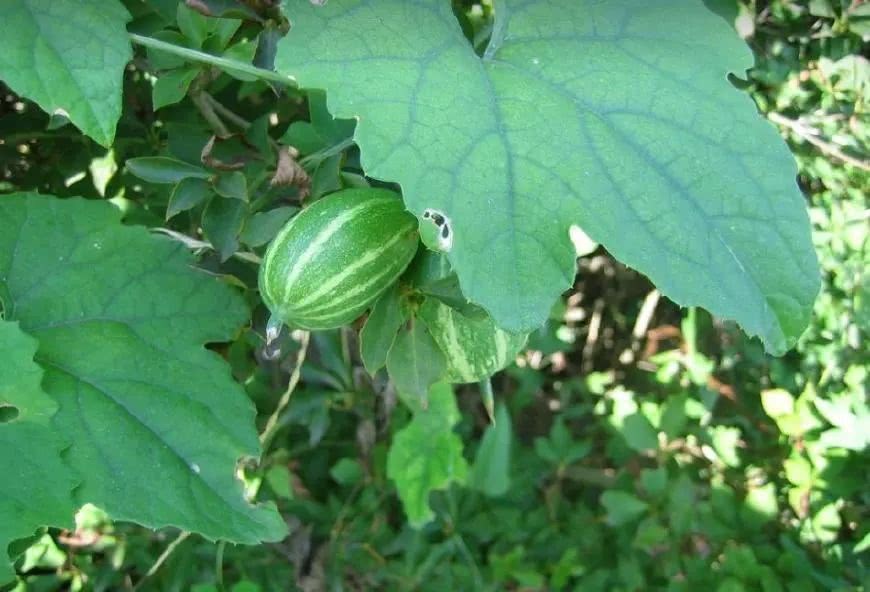
Every May, many wild grasses growing in the mountain forests begin to bloom, yet one kind of wild grass is very special. If you are a farmer friend who has grown vegetables, you can tell at a glance that the leaves of this wild grass look very much like cucumber leaves, but when August comes, you discover that the fruit it bears is actually not a cucumber, but a kind of wild fruit that looks like a watermelon. This wild plant is "Wang Gua" (Trichosanthes cucumeroides). Do not be fooled by this imposing name, as if it were the king of melons; in fact many farmer friends do not much like this wild fruit, and the reason is that the inside of its fruit is very ugly.
After Wang Gua ripens, it turns red, and seen from afar it looks just like an enticing large cherry, but if you think Wang Gua is delicious, once you peel it open you will find that the flesh of Wang Gua is actually black, very ugly. Many friends living in rural areas lose interest the moment they see the flesh of Wang Gua, and thus many farmer friends do not much like Wang Gua.
In fact, although the flesh of Wang Gua is very ugly, its value is not low at all; rather, the whole plant is a treasure and has good medicinal value.
The author also consulted relevant materials. In the records, the fruit, seeds and roots of Wang Gua can all be used as medicine and have medicinal value. Used as medicine, it has the effects of clearing heat, promoting fluid production, dissipating blood stasis and promoting lactation, and can be used to treat various symptoms such as excessive thirst, jaundice, dysphagia and regurgitation, amenorrhea, blocked lactation, carbuncles and swellings, chronic pharyngitis, blood stasis amenorrhea, cold-heat aching pain, and benefiting qi and curing deafness. However, when the author consulted the materials, it was found that in the "Hunan Materia Medica" it is recorded that Wang Gua used as medicine is toxic, while in the "Daily Materia Medica" it is recorded as non-toxic, so although Wang Gua has medicinal value, the author does not recommend using it casually.
It is precisely because Wang Gua has medicinal value that many farmer friends, although they do not much like it, will pick it and dry it in the sun to sell. The author heard a farmer friend in the village who sells medicinal materials say that the current market price of Wang Gua is about 20 yuan per jin, which shows it can be considered a rare find. However, when the author saw the flesh of this Wang Gua, he did not dare to eat it either. I wonder if any friends have eaten it and could share how it tasted.
Dear friends, have you ever seen Wang Gua? You are welcome to leave a message and exchange views
Text/Hemu Report, Images/Internet
If you like Hemu's articles, you are welcome to follow