How should bonsai cope with hot and humid weather after summer arrives?
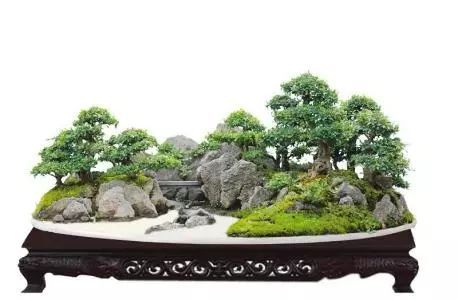
Many people like to keep bonsai at home; it is a good choice for beautifying the home environment. But summer is probably one of the hardest seasons for bonsai. The high temperature, muggy heat and humid environment of summer are a major disaster for bonsai. What measures should be taken?
1. Watering
Some mistakenly believe that watering frequently during high temperatures is good for the growth of the trunk, not realizing that watering several times a day makes the potting soil too wet, leaving the roots in an anaerobic respiration state for a long time, which produces excessive alcohol accumulation. The root system's ability to absorb water, inorganic salts and minerals fails, and the trunk eventually drowns to death. Generally speaking, in summer or during drought, it is best to water once in the morning and once in the evening.
2. Drought
When a tree stump is planted in a pot, whether a deep pot or a shallow pot, the soil is always limited, and the water it contains is also limited. Watering when you remember and not watering when you forget, sometimes leaving it unattended for several days in a row, and only quickly adding water once the leaves are found to be wilting, after which the leaf surface returns to normal - this is a reaction of the trunk adapting to the environment. But if this goes on for a long time, the excessive transpiration will eventually make the trunk seriously ill and beyond recovery, causing it to die of dehydration.
3. Sunlight
When the ambient temperature exceeds 28°C, shade protection treatment should be given to the bonsai. Otherwise, the amount of water the trunk obtains from the soil is far less than the water lost through transpiration. In mild cases, the leaf edges are scorched and withered; in severe cases, the trunk is scorched, severely damaged and dies.
4. Sudden shading
Normally, for some tree species that prefer shade, shading measures should be taken. For example, rhododendrons, camellias and the like mostly prefer shade. To avoid high-temperature damage, when the ambient temperature exceeds the maximum temperature limit the trunk can tolerate, the bonsai should be moved to a lower-temperature area with weaker light, about 2°C lower, to benefit the trunk's growth. But if it is suddenly moved indoors or to a lower-temperature area, within a few days the leaves will naturally fall off and the tree stump will shrink and die.
5. Prevent scorching by the sun
First, prevent exposure to the blazing sun. On balconies in summer, the temperature is high and the sunlight is harsh. At noon, the temperature of the pot surface can reach above 45°C. Tree-stump bonsai are generally planted relatively shallowly, with very little soil. If exposed to excessive sun, the leaves are easily scorched, the small branches lose water, and the bare roots dry up and die. For this reason, necessary shading must be provided. In addition, the method of covering the pot surface with grass can also be used to lower the potting soil temperature.
6. Stop fertilizing
In summer, not only is the temperature high, but the potting soil is also very moist. It is best to stop fertilizing stump bonsai, especially tree stumps newly planted that same year, to prevent the potting soil temperature from becoming too high after fertilizing and burning the nutrient fibrous roots.
7. Pay attention to ventilation
Bonsai should not be placed too close to walls, nor placed too densely, to avoid damage to the trunk and branch cortex caused by sunlight reflected from walls and pot walls, and also to facilitate ventilation and heat dissipation.