Ficus microcarpa is great at purifying the air, and grown at home it becomes a beautiful bonsai
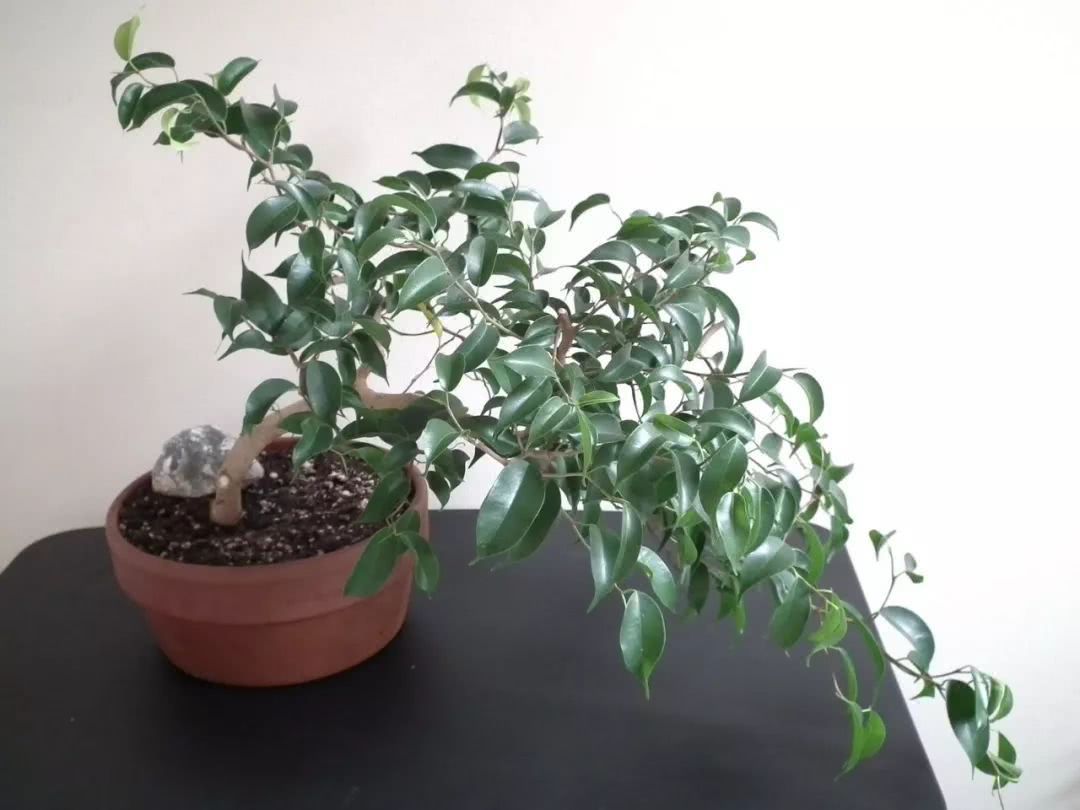
Below we introduce a potted plant that is excellent at purifying the air, namely Ficus microcarpa; some varieties have leaf spots and are called variegated Ficus, and all are very popular indoor air-purifying plants that need little regular care indoors and can stay evergreen all year round, with very dense branches and leaves and good ornamental value.
Ficus microcarpa likes a warm and humid environment all year round, grows very easily in a cool indoor environment, can reach several meters tall outdoors, and can also be grown as a bonsai plant indoors.
1. Care location
Ficus microcarpa can grow in all kinds of environments, but it is best to give it appropriate light; growing it in a spot with half shade and half sun is good. It likes a warm and humid climate all year round. Potted Ficus microcarpa should be turned regularly so its shape stays even and it does not grow crooked. When the temperature is above 10°C it should be kept outdoors or on a windowsill with plenty of sunlight; without light and with temperatures too low, it will keep dropping leaves.
2. Soil choice
Growing Ficus microcarpa requires loose, fertile, slightly acidic soil rich in humus. Avoid using peat soil, otherwise its root system will develop problems. More sand should be added to the soil to ensure good drainage.
For young Ficus microcarpa seedlings, avoid direct sun exposure; first keep them in a bright environment and do not move them frequently.
3. Container choice
When growing Ficus microcarpa, do not choose too large a container, otherwise water accumulates easily. The base of the roots and stem of seedlings should be covered with a suitably thin layer of soil. You can choose a flower pot with larger drainage holes, which benefits the root growth of Ficus microcarpa. Each watering should soak through, and some leaf mold should be added regularly.
4. Fertilizer
Ficus microcarpa is a very fast-growing ornamental plant. During the growing season, make sure there are enough nutrients. Generally, in spring and summer, give appropriately decomposed organic fertilizer once a month, which promotes good growth. After the weather turns cold in autumn, stop fertilizing, keep it warm all year round, and avoid yellowing leaves.
5. Watering
Spring and summer are the peak growing seasons for Ficus microcarpa, so it needs regular watering, but avoid overly wet soil. Another issue is controlling humidity and avoiding dry air; it likes a high-humidity environment. If you find the leaves of Ficus microcarpa curling or turning brown, it is very likely overwatered. Before each watering, make sure the potting soil has dried out.
After it turns cold in autumn, watering should be controlled appropriately, but relatively high air humidity should be maintained.
6. Sunlight
The location where Ficus microcarpa is kept should at least stay bright, and ideally it should receive appropriate scattered light every day. With appropriate daily light, Ficus microcarpa grows very quickly, but newly transplanted Ficus microcarpa should avoid direct sunlight. It can first be kept in a bright place, with gentle morning sun, and after its roots and stem grow strong, gradually increase the light. If you find the leaves of Ficus microcarpa drying out, it is usually because the light is too strong.
7. Best conditions
The optimal growing temperature for Ficus microcarpa is between 18 and 25°C. In summer, when kept outdoors, it should have appropriate shade; when the temperature drops to around 10°C, it should be moved indoors to avoid frost damage. It is a tropical plant and fears the cold.
Ficus microcarpa kept indoors should maintain a certain air humidity, with 50% to 70% being most suitable. If the air is dry, it will keep dropping leaves. Also avoid keeping it next to heating or vents.
8. Propagation and care
The simplest way to propagate Ficus microcarpa is by stem cuttings. Cut off a section of stem about 12 cm long; generally choose a semi-woody stem about one year old. Remove the leaves from the bottom of the stem, place it in water, root it in water, change the water every two or three days, and keep it on a bright windowsill at around 22°C, and it will easily take root and sprout.
Ficus microcarpa is a very easy-to-grow plant and can adapt to various indoor environmental conditions. Even so, a potted Ficus microcarpa kept indoors should not be moved frequently; it should stay in a fixed spot with scattered light. Every spring and autumn it should be pruned appropriately to maintain a good shape.
9. Pests and diseases
Ficus microcarpa occasionally suffers from pests and diseases, commonly red spider mites and mealybugs, usually caused by dry air or improper watering, and possibly also by pathogen-carrying soil. The most direct symptoms of pests and diseases are continuously dropping leaves and leaves constantly turning yellow. Diseased leaves and branches should be cut off promptly, the care environment improved, and insecticide sprayed in time.