Could the succulents you keep at home be toxic? Learn to tell whether you've been hit or scammed
Expert for this article: Feixue, PhD in Plant Molecular Biology (fengfeixue0219)
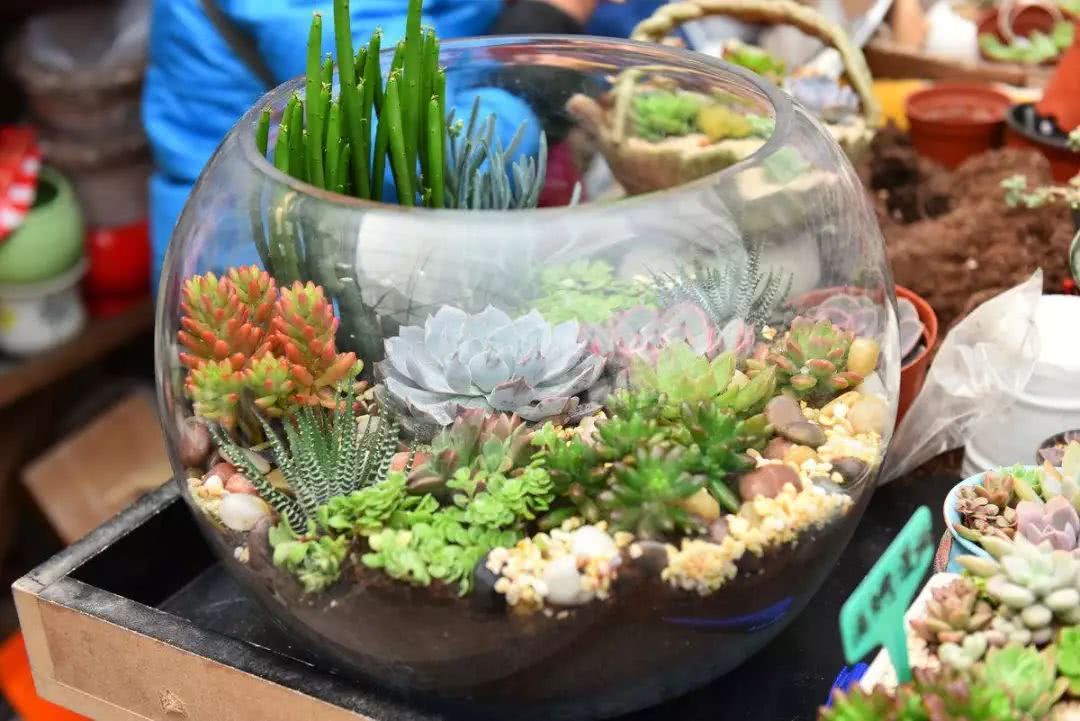
In recent years, among all kinds of greenery, succulents have won popularity with the public thanks to their diverse forms, cute and compact size, and the fact that most are easy to care for, gradually becoming the fastest-growing and most market-favored type of plant in home cultivation.
However, when it comes to growing succulents, there are also some claims circulating that many succulents are toxic and pose a threat to health, making them unsuitable for home care, which leaves some consumers feeling uneasy when choosing succulents. So, do succulents really pose a threat to health? Let's sort this out together.
What are succulents?
Succulents are not a single kind of plant, nor a taxonomic category in botany, but rather a general term used in the field of horticulture for various plants with thick, fleshy, juicy, water-rich tissues and organs.
In fact, succulents include several dozen botanical families and hundreds of plant species. Among them, the most common are the Cactaceae (cactus family), Aizoaceae (fig-marigold family), Crassulaceae (stonecrop family), and Liliaceae (in newer classification systems, some plants traditionally placed in Liliaceae are sometimes reassigned to Xanthorrhoeaceae).
Most of these plants grow in arid environments with little rain, so they have evolved fleshy characteristics to store water and get through harsh conditions.
Are succulents toxic?
Because plants must face diverse environments, as well as attacks by pests and diseases and being eaten by animals, many plants produce various chemical substances in their bodies to resist these external factors unfavorable to their survival. Since these substances are not basic substances needed to sustain the plant's survival, they are called "secondary metabolites." It is precisely becausemany secondary metabolites are used by plants for defense,that some secondary metabolites do indeedhave toxicity to animals, including humans.
However, because the secondary metabolites contained in different plants vary enormously, and succulents comprise a great many groups, thereforewe cannot broadly call succulents "toxic" or "non-toxic"; each specific case must be analyzed on its own.
1
Aizoaceae (fig-marigold family)
Various Aizoaceae succulents, such as the commonly seen Lithops (living stones), Faucaria (tiger jaws), Aptenia (heartleaf ice plant), and Drosanthemum (dew plant) on the market, can be considered the cutest and also the safest succulents. They are not only adorable in form but also contain almost no secondary metabolites harmful to humans. Some Aizoaceae succulents, such as Aptenia cordifolia (heartleaf ice plant), can even be eaten as a vegetable. Still, as ornamental succulents, it is better not to put them in your mouth.
2
Liliaceae (lily family)
For traditional Liliaceae succulents such as Echeveria (stone lotus), Aeonium arboreum 'Zwartkop' (black rose), Sedum acre (goldmoss stonecrop), and Haworthia (zebra plant), the secondary metabolites in their bodies are usually not toxic to humans, so you can buy and grow them with confidence. The only thing to note is that some plants accumulate components such as oxalic acid, which if accidentally ingested can irritate mucous membranes, causing a strong dry, stinging sensation. However, these symptoms usually disappear after resting for a certain period of time.
3
Cactaceae (cactus family)
Cactus-family plants are also a group of succulents that can be grown with confidence. Aside from needing to watch out for their sharp spines, they are an excellent choice for home succulents. However, one type of cactus-family plant requires caution: the spineless, soft-bodied Lophophora (peyote) cacti. Lophophora species contain substances such as mescaline and are hallucinogenic, so they must never be ingested by mistake.
4
Euphorbiaceae (spurge family)
Among succulents,the most controversial are the various Euphorbiaceae plants, such as Euphorbia milii (crown of thorns), Euphorbia neriifolia (Indian spurge tree), and Euphorbia obesa (baseball plant). It has been reported that many Euphorbiaceae plants, because they contain "cancer-promoting substances," have been put on a "blacklist" by many households, and this is also the biggest origin of the rumor that "succulents are harmful."
In fact, the so-called "cancer-promoting" substances refer to terpene esters contained in the latex of these plants, which have the ability to activate the Epstein-Barr virus (EBV) already infecting the human body; the activated EBV can, through replication and recombination of its nucleic acids, increase the probability of some tumors occurring. In addition, the terpenoids in the latex of Euphorbiaceae plants are mostly irritating, and contact with mucous membranes may cause symptoms such as inflammation, redness and swelling, and pain.
How to avoid the health risks of succulents?
From the above information we can see that, for these succulents, although the types of secondary metabolites in their bodies differ, they share one thing in common: they must be eaten, or come into contact with the sap released when the plant is damaged, to potentially pose a health risk to humans.
In fact, whether it is oxalic acid, toxic alkaloids, or the terpenoids in the sap, and so on, these secondary metabolites are not volatile; they exist within the plant and are only released into the environment after the plant is damaged, and then come into contact with the human body.
Therefore,when caring for these succulents, especially Euphorbiaceae plants, what you need to note isdo not break the plants, do not touch the plant sap, and prevent young children and pets from accidentally eating the plants.Pay attention to these points, and you can largely avoid the risks and enjoy the pleasure of growing succulents.
Support us by commenting and liking