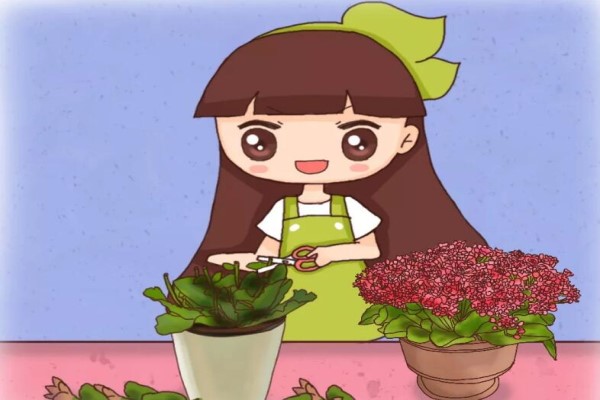
Prune roses and gardenias with one cut, and flower buds burst out easily for a full pot
Roses
Roses come in rich varieties with bright, beautiful colors and are deeply loved by flower lovers, but when it comes to pruning, people either don't know how or can't bear to make the cut. How can you expect to see blooms that way?
Daily pruning:
1. Cut off old branches and weak branches.
① The presence of old branches and weak branches affects the absorption of water and nutrients by other branches and cannot guarantee the needs of strong branches.
② In addition, cutting off old branches and weak branches can also reduce the chance of the plant being infected by pests and diseases, improve the disease resistance of roses, and make them healthier.
2. Cut off blind branches and inward-growing branches.
① Blind branches are those that have stopped growing and will not produce buds; keeping such branches only takes away nutrients.
② Cutting off branches that grow inward toward the plant, especially the branches at the bottom, helps strengthen ventilation and light penetration, reduces pest and disease infection, and promotes sprouting and bud formation on the upper part.
3. Cut off dead leaves, diseased leaves and spent flowers.
① Once dead leaves or diseased leaves are found on roses, they should be cut off in time. Besides competing with normal branches and leaves for nutrients, they can also catch pests and infect the whole rose plant.
② During the flowering period, spent flowers should also be cut off in time after blooming.
Post-bloom pruning:
1. How can single-flower roses rebloom and be encouraged to grow new branches?
① When a rose is about to fade, make a slanted 45° cut below the flower (above the point with three leaves), which can promote reblooming.
② Make a slanted 45° cut about 0.5 cm above the point with five leaves, which can promote the growth of new branches.
2. How can multi-head roses bloom abundantly and grow new branches?
① Cut below each flower bud near the node, with the cut about 0.5 cm from the node; cutting this way can allow reblooming.
② Cut below all the flower buds, leaving one branch between cuts; cutting this way can promote the growth of new branches on the rose.
Azaleas
Huahua has seen many flower lovers asking how to prune azaleas. In fact, it's simply about wanting a good-looking shape, and the key is being willing to work on it.
Daily pruning:
1. Cut off dead branches and diseased leaves.
Dead branches and diseased leaves first waste nutrients and water, and second easily trigger pests and diseases, so during daily care, just cut them off as soon as you find them.
2. Pinch off the growing tips and remove the top buds.
If you want azaleas to grow denser and have a fuller shape, regularly pinching off the growing tips and removing the top buds is a good method. Cutting off the terminal buds can promote the development of lateral buds and make the azalea look more luxuriant.
Post-bloom pruning:
1. Cut off all spent flowers.
Azalea flowers do not fall off easily after withering, so you need to cut off all the spent flowers by hand; only this way can new branches and buds be promoted to grow on both sides.
2. Cut off overlapping branches and leggy branches.
If azalea branches grow too densely, it will affect the sprouting of new buds after flowering. Leggy branches first waste nutrients and second affect the overall shape of the azalea, so both should be cut off in time.
Bougainvillea
Bougainvillea has become a new favorite among flower lovers. Watching other people's flower cascades eight stories high makes you envious, but it won't grow well if you just leave it alone! Let's take a look at how to prune it~
1. Cut off deformed branches, leggy branches and overlapping branches.
Deformed branches refer to those that grow twisted, or those that grow between the main branches and cannot develop, as well as branches growing in parallel. These branches should be cut off in time to promote the development of new branches.
Overlapping branches make the bougainvillea's branches look too complicated, and leggy branches make the bougainvillea's shape look loose. Both should be pruned off routinely.
2. Cut off weak branches and dead branches.
Weak branches are less vigorous than strong branches, and even when they sprout they are not as good as strong branches. Cutting them off in time can ensure that strong branches produce better buds and shoots.
Dead branches no longer have the ability to regrow and should be cut off in time to promote the development of new branches.
Gardenias
If gardenias are not pruned properly, they easily grow leggy and drop flower buds. Flower lovers who haven't been diligent should get moving right after reading this!
Daily pruning:
1. Cut off leggy branches and branches growing in the wrong direction.
Branches that are too long or that grow toward the main branches should be cut off; only this way can balanced growth of the gardenia be ensured.
2. Cut off dead leaves and diseased leaves.
Dead leaves should be removed immediately, otherwise they will take up nutrients needed by other healthy leaves. Diseased leaves must be cut off thoroughly to prevent other branches and leaves from being infected.
3. Cut off excess flower buds.
Keep only 2~3 flower buds on one branch, keep the strong ones and cut off the weak ones, so as to avoid insufficient nutrient supply that prevents blooming.
4. During the flowering period, cut off the leaves around the flower buds.
To ensure that the remaining flower buds can bloom normally, it is recommended to trim the large leaves below the flower buds, so that nutrients will be supplied to the flower buds in a more concentrated way.
Post-bloom pruning:
1. Cut off spent flowers.
After gardenias finish blooming, cut them off in time, otherwise it will slow down the emergence of new buds.
2. Pinch off the growing tips and remove the top buds.
After the flowers fall, gardenias will grow many new terminal buds. At this time, you can pinch off the growing tips and remove the top buds, cutting off part of the terminal buds to promote the development of lateral buds and make the gardenia grow more luxuriantly.
Milan
Milan can be pruned all year round. In spring it can be heavily pruned, and in autumn and winter routine pruning and care can be carried out.
1. Daily pruning mainly cuts leggy branches, inward-growing branches, dead branches and diseased branches. This can ensure normal ventilation and light penetration for the plant, and can also ensure that strong branches have sufficient nutrient supply.
2. After Milan sprouts new shoots, pinching off the growing tips can be carried out to promote the development of lateral buds.
3. In spring it can be heavily pruned, that is, all branches are cut off. The purpose of doing this is to make Milan produce more lateral branches, develop horizontally, and expand the crown.
4. In summer, when the temperature is high, large-scale pruning is generally not recommended.
That's all Huahua has to say about pruning today
In fact, the more you prune flowers, the faster they grow
If the flowers at home have lost their vitality, hurry up and pick up the scissors and give it a try!
For other questions, feel free to leave a message~