Mealybugs on succulents: use alcohol to kill insects and sterilize, keeping pests and diseases away
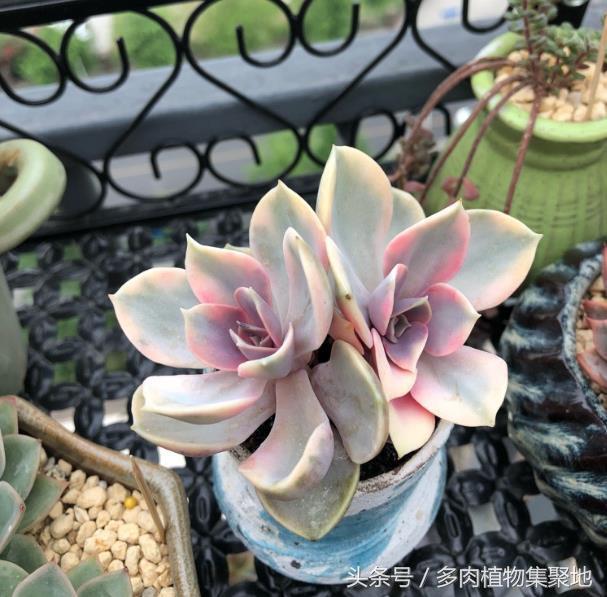
The weather has warmed up recently, and mealybugs on succulents are stirring again. For those who don't want to use pesticides, alcohol can come in handy again. You can use a syringe to draw up 75% alcohol, and spray it wherever there are mealybugs. The advantage is that it sprays precisely, and generally any mealybug that gets sprayed will die. Alcohol can also absorb the water from bacterial proteins, causing them to dehydrate, denature and coagulate, thereby achieving the purpose of killing bacteria.
What are mealybugs? Mealybugs are of course insects, so that's not important. What's important is that the body of a mealybug is wrapped in a layer of cuticle, so spraying with pesticides directly is not easily effective. And mealybugs suck plant sap, so they cause great harm to flowers and trees. Generally, plants targeted by mealybugs will show poor growth, yellowing leaves, early leaf drop and other symptoms, and in severe cases the whole plant will wither.
The sterilizing effect of alcohol is far less effective than killing mealybugs. For some stem cuttings, transplants, wounds and root systems, they usually survive quite well whether or not they are actually disinfected. Using alcohol to disinfect is more likely a psychological effect. The principle of alcohol sterilization is to denature proteins. The outer shell of bacteria is peptidoglycan (still quite similar to protein, just without spatial structure), while the outer shell of fungi is generally chitin, and alcohol has very little killing power against it.
Since alcohol is volatile, there will be no residue. In addition, it does almost no harm to the powder on succulent leaves (thin powder can be sprayed, thick powder should be sprayed with caution, as excessive spraying may make it hard to dry and cause the powder layer to break apart; for ones like Saussurea involucrata, don't try it, and if there are no pests normally, there's no need to spray anything, as any spray will remove the powder). It is not recommended to use high-concentration alcohol. If high-concentration alcohol is used, it dehydrates bacterial proteins too quickly, causing the proteins on the bacterial surface to denature and coagulate first, forming a firm film, and alcohol instead cannot penetrate well into the interior of the bacteria, thus affecting its sterilizing ability.
Alcohol kills insects and sterilizes, so it has relatively good prevention and control effects on early- and mid-stage succulent pest and fungal diseases. Do not use it under direct sunlight. It is recommended not to use it as a root drench; I haven't tried this, and since it cannot completely volatilize directly, it may burn the roots. If the plant's disease is severe, it is still recommended to pull it out.
After a succulent develops black rot, spray the wound once; after washing the roots, you can also spray once; for sunburn prevention and treatment, beheading succulents, and moldy wounds, you can spray once. In all these cases, you must let it dry, spray a little, then let it dry again. Do not use it on small leaves and thin small stems, as it will basically harm the plant, such as the succulent Senecio rowleyanus (string of pearls), Sedum dasyphyllum and other ground-cover sedums. Some flower enthusiasts say not to spray wounds because they will dissolve, but mine never have. When I cut off the heads, I always let them dry, spray a little, then let them dry again.
This is a gathering place for succulent enthusiasts, sharing succulent care tips. Welcome to follow and exchange ideas.