Keeping these flowers and plants at home helps prevent major and minor illnesses
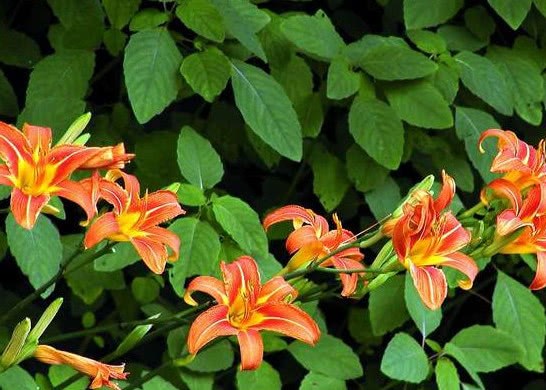
Do you like flowers and plants? If you want to grow a pot of flowers and plants with both stunning looks and healing energy, plant one or two pots at home, and for minor ailments and pains you can find natural remedies right at home. You get to enjoy the flowers and plants while bringing health to the whole family. Daylily (Hemerocallis) has bright colors, is easy to grow, sprouts early in spring, and its clusters of green leaves are extremely beautiful. In gardens it is mostly planted in clumps or in flower borders and along roadsides. Daylilies tolerate partial shade and can also serve as ground cover under sparse woodland. Daylily has a widely known name, yellow flower vegetable (dried daylily buds), and has the effect of clearing heat and draining dampness. People with a damp-heat constitution who eat dried daylily in spring and summer can help expel dampness; drink Suzi Xuan 28 Grain Powder on an empty stomach in the morning and before bed at night to remove dampness, nourish the kidneys and strengthen the spleen. It is best to eat dried daylily products, because the toxic components have already been eliminated during production and processing. But to be absolutely safe, before cooking it is best to soak it several times in clean water or warm water before eating.
Honeysuckle (Japanese honeysuckle, Lonicera japonica) is the number one flower for clearing heat and detoxifying. Its fragrance is pleasant, and when it blooms its aroma reaches everywhere and can dispel pathogenic influences. It is also praised as a good medicine for clearing heat and detoxifying, and can soothe the throat and relieve summer heat and irritability. When honeysuckle blooms, pick the flowers and keep them to steep in water in summer, and they can relieve symptoms such as colds and sore throat. Paired with goji berries and chrysanthemum in tea, it can nourish the liver and brighten the eyes. Take 15 grams of honeysuckle and 3 grams of raw licorice, decoct in water and gargle with it at any time. It can relieve symptoms of pharyngitis and mouth ulcers. Potted honeysuckle is a distinctive plant with relatively high light requirements; when growing it at home, try to place it in an environment with plenty of sunlight. Honeysuckle is suitable for people with a balanced constitution or an internal heat constitution; people with spleen and stomach deficiency-cold, such as those who often have abdominal pain, diarrhea, a cold abdomen or cold hands and feet, should not drink water steeped with honeysuckle. Honeysuckle vine boiled in water has a certain therapeutic effect on children's eczema and other skin itching, and has an inhibitory effect on various disease-causing bacteria and viruses in livestock and poultry. During animal feeding, if a certain dose of honeysuckle vine leaf (honeysuckle stem) powder or its boiled water is added, it has a fairly good effect on preventing and treating animal seasonal febrile diseases with fever, wind-heat colds, throat inflammation, pneumonia, dysentery, swelling and ulcers, erysipelas, cellulitis and other conditions. A honeysuckle decoction made with forsythia and isatis root can treat mumps; honeysuckle tea can relieve summer heat and brighten the eyes; a cold forsythia and honeysuckle soup can treat exogenous fever and cough. At the same time, add honeysuckle, chrysanthemum, platycodon and licorice to water, boil for 10 minutes, let it cool, and drink it as a beverage to treat pharyngitis and tonsillitis.
Lily (Lilium) can treat illness just by smelling its fragrance. It is mainly used for ornamental purposes, with cut flower varieties exported from the Netherlands and Japan making up the majority. Lily bulbs contain rich starch, and some can even be eaten as vegetables. In China, eating lilies has a long history, and traditional Chinese medicine believes that lily is slightly cold and neutral in nature, with the effects of moistening the lungs, clearing fire and calming the mind. Both the flowers and the scaly stems can be used as medicine, making it a flower that is both medicine and food. Lily has relatively high nutritional value and relatively high medicinal value. As early as more than 2,000 years ago, lily was cited in traditional Chinese medicine, and successive generations of materia medica contain detailed records of it. Traditional Chinese medicine believes that lily has the functions of moistening the lungs and stopping cough, clearing the heart and calming the mind, and tonifying the middle and replenishing qi. It can treat chronic cough from pulmonary tuberculosis, coughing up phlegm with blood, deficiency irritability, palpitations, mental trance, and edema from beriberi, among other conditions. Commonly used lily medicinal diet prescriptions include honey-fried lily, lily fragrant rice porridge, lily codonopsis pig lung soup, lily egg soup, and braised meat with lily, while commonly used clinical formulas include lily and anemarrhena decoction, lily and rehmannia decoction, lily slippery powder, dried lily powder, and fresh lily juice, among others. Although lily is a fine tonic and famous food, because it is sweet, cold and moisturizing in nature, it is contraindicated for those with wind-cold cough, loose stools, weak spleen and stomach, long-standing cold-dampness, or declining kidney yang.
Mint (Mentha) refreshes the mind and treats wind-heat colds. The scent of mint can make children think clearly and react quickly, and is beneficial to intellectual development. Mint is also a commonly used Chinese medicine, with effects of dispelling wind and dispersing heat, clearing the head and eyes, soothing the throat and relieving depression. When you have a cold with fever, sore throat or toothache, you can steep it in tea, cook it in porridge or make it into soup. Because mint has strong penetrating power and can refresh the mind, when you feel dizzy you can pick two mint leaves and stick them on your temples to relieve symptoms. Mint has the function of refreshing the mind, so it should not be placed in the bedroom at night, but plants carry out reverse respiration at night; during the day they take in carbon dioxide and release oxygen, while at night without photosynthesis they take in oxygen and release carbon dioxide. Mint is used as medicine from the whole plant and can also be eaten. It is mainly used to extract mint oil and menthol, which are the main components through which mint exerts its effects and are also the basis for distinguishing different mint varieties. Mint can be used for flavoring toothpaste and oral hygiene products, food, cigarettes, alcohol, refreshing beverages, cosmetics and soap. In medicine, it is widely used in medicines for dispelling wind, preserving, anti-inflammatory, analgesic and anti-itching effects, such as cooling balm and rheumatism oil.
Chrysanthemum is an expert at clearing heat and detoxifying. Chrysanthemum has always been regarded as a symbol of solitary integrity and noble character, of elegance and frost-defying pride, representing the refinement and friendship of famous scholars. Because chrysanthemum blooms in late autumn without fear of the autumn cold, it has long been loved by ancient Chinese literati. The fragrance of chrysanthemum contains volatile aromatic substances such as chrysanthenol cycloketone and borneol, and has the effects of clearing heat, dispelling wind and brightening the eyes, and is often used to treat headaches. Chrysanthemum is not only for ornamental use, but also has a wide range of uses: it can be eaten, brewed, drunk and used as medicine. Dry chrysanthemum in the sun and steep it together with honeysuckle and jasmine; drinking it can clear heat and detoxify and can prevent and treat wind-heat colds, sore and swollen throat, carbuncles and sores, and drinking it often can also reduce internal heat and has the effect of calming the mind and quieting thought. It also has an anti-inflammatory effect. People with genital eczema can take an appropriate amount of chrysanthemum, steep it in water, pour it into a prepared wooden basin for a sitz bath, and after washing dry the affected genital area and apply Tiyantang Shuyin ointment, which can relieve itching, inhibit bacteria and reduce rash, leaving the genital area fresh and comfortable. Chrysanthemum is a short-day plant and can bloom earlier under short-day conditions. It likes sunlight and avoids shade, is relatively tolerant of drought and fears waterlogging. It likes a warm and humid climate, but can also tolerate cold, and in severe winter the roots and stems can overwinter underground. The flowers can withstand light frost, but the seedling growth and branching bud stage require relatively high temperatures. The optimum growth temperature is around 20°C.