Spider plant propagation is simple, easily turning one pot into many
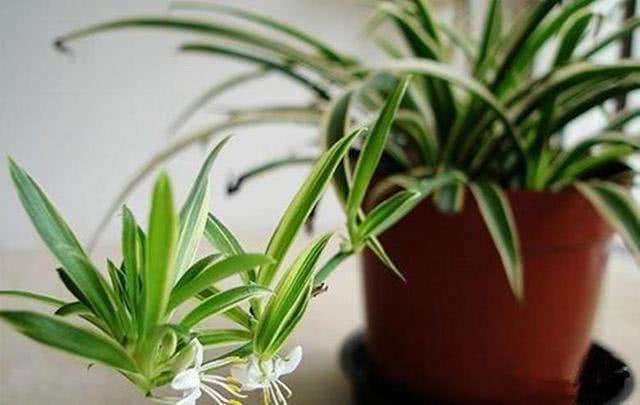
The spider plant is a plant with strong vitality and easy propagation. Whether grown in pots or hydroponically, it has strong ornamental value. Most importantly, it can also purify the air. Another major function of the spider plant is that it can absorb harmful gases indoors, especially in newly renovated rooms, where it has a strong ability to adsorb formaldehyde, making it a great air-purifying expert. So if you have spare pots at home, you can propagate several more pots. No matter where you place them in a room, they are very pleasing to the eye. Cuttings are not very troublesome; just master these few tips!
Prepare a spider plant, preferably one that has grown stems. If there are no stems, you can also divide the plant from the roots, or you can choose spider plant plantlets; all of these can be used for propagation. There are many varieties of spider plants, including green spider plants, variegated spider plants with golden edges, and others.
First, pick off the small spider plants growing one by one on the stems. You can use your hands or a knife. When picking them off, be careful to keep the roots growing on them so they can easily survive. Pick them directly from the stem of the spider plant; do not let the leaves scatter and fall off. When cutting them off, keep an appropriate section of the stem. When taking cuttings, do not choose a pot that is too large; a small pot is enough. Otherwise, if too much water accumulates, it is not easy to clean up, and it is also inconvenient to move. For pot selection, it is best not to use wooden pots. Although wooden pots are beautiful, over time the wood is prone to rotting, which will affect the plant. Also make sure there must be holes in the bottom of the pot; otherwise, it is impossible to grow the plant well.
The spider plant has strong vitality and grows easily, and it does not have high soil requirements. Of course, fertile soil is naturally best. When choosing garden soil, you can add some coal cinder and leaf mold. Coal cinder can enhance the soil's air permeability, and leaf mold contains more nutrients. Insert the cut plantlets into the soil, but do not insert them too deep; make sure the leaves are all above the soil. After planting, do not rush to fertilize, and do not place them in a place with strong sunlight. The suitable temperature for planting and propagation is around 20°C, so spring and autumn are the most suitable times for planting and propagation.
When watering, water thoroughly in one go. Do not water too frequently, then place it in a cool, ventilated place. At this time, the spider plant has not yet grown roots; if watered too much, it is prone to root rot. Roots generally begin to grow in about 7 days. If you are not sure whether roots have grown, you can gently pull a leaf with your hand. If you feel something holding the roots, then roots have grown. After a month, you can appropriately apply some water-soluble fertilizer. Remember, it is water-soluble fertilizer, do not get it wrong
When the spider plant's root system is well developed, you can appropriately prune the roots and add some nutrient soil. This way, the spider plant will be more lush. When the temperature is suitable, you can place the spider plant beside a window. At this time, the spider plant needs sunlight. In winter, pay attention to keeping it warm and place it indoors in a sheltered place. You can also use plastic wrap or plastic film to make a small greenhouse for the spider plant, so that next year the leaves will be greener