Detailed Explanation of the Methods for Making and Managing Camellia Bonsai
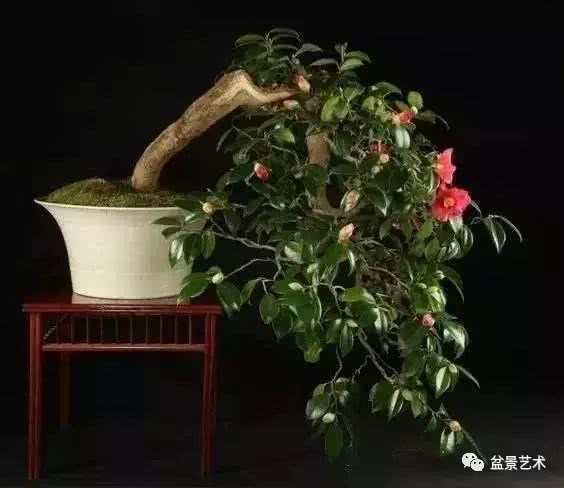
Plant landscaping material. Camellias are evergreen year-round, widely distributed, and have graceful tree forms, making them one of the important plant landscaping materials in southern China.
Specimen planting: using the different natural tree forms of camellias, planting them singly in greened environments, with the green lawn as a backdrop being the best.
Group planting: using the natural tree forms of camellias, with heights staggered, in groups of three to five, in clumps and patches, thereby highlighting the landscape effect of camellias.
Artificial shaping: Camellias can also be shaped artificially for ornamental use, such as: through pruning and shaping camellias into spherical, umbrella-shaped, and cylindrical crowns, camellia espalier forms, and prostrate ground-cover forms, making camellias grow creeping on the ground and spread across it.
Espalier is used more in Western Europe and North America, that is, planting camellias outside sunny, warm walls, attaching climbing frames, so that the camellia branches and trunks rise along the wall and then cover the wall, which is quite spectacular.
Bonsai shaping: using old dwarf camellia stumps, usually mostly sasanqua, according to bonsai shaping methods, matched with water and stones, lovely and unique. There is also grafting onto old stumps, which can be faster and more colorful. Mr. Liu Maohua's experience is: the making of camellia bonsai wins by "artistic conception"; camellia bonsai, through people's conception and theme, carries out ingenious artistic treatment of the trunk, crown completion, and exposed roots of natural-style camellia seedlings, thereby expressing a feeling of openness, boldness, and elegance. When making bonsai from camellia seedlings, one should select camellia seedlings with upright and graceful posture, full body, complete tree form, a trunk and branches resistant to bending, and basically clear layers, mainly treating the trunk, then carrying out branching and crown completion, and afterward exposed root treatment. The trunk is treated into curved-trunk and other shapes. During production, according to the growth direction of the seedling material, decisive pruning and shaping artistic means are adopted; when treating branches, let the trunk retain the main branches that have a supporting effect. Crown completion is the main part expressing dynamism and should be especially noted. In the process of branch treatment, the tree form must be symmetrical, with light and heavy, rise and fall, and reasonable lengths, and throughout the layout of the stump bonsai, insist on highlighting the mutually harmonious artistic means of density, virtual and real, exposed and hidden, echo, hardness and softness, cleverness and clumsiness, thickness and thinness, and so on.
Flower arranging and cut flowers: Camellias are even better materials for flower arranging and cut flowers; their flowering period is relatively long, their flower colors and forms are rich, and their leaf color is deep green and glossy. There are written records that as early as the Ming dynasty in China, tea was listed as a vase flower material for floral decoration, and Japan's use of it is said to have been influenced by China. Today camellia cultivation is already quite common, and with the improvement of people's living standards, the use of camellia cut flowers will become increasingly widespread.