Sharing My Experience Growing English Roses: This Is How a Courtyard Full of Blooms Is Grown
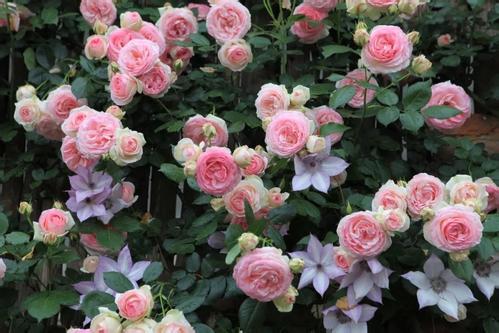
I have a courtyard full of blooms, and today I will focus on a few insights about growing English roses
English roses are one of the plants I grow the most, second only to clematis.
But if you pay attention, you will easily discover a fact: I grow roses very poorly.
Yes, I have lost many beautiful English roses, so many varieties that I can no longer remember them all, and even more of them ended up turning into spring soil.
So I also have the right to speak, because I have accumulated a lot of lessons!
Let me share the lessons I bought with money -- every sentence was bought with money! Cherish them!
PART I The Most Important Rule: Soil Mixing
The soil must be loose, breathable and well-draining.
Roses may look tough, but in the humid and hot rainy season in the south, the roots rot very easily.
Especially for roses planted in the ground in the south, soil with strong stickiness must first be improved.
Dig a large hole, dig a deep hole, at least 40 cm or more. Bury 5 cm of stones at the bottom for drainage.
If it is garden soil, mix in 30 percent perlite.
Part II The Most Important Rule: Light and Ventilation
Roses are basically all strongly light-loving.
For places like a north-facing wall corner, do not waste your money.
Light directly affects the number of blooms.
Roses planted by a south-facing wall all grow fairly well.
Part III The Most Important Rule: Pest Control
Roses are the plant in this uncle's garden that attracts the most pests, bar none!
Besides the disgusting aphids, the most numerous are the green little worms hatched from the eggs laid by white butterflies -- from spring to autumn, without interruption.
Do not underestimate them. If you do not clean them up for a week, they can chew your leaves completely bare.
By comparison, clematis does not attract many pests.
If you do not like using chemical sprays -- like this uncle -- then you must clean them up by hand.
This is really work that tests your eyesight and patience!
Pay attention to the above three points, and basically anyone can grow roses well.
Of course, roses also get many diseases, but this uncle's experience is: if you solve the problems of light and ventilation, and at the same time keep the soil well-draining,
then roses are not easily infected by those strange diseases -- in fact, a damp, stuffy and hot environment is the main cause of roses getting sick.
So I have also found that often, flower growers in the north have roses that grow a bit better.
And among flower growers in the south, those grown in large clay pots on rooftops and terraces often grow better.
This article was originally created by Fashion Home. Welcome to follow, and let us grow our knowledge together!