Golden Phoebe is called the "Emperor's Wood," once used for dragon thrones that did not rot for a thousand years
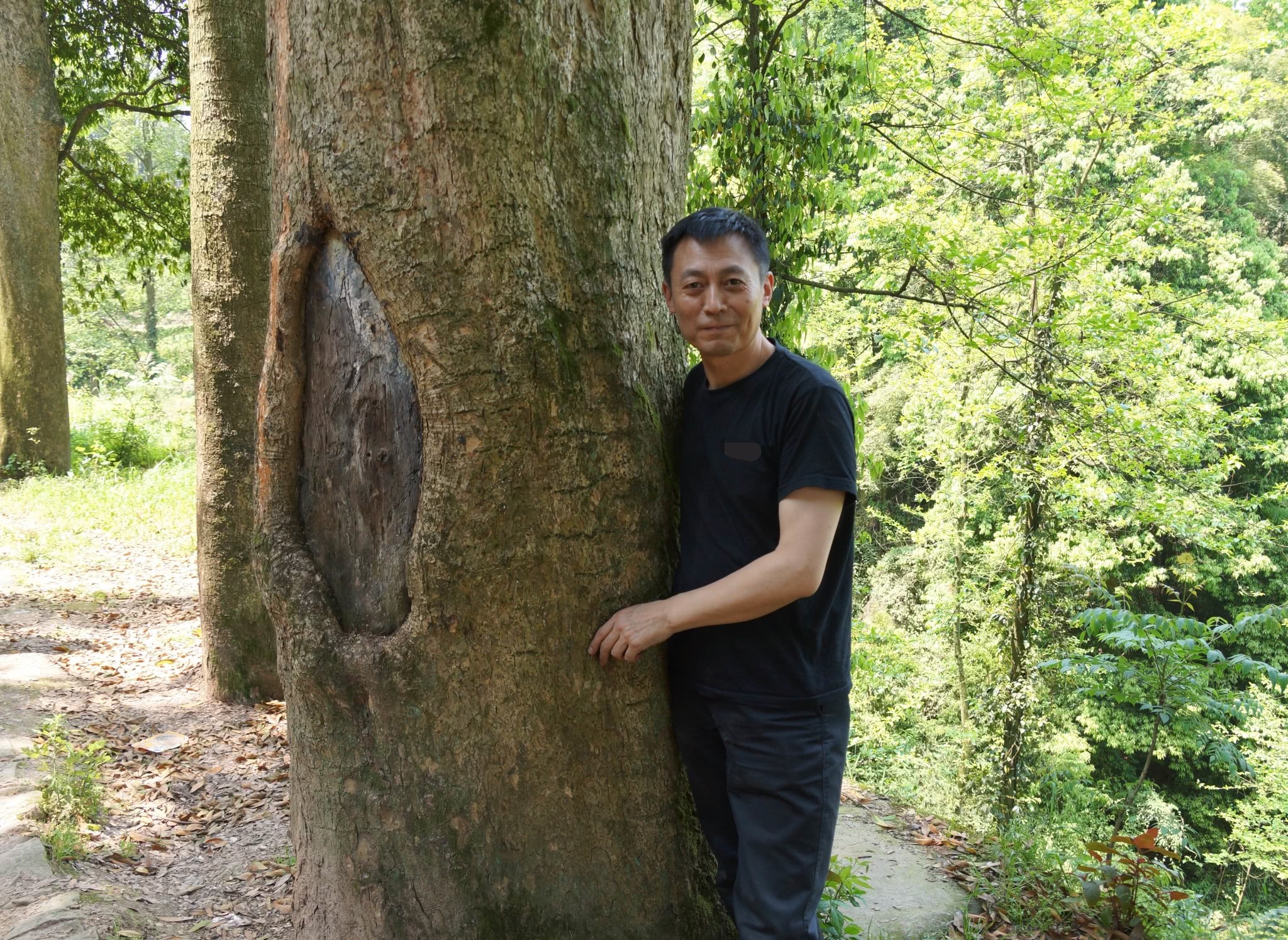
In our country's history, there are the "Four Great Famous Woods," namely nanmu (Phoebe), camphor, catalpa, and quercus, and Phoebe is the foremost of the four great famous woods, extremely precious. And the most precious of the Phoebe woods is undoubtedly "Golden Phoebe." In ancient times, Golden Phoebe was exclusively enjoyed by the imperial family and was called the "Emperor's Wood." It was mainly used for building imperial palaces, making furniture, and crafting the emperor's throne, the "dragon throne." In ancient times, commoners could not use Golden Phoebe freely; if they did, they would be imprisoned for "overstepping ritual regulations."
The scientific name of Golden Phoebe is Phoebe zhennan (xiaoye zhennan), because it turns golden yellow after oxidation, and glitters with golden light under illumination, just as if the tree contained golden threads, hence the name Golden Phoebe. Actually, its "golden threads" are a kind of crystalline substance between the wood fibers, extremely fine, and when the amount of crystallized material is large, it presents a golden yellow color. Therefore, the longer a Golden Phoebe grows, the greater the amount of crystallized material, and the better its quality.
Besides its noble and enchanting color, Golden Phoebe's wood is also top-grade. From ancient times to the present, there has been a saying that "water cannot soak it, and ants cannot bore into it." It is very hard, corrosion-resistant, and can also repel insects. Therefore, the coffins of ancient emperors were mostly made of Golden Phoebe, and after being buried in the ground for a thousand years they did not rot, nor were they afraid of insect damage. Ancient high-grade furniture and couches also favored Golden Phoebe, because it is not icy cold in winter and not hot in summer, with a good feel, and thus was highly sought after.
Golden Phoebe is mainly distributed in mountainous rural areas such as Sichuan, Guizhou, and western Hubei, and is a precious resource unique to our country. Unfortunately, Golden Phoebe takes several hundred years to mature, and its growth rate is very slow. Today it is an extremely scarce resource. Moreover, wild Golden Phoebe is listed as a national second-class protected plant and cannot be felled at will. Today, good Golden Phoebe can be described as having a price but no market; it is hard to buy even with money.
Now quite a few farmers also plant Golden Phoebe, but within their lifetime they will not live to see it mature. It is generally used as a landscape tree, or treated as precious wealth left to descendants. Reader friends, have you ever seen this precious "Emperor's Wood"?