A tilted potted succulent is actually sending out a cry for help
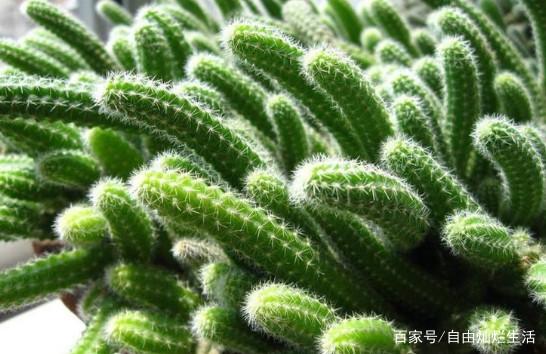
Succulents generally refer to cacti and succulent flowering plants. In the cultivation of succulents, we often encounter a phenomenon where the plant tends to lean to one side. This "tilting" is one of their body language signals. It is a "help" signal that succulents send to their growers. So how should we deal with it?
Almost all plants have the habit of turning toward the sun and seeking light. This is especially pronounced in most cacti and succulent flowering plants, which prefer warmth, dryness and plenty of sunlight. When a plant receives light from a single direction for a long time, it will clearly lean toward the lit side. The appearance of this state is as if the plant is reminding the grower that it is time to turn the pot in another direction. Yes! A 180-degree rotation to change the situation of uneven light exposure. By turning the direction, the plant will gradually straighten up. However, to prevent it from leaning again, after a period of time, the pot should be turned in another direction. This is especially important for indoor cultivation.
As the plant gradually grows, some become tall and large, often developing a "top-heavy" condition and losing their center of gravity. At this point, if the support from the soil weakens or the soil around the roots loosens, the plant will lean to one side. This posture seems to tell the grower: buddy, please help check whether the soil has become loose. If so, please help straighten it. First, after straightening the plant, set up a support beside it; or press the loose soil firm, then place a reasonably heavy cobblestone on top to reinforce it. Second, if possible, take the opportunity to repot it, fill in fresh soil, and correct the plant's tilt; at the same time, you can also check whether there is a problem with the plant's roots.
Perhaps the problem lies with the plant's roots. For example, root rot, being hollowed out by borers, or rot at the lower part of the stem can all cause sudden tilting. This seems to be a "cry for help" sent to the grower. If we ignore it and overlook the message the plant is conveying, then when it later topples over, it will already be too late, and no remedy will be able to save it.
When we find that a plant is tilting, we should become alert, and in particular first consider and promptly check whether there is a problem with the roots or the lower part of the stem, so that measures can be taken in time: in mild cases, the environment can be changed and the light and ventilation conditions improved; for partially rotted plants, the rotten parts can be removed, disinfected, dried, and then replanted; in severe cases, we can only take cuttings from the upper stems and leaves, or take offsets for cuttings or grafting. If there is no problem, then adopt the methods mentioned earlier.
That is all for today's sharing. I hope it is helpful to you!