How to prune a Chinese swamp cypress bonsai? A detailed guide to styling techniques for the living fossil plant
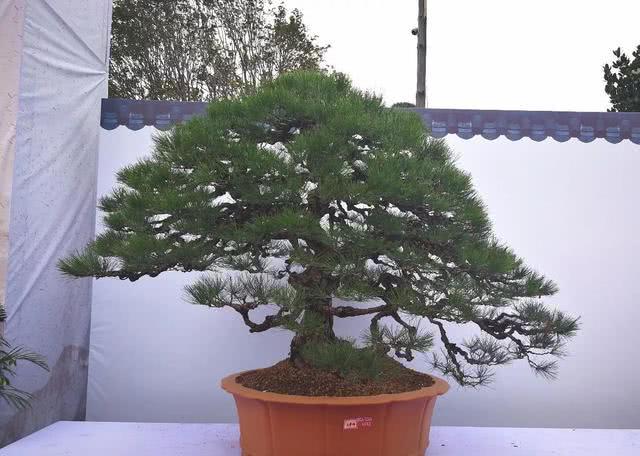
Chinese swamp cypress bonsai - just from the name you can probably guess that it mainly grows in places with plenty of water, such as paddy fields or beside small streams. The Chinese swamp cypress breathes more suitably in places rich in water, while in dry areas its breathing is easily suppressed.
The Chinese swamp cypress grows very gracefully overall and is a tree species unique to China, and it is very suitable as a bonsai for viewing. Below, let us look at three cultivation techniques for Chinese swamp cypress bonsai.
The first: the trunk-cutting technique. First you need to dig out the Chinese swamp cypress growing in the ground, carefully observe its overall form, and judge whether its roots and stem are relatively well developed, so as to further determine whether it can be used for bonsai.
For a Chinese swamp cypress that can be used for a large tree bonsai, the first trunk cutting should be done in May. At a point 20 to 25 cm from the ground, saw through the trunk, throw away the damaged roots, and place it in a flowerpot without holes for cultivation. After it sprouts, choose the one that is growing better and keep it, discarding the rest.
After one or two years, when the new sapling reaches two thirds of the height of the original stump, dig out the whole tree again and cut it once more. This time the cut should be about 20 cm away from the position of the previous cut, and then place it back into the pot, but in the opposite direction from the previous placement. The third time, just repeat what was done the second time.
The second: the branch-pad fixing method. When a branch pad of the Chinese swamp cypress has grown to a suitable length, cut it at a point one cun away from the branch pad, and the length of the second section should be shorter than that of the first section. After cutting, when the first section grows new branches and leaves, turn it in another direction, tie or twist it with rope or string, and after about three months, when it has basically grown well, you can remove the excess parts and let it grow naturally.
The third: the top-branch pruning technique. The top-pruning technique can be said to be a technique that adds the finishing touch. If it is pruned well, everything will naturally rise to a higher level; on the contrary, if it is not pruned well, then all previous efforts may be wasted.
There are three methods for pruning the top branches: First, control the height well, especially the height of the top. At the pre-planned height, cut off the top, and it is best to leave the top as three-forked new shoots, then remove the excess buds. When the new shoots grow to a suitable height again, cut off the top again. Repeat this over and over, and the shape will basically be almost set. Second, keep the direction of the top basically consistent with the direction of the combing, which will also create a kind of visual beauty, with the top and the whole tree complementing each other. Third, when all this pruning is finished, the whole tree should look like a triangle, neither too tight nor too loose, just right.